
 English
 한국어
한국어 Français
 Español

Construction Equipment Tires: How to Choose, Maintain, and Get the Most Out of Them
Content
- 1 Why Construction Equipment Tires Are More Than Just Rubber
- 2 Types of Construction Equipment Tires and What They're Built For
- 3 Understanding OTR Tire Size Markings
- 4 Tread Patterns and What They Do on a Jobsite
- 5 Matching Tires to Specific Construction Machines
- 6 How to Read Tire Wear and Diagnose Problems Early
- 7
- 8 Inflation Pressure: The Single Biggest Factor in Tire Life
- 9 Practical Tire Maintenance Routines for Construction Fleets
- 10 Site Management Practices That Protect Tires
- 11 Understanding Tire Cost Per Hour: The Real Measure of Value
Why Construction Equipment Tires Are More Than Just Rubber
When people think about construction equipment, they usually picture the machine itself — the boom, the bucket, the cab. Tires tend to be an afterthought. But ask any experienced site manager and they'll tell you that the wrong tires, or poorly maintained ones, can bring an entire operation to a halt. Construction equipment tires are load-bearing, traction-providing, and shock-absorbing components that directly affect machine performance, operator safety, and total operating cost.
Unlike passenger car tires, heavy equipment tires operate in some of the harshest conditions imaginable — sharp rock, deep mud, loose gravel, steep grades, and extreme loads that would destroy an ordinary tire in minutes. They are engineered specifically for these environments, with compound formulations, tread patterns, and carcass constructions that match each machine type and application. Getting this match right is one of the most important decisions a fleet manager or equipment operator can make.
This guide covers everything from understanding tire categories and reading tire size markings to practical maintenance routines and common failure modes — giving you the knowledge to make smarter decisions and squeeze more life out of every tire on your fleet.
Types of Construction Equipment Tires and What They're Built For
Construction machinery tires fall under the broader category of OTR tires — Off-The-Road tires — a classification that covers any tire not designed for paved highway use. Within the OTR category, there are several distinct types, each engineered for specific machines and site conditions.
Bias Ply Tires
Bias ply tires are constructed with cord plies laid diagonally across the tire from bead to bead, typically at angles between 30 and 40 degrees. This gives the sidewall and tread a thick, unified structure that handles punctures and impacts extremely well. They are the preferred choice for rocky quarry environments, demolition sites, and any application where sharp debris is a constant hazard. The tradeoff is higher heat buildup at speed and a stiffer ride, but on a slow-moving loader or dozer, these drawbacks are largely irrelevant.
Radial Tires
Radial tires have cord plies running perpendicular to the direction of travel, with separate stabilizer belts beneath the tread. This construction allows the tread and sidewall to flex independently, resulting in a larger, flatter contact patch with the ground, lower rolling resistance, and better heat dissipation. For construction equipment that travels longer distances — articulated dump trucks, wheel loaders on road hauls, motor graders — radial tires offer significant fuel savings and longer service life compared to bias ply alternatives.
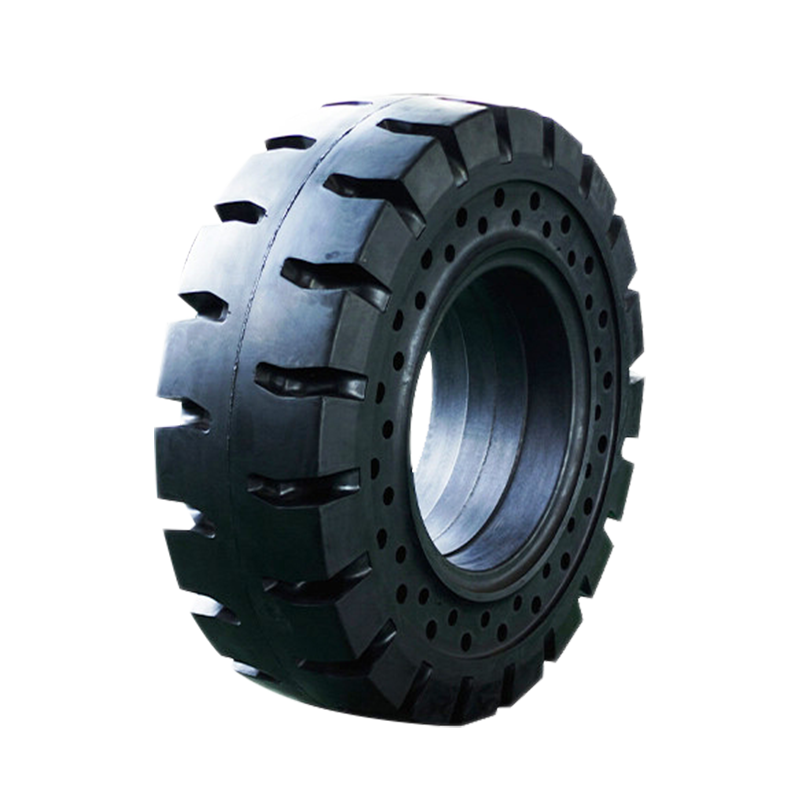
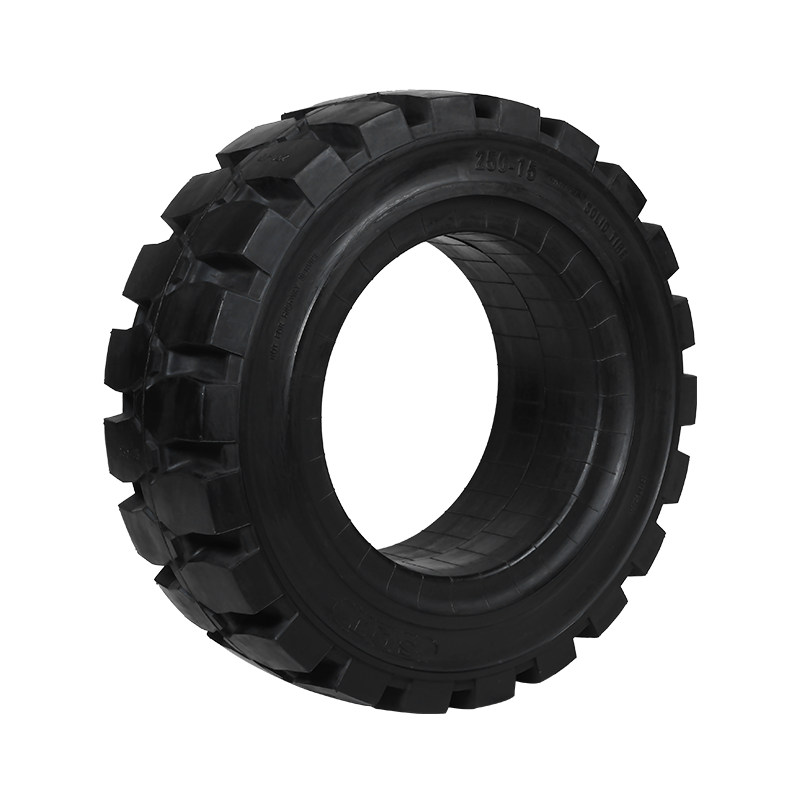
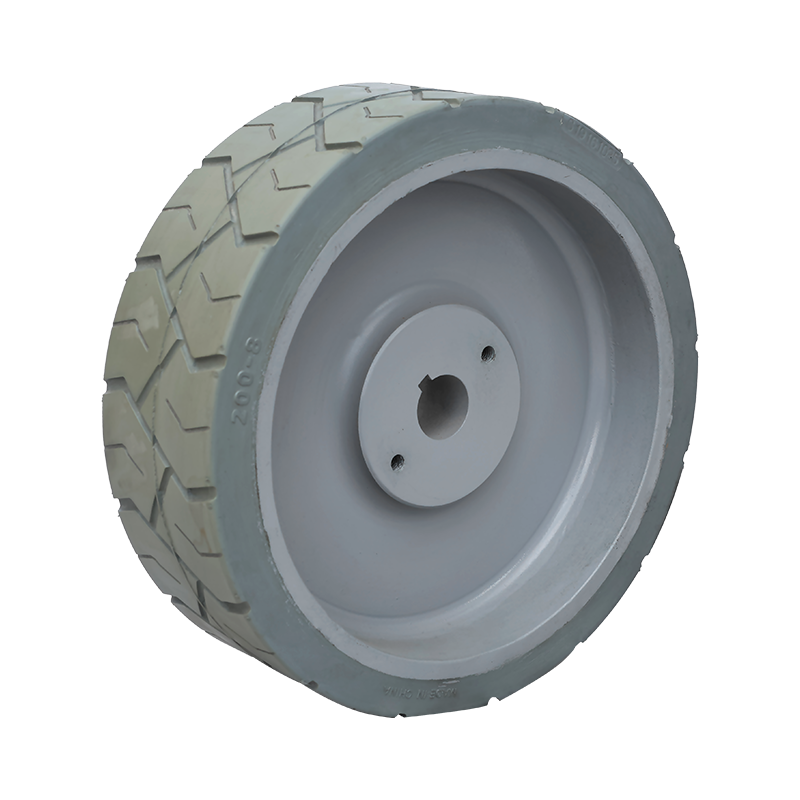
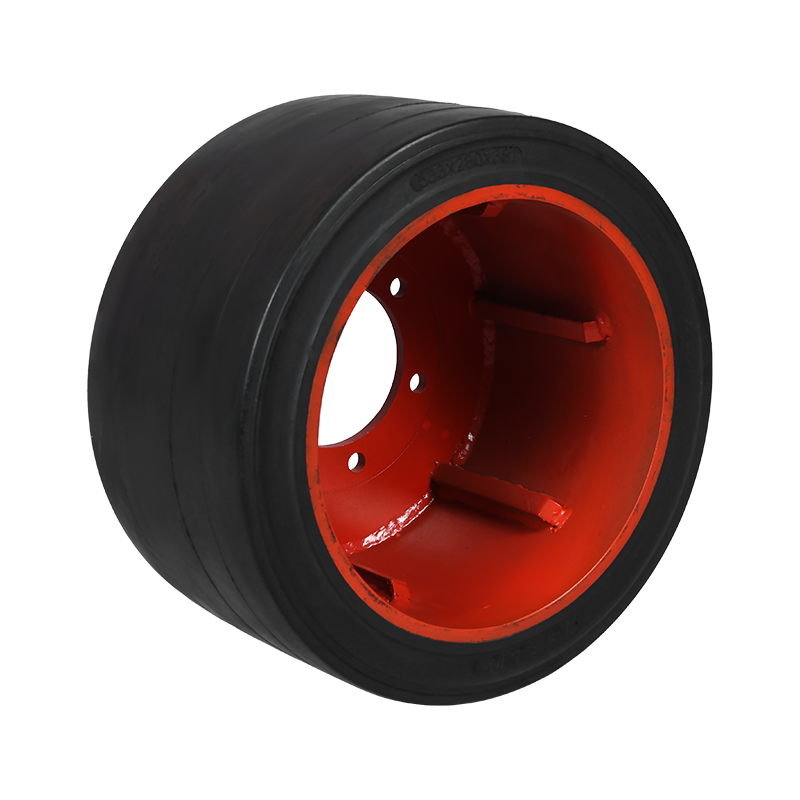
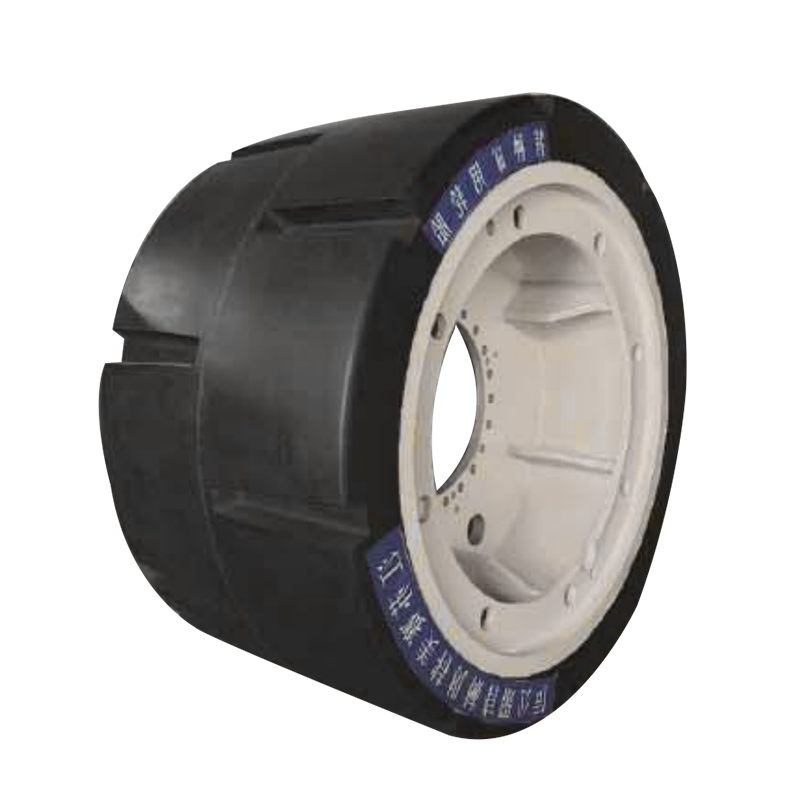
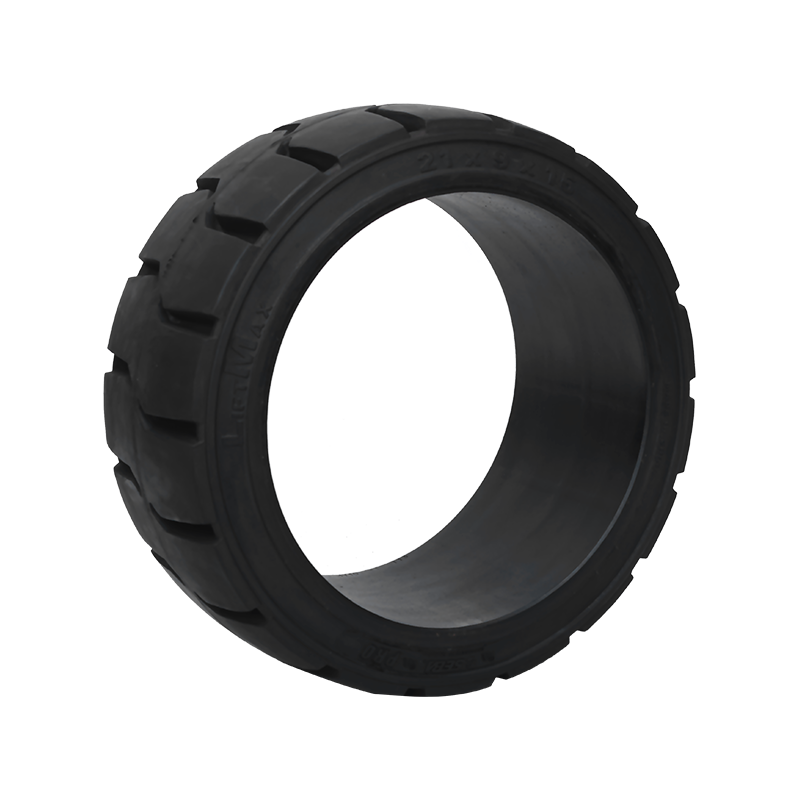
Solid and Foam-Filled Tires
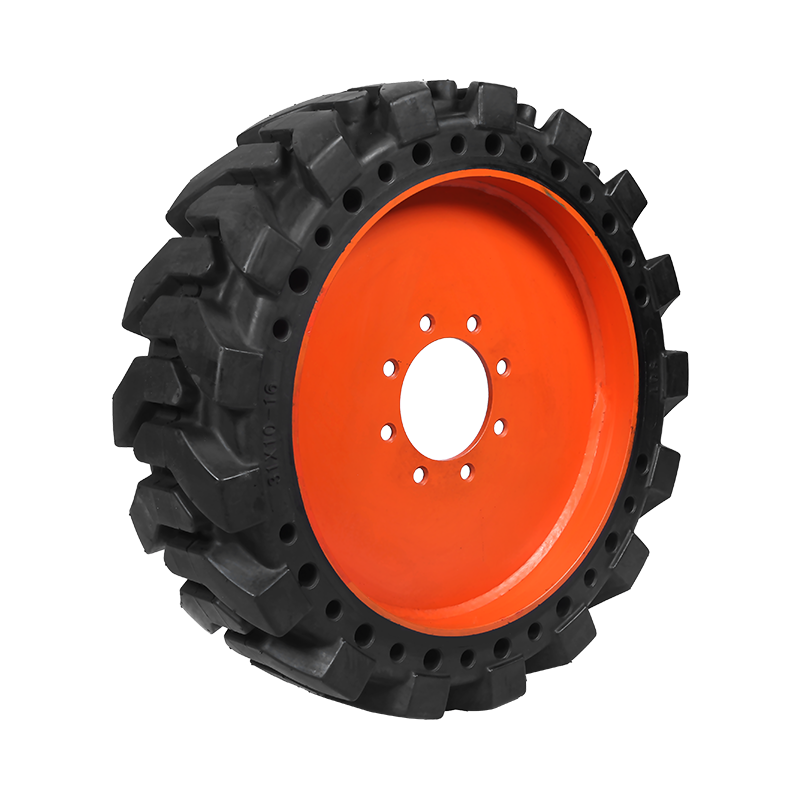
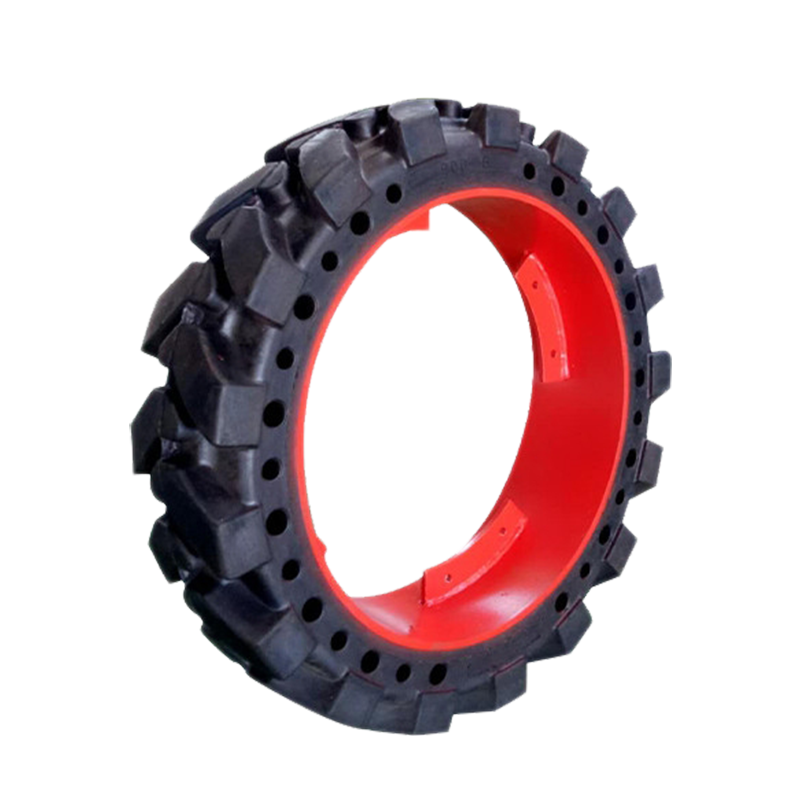
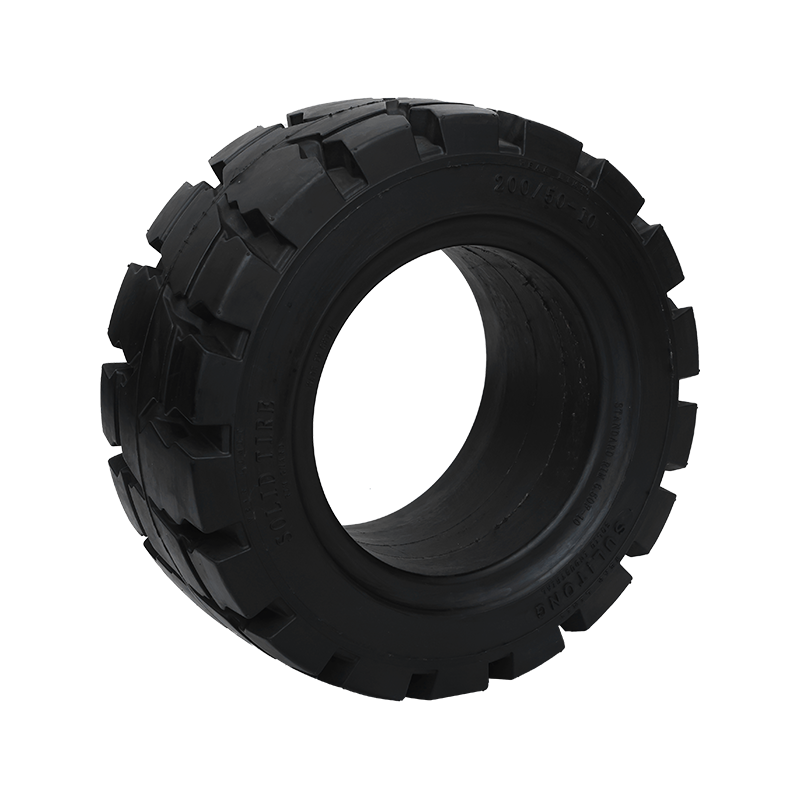
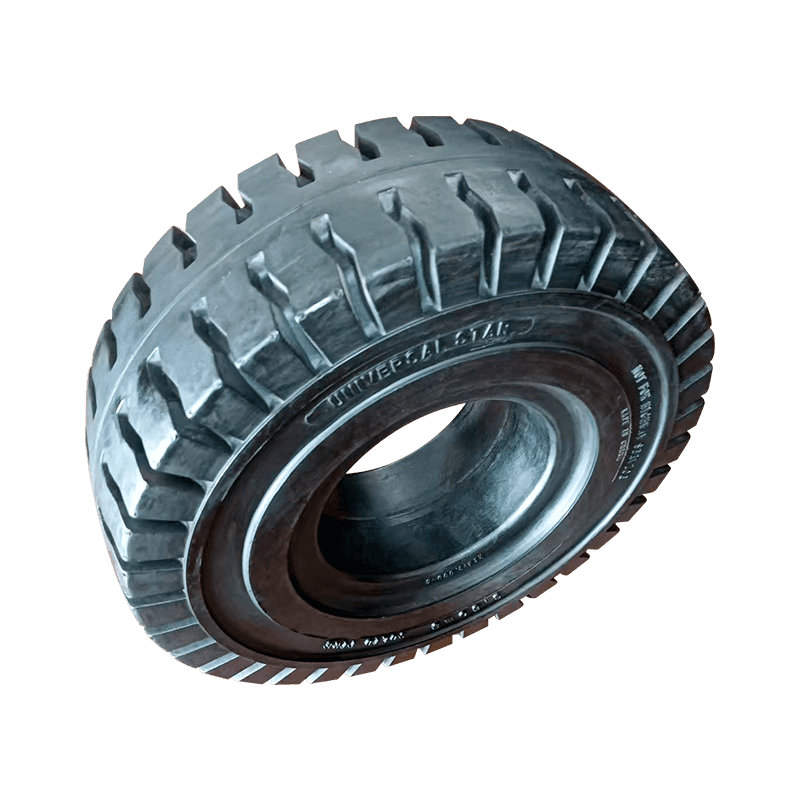
In environments where downtime from flat tires is unacceptable — scrap yards, recycling facilities, demolition sites with heavy wire and rebar — solid rubber tires or foam-filled tires eliminate the risk of punctures entirely. Solid tires are molded from rubber compounds and require no air pressure. Foam-filled tires are standard pneumatic tires injected with polyurethane foam after mounting, giving them a similar feel to aired-up tires but with no inflation to lose. Both types trade ride comfort for reliability in extreme puncture environments.
Pneumatic OTR Tires
Standard pneumatic (air-filled) tires remain the most common choice across most construction applications. They deliver a balance of load capacity, traction, cushioning, and cost that solid alternatives cannot match in general-purpose use. Pneumatic heavy equipment tires are available in virtually every size and tread pattern needed across the construction industry.
Understanding OTR Tire Size Markings
Reading a construction equipment tire size correctly helps you identify the right replacement and ensures you are operating within the machine manufacturer's specifications. OTR tire sizes follow a few different notation formats depending on tire age and type.
| Size Format | Example | What It Means |
| Inch Designation | 23.5-25 | Tire width (inches) – Rim diameter (inches) |
| Low Profile Inch | 17.5R25 | Width – R (radial) – Rim diameter |
| Metric Designation | 445/95R25 | Width (mm) / Aspect ratio – R – Rim diameter (inches) |
| Three-Part Inch | 14.00-24 | Width – Construction type – Rim diameter |
In addition to the size, tires carry a load index and ply rating (PR) or load range designation. The ply rating indicates the tire's load-carrying capacity relative to a baseline — a higher PR means a stronger carcass capable of carrying heavier loads. Always match or exceed the original equipment manufacturer's (OEM) specified ply rating when selecting replacement tires.
Tread Patterns and What They Do on a Jobsite
Tread pattern is one of the most visible differences between construction machinery tires, and it has a direct impact on traction, stability, and wear characteristics. Choosing the wrong pattern for your site conditions leads to premature wear, poor grip, or unnecessary heat buildup.
- L-2 / E-2 (Traction Tread): Open, aggressive lug pattern designed for maximum traction in mud, loose soil, and soft underfoot conditions. Common on wheel loaders and compactors working in earthmoving applications. The open voids between lugs self-clean as the tire rotates.
- L-3 / E-3 (Rock Tread): Deeper, more widely spaced lugs than L-2. Built for abrasive rocky terrain where cut resistance and tread depth are priorities. Ideal for quarry loaders and equipment working on crushed stone surfaces.
- L-4 / E-4 (Rock Deep Tread): Extra-deep tread for severe rock applications, offering extended service life where L-3 would wear quickly. Often used in underground mining and heavy quarry work.
- L-5 / E-5 (Rock Extra Deep Tread): Maximum tread depth for the most extreme rock environments. These tires are built for longevity over traction and are common on large mining loaders and rigid dump trucks in hard rock quarries.
- Smooth / Semi-Smooth Tread: Compactors and rollers use smooth or near-smooth tires to maximize ground contact area and compaction effectiveness rather than traction.
- Rib Tread (G-Series for Graders): Motor grader tires typically use a ribbed pattern that provides stable steering response and even wear when operating on graded road surfaces.
Matching Tires to Specific Construction Machines
Different machines place very different demands on their tires. A tire that performs brilliantly on a wheel loader may be a poor choice for a telehandler or a skid steer. Here is how tire selection typically maps to common construction equipment types.
Wheel Loaders
Wheel loader tires endure intense forward thrust loads during bucket fill, combined with lateral scrubbing when the machine cuts into a pile and steers simultaneously. This "push-pull-steer" cycle generates significant sidewall stress and tread wear. L-3 or L-4 rated radial OTR tires are common for general earthmoving loaders, while quarry loaders running on hard rock often use bias ply L-5 tires for their superior cut resistance.
Articulated Dump Trucks (ADTs)
ADT tires carry enormous dynamic loads over rough haul roads. Radial tires are almost universally preferred here because they run cooler under sustained haulage speeds, which is critical for tires that may cover dozens of kilometers per shift. The E-3 or E-4 tread designation is typical, providing a balance of traction on unpaved roads and resistance to rock cuts.
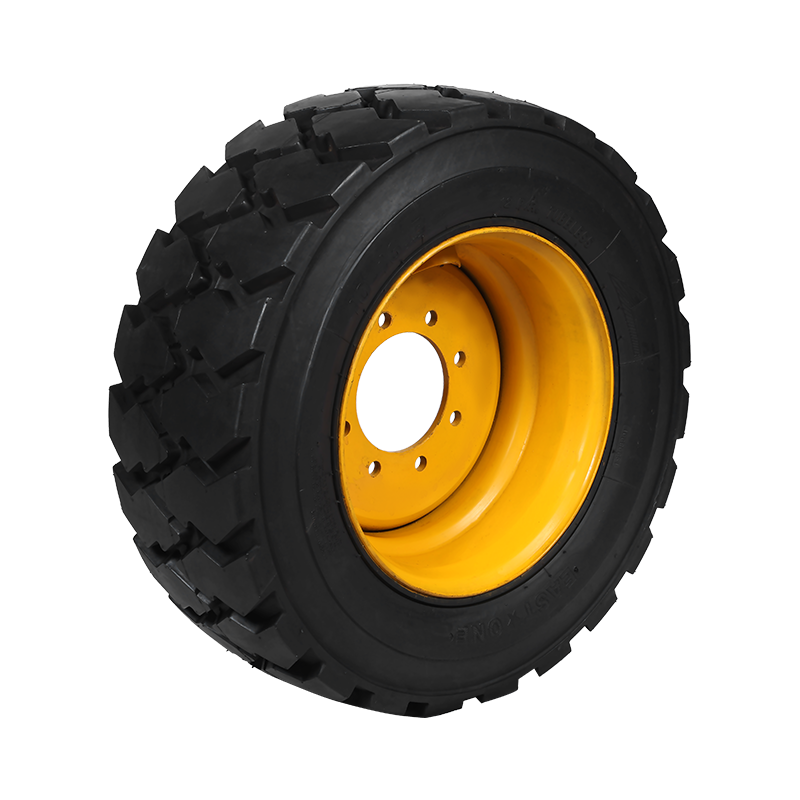
Skid Steer Loaders and Compact Track Loaders
Skid steer tires face a unique challenge: the machine turns by skidding its wheels laterally, which creates extreme shear forces across the tread face. For skid steers on dirt and gravel, standard bias ply tires with robust tread lugs work well. In demolition or scrap environments, solid or foam-filled skid steer tires eliminate the puncture risk that would otherwise make these machines nearly unusable.
Telehandlers and Rough Terrain Forklifts
Telehandlers operate on varied surfaces — from firm concrete pads to soft field conditions — often while carrying elevated loads. Stability is paramount, which means tire inflation accuracy is especially critical. The tires on these machines need to maintain their rated load capacity consistently, making regular pressure checks a non-negotiable maintenance item.
Motor Graders
Grader tires use the G-series designation and are typically ribbed for directional stability. They cover long stretches of road at relatively higher speeds compared to other construction equipment, so heat resistance and even wear across the tread width are key performance requirements. Proper inflation is critical since an under-inflated grader tire will wear its shoulders prematurely due to the machine's characteristic working posture.
How to Read Tire Wear and Diagnose Problems Early
Construction equipment tires rarely fail without warning. Wear patterns and physical signs on the tire almost always tell a story about what is going wrong — whether that is an inflation problem, an overloading issue, or an alignment fault. Knowing how to read these signs saves money and prevents dangerous blowouts.
- Center tread wear: When the center of the tread wears faster than the shoulders, the tire is consistently over-inflated. The tire bulges in the middle, reducing the contact patch and concentrating wear on the center lugs. Reduce inflation to the OEM-recommended pressure for the actual load being carried.
- Shoulder wear (both sides): Wear concentrated on both outer shoulders indicates chronic under-inflation. The tire is flexing excessively, causing the shoulders to contact the ground more than the center. This also generates dangerous heat buildup inside the carcass.
- One-sided shoulder wear: Wear on only one shoulder is typically caused by misalignment or camber issues on the axle. This requires a mechanical inspection of the steering and suspension components, not just a tire swap.
- Cupping or scalloping: An irregular, wavy wear pattern around the circumference often points to a dynamic balancing problem, worn bearings, or loose wheel fasteners. Do not ignore this pattern — it indicates a mechanical fault that will accelerate tire failure.
- Sidewall cracking or bulging: Cracks in the sidewall can result from UV exposure, ozone degradation, or age. A visible bulge is more serious — it indicates internal carcass damage, possibly from impact with a sharp object or severe overloading. A bulging tire should be removed from service immediately.
- Chunking or tearing of lugs: Large pieces breaking off the tread face are a sign of overloading, excessively aggressive site conditions, or a tire specification mismatch. Consider upgrading to a higher tread depth rating (L-4 or L-5) if lug chunking is recurring.
Inflation Pressure: The Single Biggest Factor in Tire Life
If there is one maintenance practice that delivers the highest return on investment for heavy equipment tires, it is maintaining correct inflation pressure. Studies and field data from OTR tire manufacturers consistently show that inflation pressure is the number one controllable factor in tire longevity — more impactful than site conditions, speed, or even load management in most cases.
Tire pressure should always be set based on the actual load the tire is carrying — known as the load-inflation table method. Manufacturers publish load-inflation tables that specify the correct cold inflation pressure for each load level. Running a tire at a pressure calibrated for a lighter load than actual will cause premature failure, even if the tire looks fine externally. Most construction equipment fleets check and set tire inflation at the start of each shift, before the tires have warmed up, since heat from operation will naturally increase internal pressure by 4–8 psi.
Nitrogen inflation is gaining traction on premium heavy equipment fleets. Because nitrogen molecules are larger than oxygen molecules, they permeate through the tire carcass more slowly, resulting in more stable pressure over time and across temperature changes. This is particularly beneficial on equipment that sits idle for extended periods between shifts.
Practical Tire Maintenance Routines for Construction Fleets
A structured maintenance routine keeps construction machinery tires in service longer and catches problems before they cause expensive failures or safety incidents. The following schedule reflects best practices used by professional fleet operators.
Daily Checks (Pre-Shift Inspection)
- Walk around the machine and visually inspect all tires for visible cuts, embedded objects, sidewall damage, or abnormal deflation.
- Check inflation pressure with a calibrated gauge on cold tires before starting operation. Adjust to load-rated pressure if needed.
- Inspect valve stems and caps for integrity — missing caps allow dirt contamination that leads to slow leaks.
- Check wheel nuts for tightness and look for any signs of rim damage or cracks.
Weekly and Monthly Checks
- Measure tread depth at multiple points across the tread width and around the circumference. Flag tires approaching the manufacturer's minimum tread depth for replacement planning.
- Rotate tires on applicable equipment to equalize wear across the set, following the machine manufacturer's recommended rotation pattern.
- Inspect the mounting area of the rim — rust buildup between the tire bead and rim flange is a hidden cause of slow leaks on steel wheels.
- Review tire wear records and compare actual wear rates against expected service life to identify any anomalies requiring investigation.
Site Management Practices That Protect Tires
Even the best tires wear out faster than necessary when the job site itself is poorly managed. Site conditions are often within the contractor's control, and small improvements to haul road quality and debris management can have a measurable impact on overall tire costs.
- Maintain haul roads: Ruts, potholes, and loose sharp rock on haul roads are among the leading causes of tire damage on construction sites. Regular grading and compaction of haul surfaces dramatically reduces impact damage and cuts.
- Manage tire dumping and sharp debris: Rebar, wire mesh, nails, and broken concrete are tire killers. Designating clean access routes for wheeled equipment, away from demolition and steel-work areas, protects tires from avoidable punctures.
- Control travel speeds: Higher speeds generate more heat inside a tire. Imposing and enforcing site speed limits — typically 15–20 km/h for loaded haul trucks — is one of the simplest ways to extend tire service life.
- Minimize tight turns under load: Sharp turns with a loaded bucket or trailer create severe lateral scrub forces on tires. Training operators to reduce load before turning and to take wider arcs when possible reduces sidewall stress and tread wear.
- Avoid parking on sharp objects: Machines parked overnight on crushed rock or debris piles can develop bead damage or slow punctures from the static load on a sharp point. Designate flat, clean parking areas wherever practical.
Understanding Tire Cost Per Hour: The Real Measure of Value
Fleet managers experienced with heavy equipment tires know that the sticker price of a tire is a poor indicator of its true value. The metric that matters is cost per hour (CPH) — the total tire purchase price divided by the number of operating hours it delivers before it needs replacement.
A premium OTR tire from a major manufacturer might cost 40–60% more than a budget alternative, but if it delivers twice the service life, the CPH is actually lower. On top of that, premium tires generally offer better fuel economy due to lower rolling resistance, more predictable wear patterns that simplify maintenance planning, and lower risk of unexpected catastrophic failure that can damage rims or cause accidents.
The CPH calculation should also factor in labor for tire changes, potential rim damage from tire failures, and machine downtime costs. On a large excavator or dump truck earning several hundred dollars per hour, a single avoidable tire failure can cost more in downtime than the price difference between cheap and premium tires across an entire season of operation. Tracking tire hours by position and machine, and keeping records of failure causes, is the foundation of smart tire cost management on any serious construction fleet.
CONTACT US
-

Email: SMT001@saimeite-tyre.com
-

Phone: +86-18451337018No. 1, Renmin South Road, Yandu District, Yancheng City, Jiangsu Province, China