
 English
 한국어
한국어 Français
 Español

Everything You Need to Know About Aerial Work Solid Tires
Content
- 1 Why Aerial Work Platforms Need Solid Tires
- 2 Solid Rubber vs. Polyurethane: Which Core Material Is Right?
- 3 Tread Patterns and What They Actually Do
- 4
- 5 Load Rating and Size Specifications Explained
- 6 Indoor vs. Outdoor Applications: Choosing the Right Tire for the Job
- 7 How Long Do Aerial Work Solid Tires Last — and What Wears Them Out Faster
- 8 What to Look for When Sourcing Aerial Work Solid Tires at Volume
Why Aerial Work Platforms Need Solid Tires
Aerial work platforms — scissor lifts, boom lifts, telehandlers, and vertical mast lifts — operate under conditions that standard pneumatic tires simply aren't built for. These machines routinely carry heavy loads at elevated heights, work on uneven or debris-covered surfaces, and spend long hours parked under full static load. A puncture or blowout on a standard pneumatic tire at height isn't just an inconvenience — it's a serious safety incident.
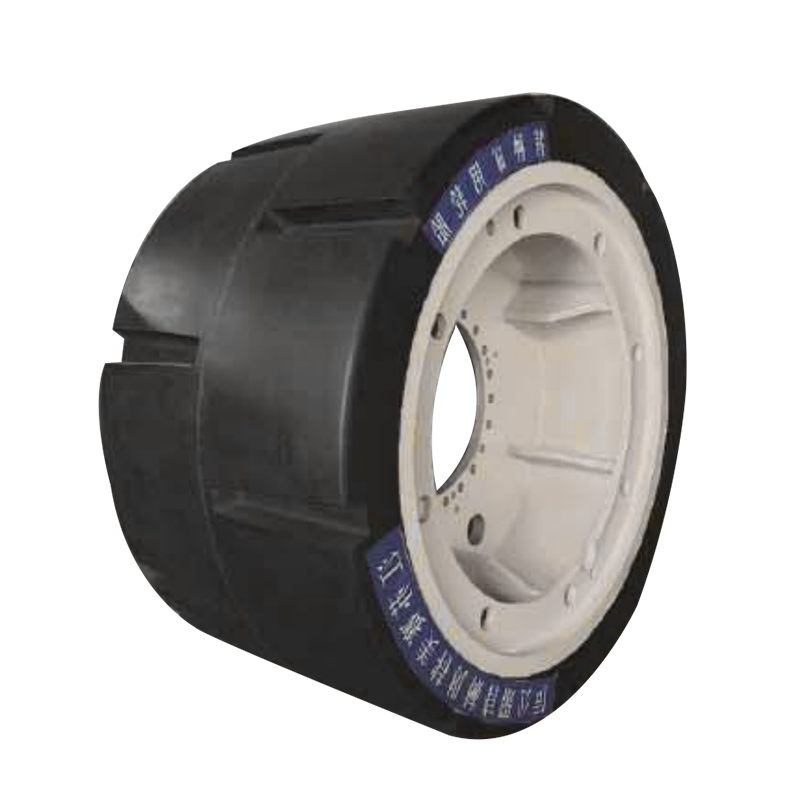
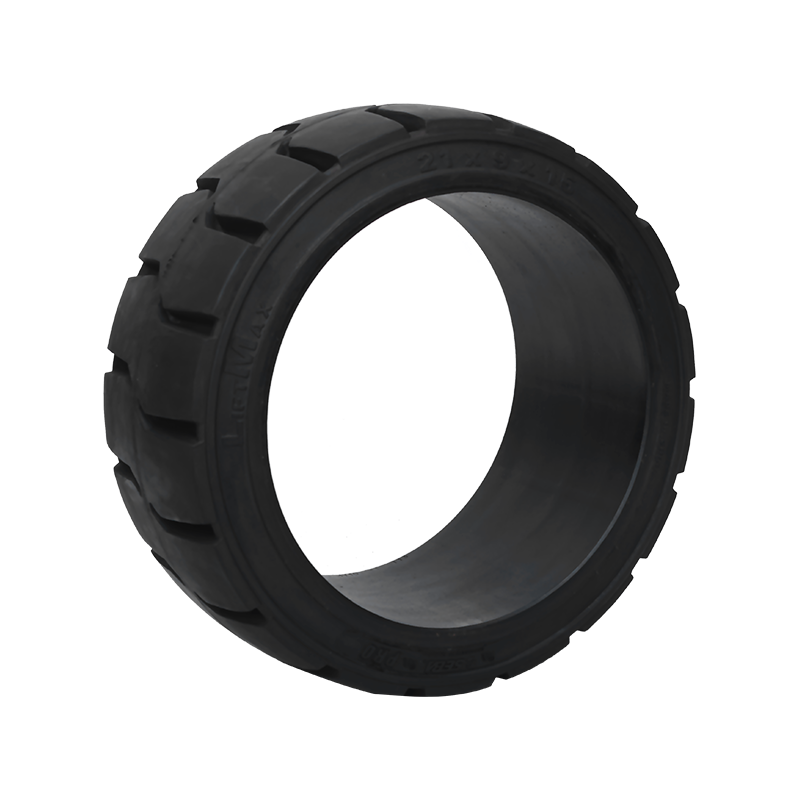
Solid tires for aerial work platforms eliminate the blowout risk entirely by replacing the air chamber with a solid rubber or polyurethane core. There's no pressure to maintain, no inner tube to fail, and no sudden loss of stability. For job sites where downtime is expensive and working at height demands consistent ground contact, this is a fundamental advantage over their pneumatic counterparts.
Beyond safety, aerial work solid tires are engineered to handle the specific load distribution of AWP equipment. Unlike a forklift or construction vehicle that moves loads horizontally, an aerial platform concentrates weight on a compact footprint while extending mass vertically — creating a tipping moment that demands precise, stable tire contact with the ground at all times. The structural integrity of a solid tire directly supports that stability requirement.
Solid Rubber vs. Polyurethane: Which Core Material Is Right?
The two dominant core materials for aerial work solid tires are solid rubber and polyurethane (PU), and the performance difference between them is meaningful enough to affect your purchasing decision.
Solid Rubber Tires
Solid rubber aerial work tires are the traditional choice for outdoor and rough-terrain applications. The rubber compound absorbs vibration better than polyurethane, reducing operator fatigue during extended platform use. Rubber also performs reliably across a wide temperature range, making it suitable for outdoor job sites in both cold and hot climates. The trade-off is weight — rubber cores are heavier than PU equivalents, which can marginally affect the machine's rated capacity.
Polyurethane (PU) Foam-Filled Tires
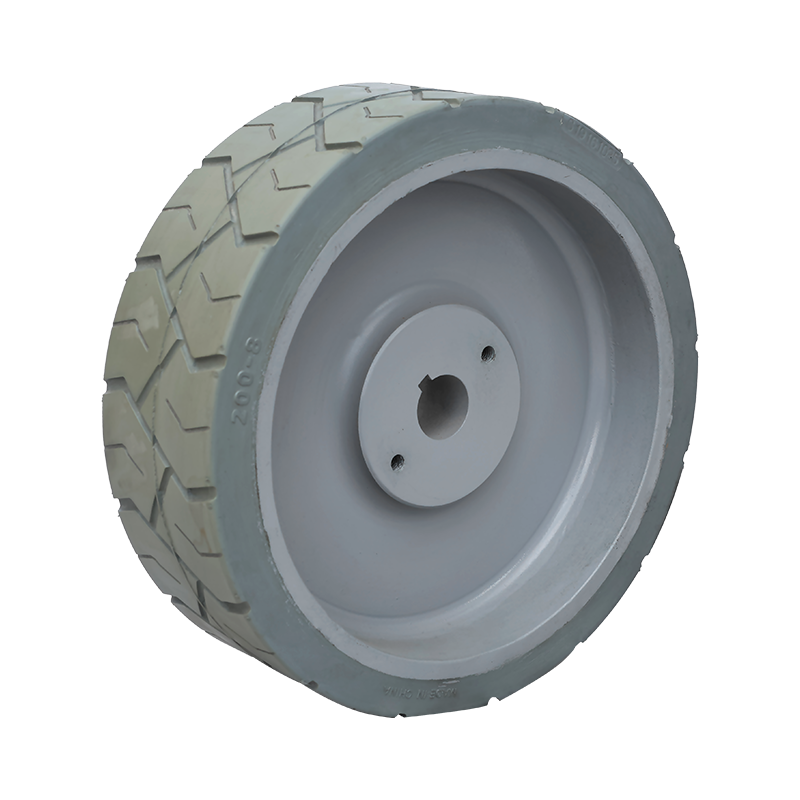
PU tires are the preferred option for indoor aerial work platforms, particularly in warehouses, data centers, and manufacturing facilities. They are significantly lighter than solid rubber, offer a harder ride, and most importantly, are available in non-marking formulations that leave no black streaks on polished concrete or epoxy-coated floors. PU cores also resist chemical exposure well, making them suitable for environments where cleaning solvents or industrial fluids are present on the floor.
| Property | Solid Rubber | Polyurethane (PU) |
| Ride Comfort | Better vibration absorption | Firmer, less cushioning |
| Weight | Heavier | Lighter |
| Floor Marking | May mark indoors | Non-marking options available |
| Temperature Range | Wide range, outdoor-ready | Best in moderate climates |
| Best Application | Outdoor, rough terrain | Indoor, sensitive floors |
Tread Patterns and What They Actually Do
The tread pattern on an aerial work solid tire is not cosmetic. It directly determines how the tire manages traction, surface contact, and debris clearance under the specific operating conditions of the machine.
Smooth / Flat Tread
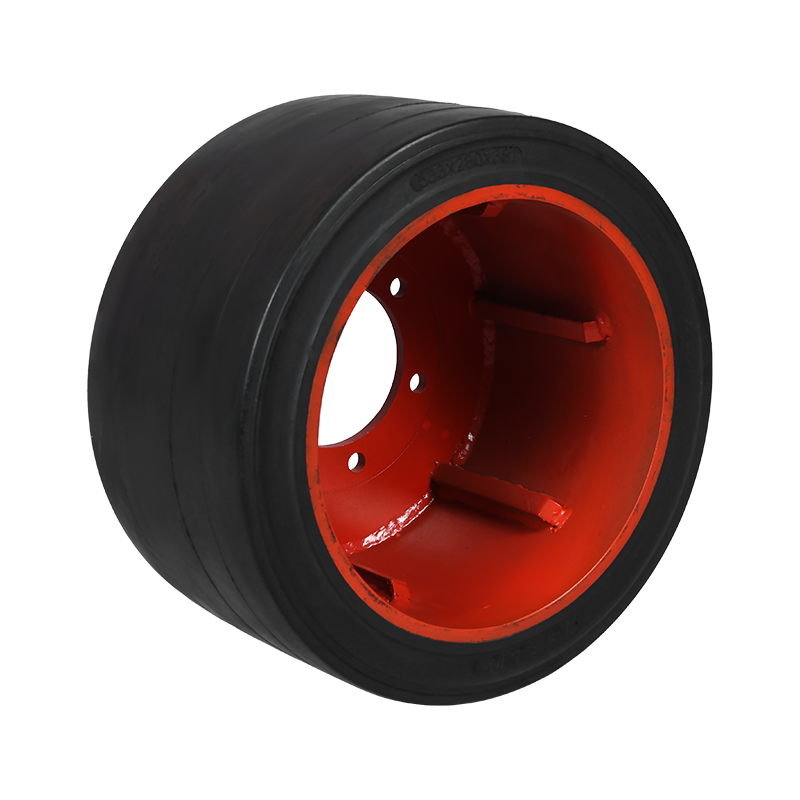
Smooth tread tires maximize surface contact area, which distributes load evenly and minimizes floor pressure per square inch. This makes them the standard choice for indoor aerial platforms on hard, flat surfaces like concrete and tile. They also generate less rolling resistance, which preserves battery life on electric-powered scissor lifts.
Ribbed or Multi-Rib Tread
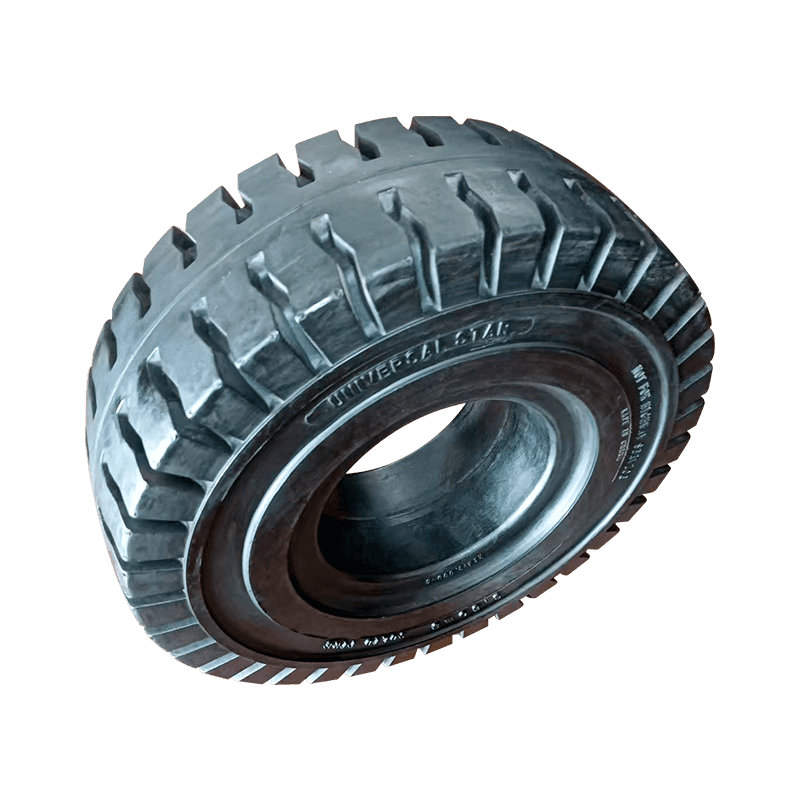
Ribbed tread patterns are common on outdoor aerial work solid tires. The longitudinal grooves channel water and debris away from the contact patch, maintaining grip on wet pavement, asphalt, and compacted dirt. They also reduce tire scrub during tight turns, extending tread life on machines that maneuver frequently.
Lug / Block Tread
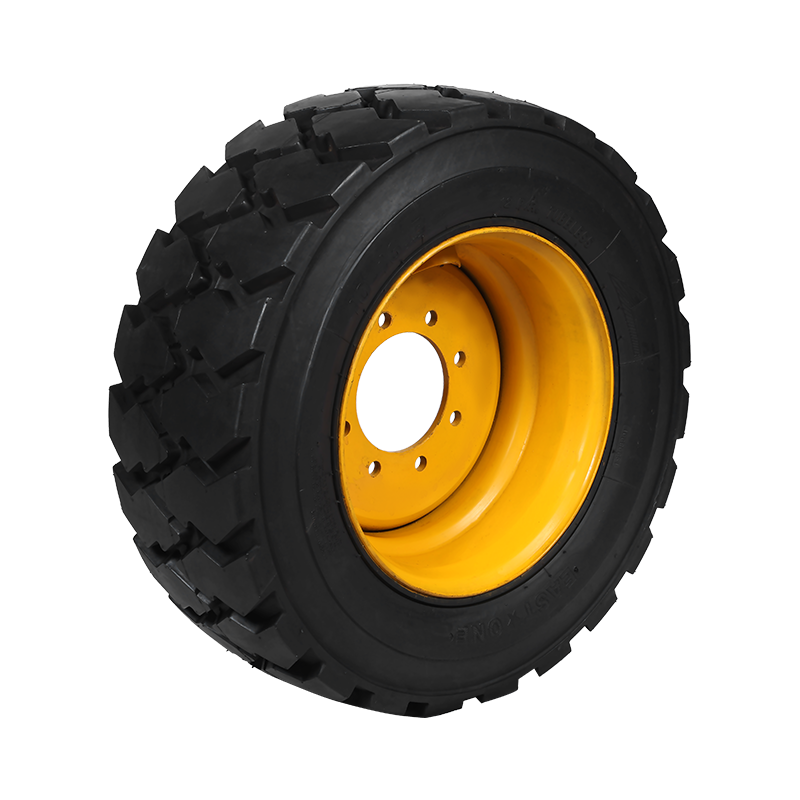
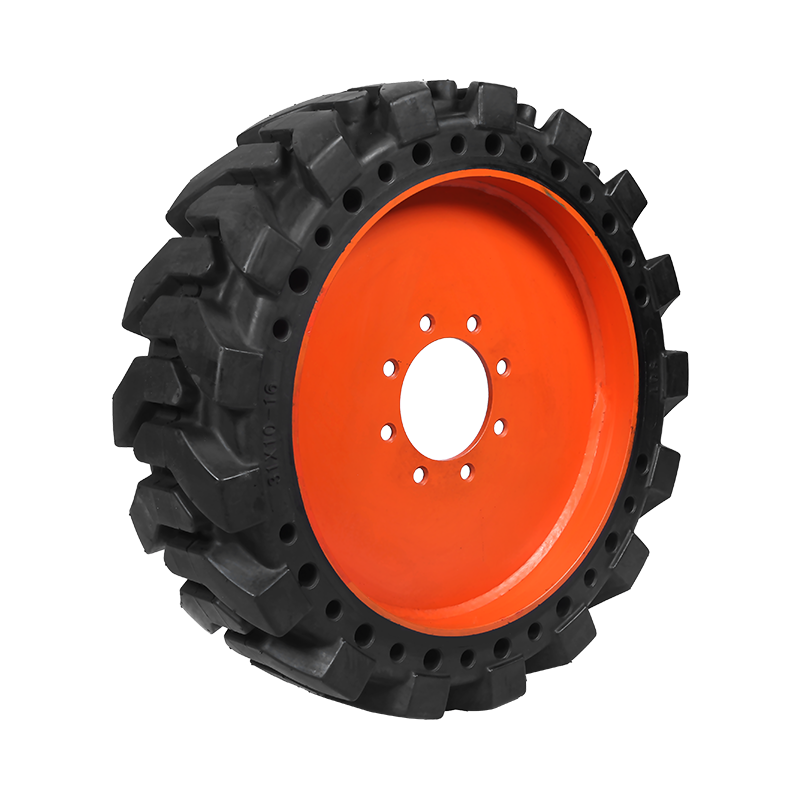
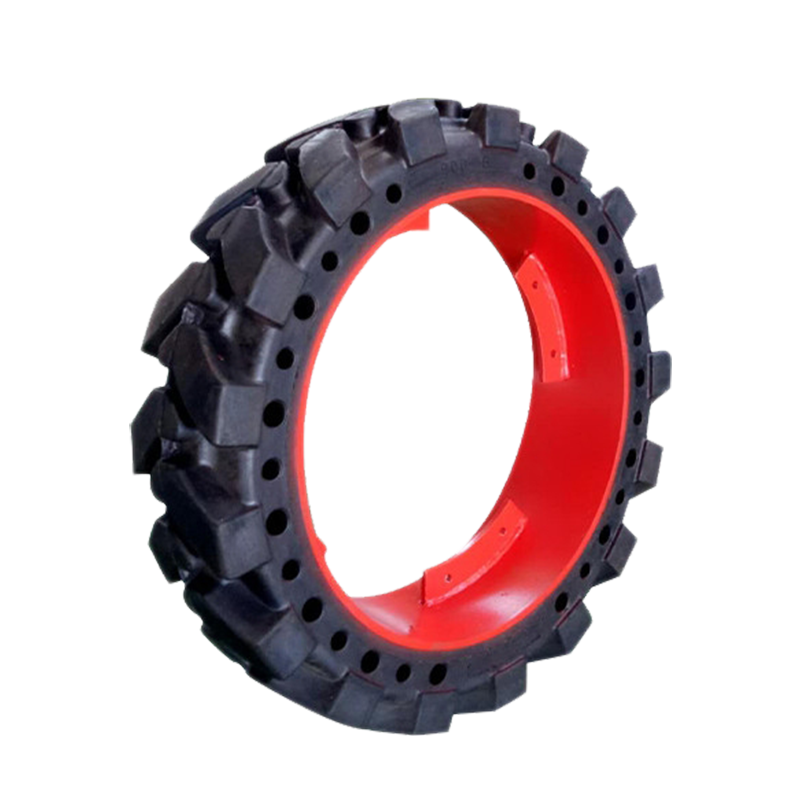
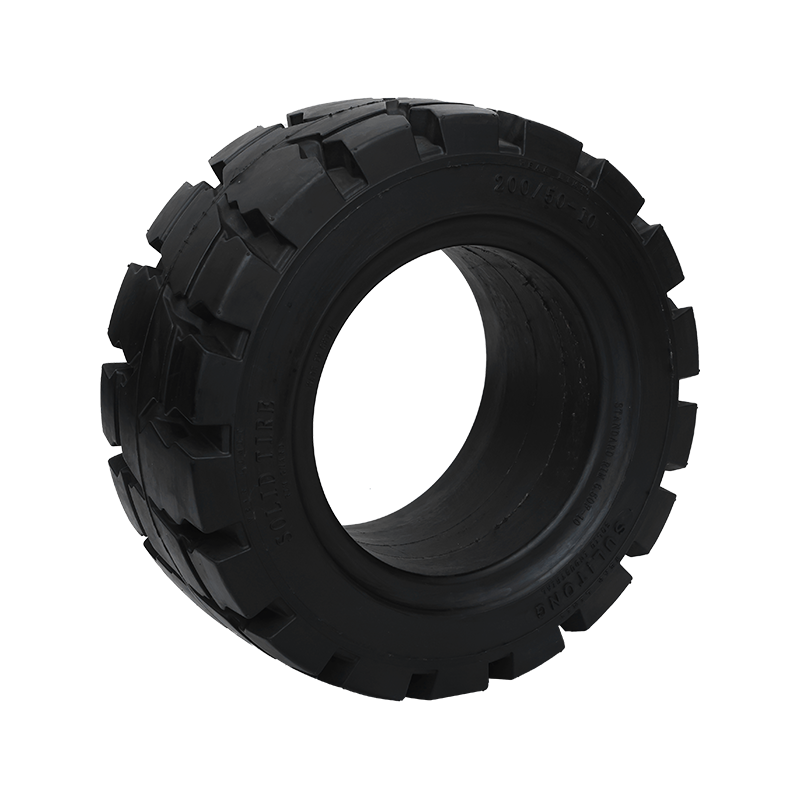
Block lug tread is used on rough-terrain Aerial Work Solid Tires — telehandlers and all-terrain boom lifts that operate on gravel, mud, or uneven ground. The raised blocks bite into loose surfaces for traction while the open shoulder design ejects packed material to prevent clogging. These tires are not intended for indoor or hard-floor use, as the aggressive pattern can damage floor surfaces and generates more vibration.
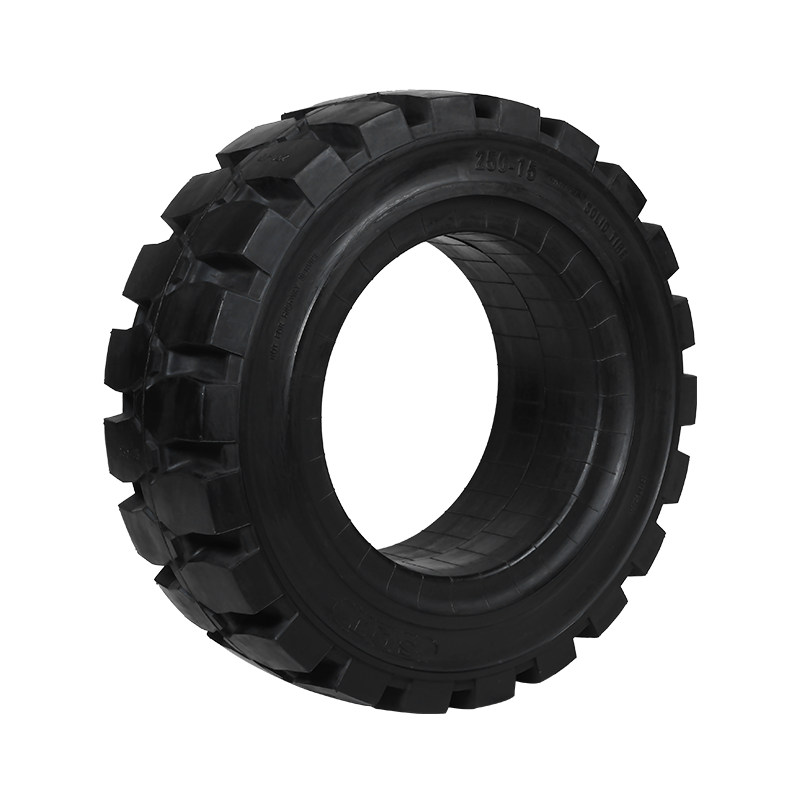
Load Rating and Size Specifications Explained
Selecting the correct size and load rating is non-negotiable for aerial work solid tires. Undersized tires compromise stability and can void the machine's certification. Oversized tires may interfere with wheel wells or alter the machine's geometry in ways that affect rated platform height and outreach.
Solid tire sizes follow the same nominal format as pneumatic tires — for example, 15×5–8 or 18×7–8 — where the three numbers represent the overall tire diameter, tread width, and rim diameter respectively, all in inches. When replacing tires on an existing machine, the OEM specification on the data plate should always be the reference point. Deviating from OEM size requires engineering sign-off and may require re-certification of the machine.
Load rating for aerial work solid tires is expressed as a static load capacity per tire at a given speed. Key figures to check when sourcing include:
- Static load capacity: The maximum weight the tire supports when the machine is stationary — the most relevant figure for AWP equipment that spends significant time parked under load.
- Dynamic load capacity: The weight rating during travel. On aerial platforms this is typically lower than the static rating since the machine is not elevated when driving.
- Shore hardness (Durometer): Measured on the Shore A scale, this indicates rubber compound firmness. Typical aerial work solid tires fall between Shore A 60 and Shore A 75. Higher hardness improves load capacity but reduces vibration damping.
Indoor vs. Outdoor Applications: Choosing the Right Tire for the Job
One of the most common sourcing mistakes is treating aerial work solid tires as a single product category when they are actually segmented by application environment. Using an outdoor lug tire indoors damages floors and shortens tire life. Using a smooth indoor tire on rough terrain creates traction problems and accelerates uneven wear. Matching tire specification to application is as important as matching size to machine.
Indoor Applications
- Specify non-marking, smooth-tread PU or rubber tires for warehouses, retail construction, and finished interiors
- Prioritize low rolling resistance to extend battery runtime on electric scissor lifts
- Check floor load limits — spreading tire contact area reduces PSI on sensitive floor systems
- Look for tires certified to OSHA and ANSI A92 requirements for indoor aerial equipment
Outdoor Applications
- Ribbed or lug tread solid rubber tires for construction sites, asphalt, and gravel yards
- Confirm UV and ozone resistance in the rubber compound for tires left outdoors for extended periods
- For all-terrain boom lifts, verify that tire diameter and tread width match the machine's ground clearance specification
- Consider tire sidewall reinforcement if the machine operates near curbs, ramps, or step-edges that create lateral impact loads
How Long Do Aerial Work Solid Tires Last — and What Wears Them Out Faster
Solid tires for aerial work platforms don't fail the way pneumatic tires do — there's no blowout moment. Instead, they degrade gradually through tread wear, chunking, cracking, or delamination from the rim. A well-specified solid tire on a properly maintained machine typically lasts between 1,000 and 2,000 operating hours, though this range varies significantly based on application and maintenance practices.
Factors that accelerate wear include:
- Overloading: Consistently operating above the machine's rated capacity compresses the tire core beyond design limits, accelerating fatigue cracking.
- Tight turning on hard surfaces: Spinning the drive tires during sharp turns on concrete scuffs tread and generates heat that degrades the rubber compound over time.
- Debris penetration: While solid tires can't be punctured, sharp objects like rebar fragments or metal shards can gouge the tread and create chunking initiation points.
- UV and ozone exposure: Tires stored or operated outdoors without UV-stabilized compounds develop surface cracking (ozone cracking) that compromises the sidewall over time.
- Incorrect rim fit: A tire mounted on a rim that doesn't match the specified bead seat diameter concentrates stress at the rim interface, leading to early delamination.
Inspection intervals should include checking tread depth (most manufacturers specify a minimum remaining tread depth before replacement), examining sidewalls for cracking or bulging, and verifying that the tire hasn't separated from the rim bead. Any lateral wobble during travel is an immediate indicator of rim separation and requires the machine to be taken out of service.
What to Look for When Sourcing Aerial Work Solid Tires at Volume
For fleet operators, rental companies, and equipment distributors sourcing solid tires for aerial work platforms in quantity, the purchasing decision involves more than unit price. Consistency of specification across a batch, availability of documentation, and supplier reliability all affect the total cost of ownership.
Key criteria to evaluate when selecting a supplier:
- OEM cross-reference capability: A reliable supplier should be able to cross-reference their tire specifications against major AWP OEM part numbers — JLG, Genie, Skyjack, Haulotte — and confirm fitment before the order ships.
- Material certifications: For non-marking tires specified in food, pharmaceutical, or sensitive-floor environments, request third-party test certification confirming the non-marking compound.
- Dimensional consistency: Solid tires produced to loose tolerances create fitment problems at installation. Request dimensional inspection reports, particularly on outside diameter and bead seat width, for large orders.
- Shore hardness documentation: Hardness directly affects load performance. Suppliers should provide Shore A hardness test results per batch, not just a nominal specification.
- MOQ and lead time flexibility: For fleet maintenance programs with varied machine inventory, the ability to order mixed sizes within a single purchase order reduces warehousing complexity and minimum spend requirements.
Direct manufacturer sourcing consistently delivers better specification control and lower per-unit cost compared to multi-tier distributor channels — particularly for orders above a few hundred units where the savings on markup and handling compound quickly across the order volume.

CONTACT US
-

Email: SMT001@saimeite-tyre.com
-

Phone: +86-18451337018No. 1, Renmin South Road, Yandu District, Yancheng City, Jiangsu Province, China