
 English
 한국어
한국어 Français
 Español

Automobile Tires Explained: Construction, Types, Ratings, and Maintenance
A delivery van began vibrating above 90 km/h last month. The mechanic found a bulge in the inner sidewall of a front tire — a failure invisible until the wheel was removed. Left unchecked, that tire could have blown out at highway speed. No other component on a vehicle carries such a heavy responsibility with so little attention. Tires support the load, generate traction, shorten braking distances, and absorb impacts that would otherwise hit the suspension directly. For anyone who owns, operates, or maintains vehicles, knowing how automobile tires are built, rated, and cared for is not optional technical detail; it is the foundation of safe, economical operation.
Content
- 1 What an Automobile Tire Actually Does
- 2 How a Modern Automobile Tire Is Constructed
- 3 Tire Categories and When to Choose Them
- 4 Reading the Sidewall: Size, Load, and Speed Ratings
- 5 Maintenance That Extends Tire Life and Safety
- 6 When to Replace Your Tires
- 7 The Heavy-Duty Counterpart: Industrial Solid Tires
What an Automobile Tire Actually Does
Before comparing tread patterns or brands, it helps to understand the job itself. A modern tire is a flexible pressure vessel with a carefully engineered tread surface. Its functions combine in ways that force trade-offs:
- Load support: the tire carries the vehicle weight through the contact patch, the area of rubber touching the road — roughly the size of a smartphone on a typical passenger car.
- Traction and braking: the tread compound and pattern convert engine torque and braking force into motion and stopping power on dry, wet, or loose surfaces.
- Steering precision: sidewall stiffness and the belt package transfer lateral forces, allowing the vehicle to respond predictably.
- Ride comfort: before the suspension moves, the air volume inside the tire is the first spring absorbing road irregularities.
- Fuel economy: rolling resistance accounts for a meaningful share of fuel consumption, and underinflated tires increase it.
Understanding these functions explains why no tire can be best at everything. A soft compound grips well but wears quickly; an aggressive tread works off-road but adds noise and heat. The construction details of an automobile tire shape every one of these trade-offs.
How a Modern Automobile Tire Is Constructed
Nearly all automobile tires sold today are radial-ply. Their construction is best understood as layers:
- Inner liner: a thin airtight rubber layer that keeps air contained without an inner tube.
- Body plies: cords, usually polyester or rayon, running radially from bead to bead to give the carcass strength.
- Belt package: steel or aramid cords wrapped under the tread; this stabilizes the tread, improves handling, and resists punctures.
- Tread: the thick outer rubber, compounded differently for summer, winter, or all-season use.
- Sidewall: flexible rubber connecting the tread to the bead, protecting the plies and displaying tire markings.
- Bead: a bundle of high-tensile steel wire that locks the tire onto the rim.
Bias-ply tires, with cords running diagonally in alternating layers, still appear on trailers, older trucks, and some off-road machinery. They are less expensive to build and have stiff sidewalls, but they run hotter and ride worse at highway speed. Radial construction is the standard for passenger vehicles because it rolls cooler, resists wear longer, and uses less fuel.
Tire Categories and When to Choose Them
The correct category depends on climate, road conditions, and driving style. Most passenger vehicles use one of the following:
| Category | Best For | Main Trade-off |
|---|---|---|
| All-season | Year-round use in moderate climates | Average performance in every condition |
| Summer or performance | Warm, dry and wet asphalt | Poor grip in snow and near-freezing temperatures |
| Winter or snow | Snow, ice, and low temperatures | Soft compound wears quickly in summer heat |
| All-terrain | Mixed gravel, dirt, and pavement | Higher noise and rolling resistance |
| Touring or grand-touring | High-speed highway cruising | Prioritizes comfort and tread life over sporty grip |
All-season tires dominate because they remove the need for seasonal changeovers in regions with mild winters. If your driving regularly involves snow and ice, a dedicated winter tire with the three-peak mountain snowflake symbol shortens braking distance by several car lengths on ice. Fleet managers often prefer a strong all-season with high treadwear numbers to reduce cost per mile, while enthusiastic drivers accept shorter tread life for the grip of a summer compound. Those priorities are exactly what a guide to tire performance, safety, and longevity helps you weigh before you buy.
Reading the Sidewall: Size, Load, and Speed Ratings
Every legitimate tire carries a standardized code on its sidewall. A common passenger size reads P215/65R15:
- P means passenger vehicle; LT indicates light truck, and no letter means metric sizing.
- 215 is the section width in millimeters.
- 65 is the aspect ratio, meaning sidewall height is 65 percent of the width.
- R denotes radial construction.
- 15 is the rim diameter in inches.
After the size, the load index and speed rating define the limits. The load index maps to a maximum weight per tire, and the speed rating indicates sustained speed capability. Matching the vehicle's original specification matters for a practical reason.
| Speed Rating | Max Speed (km/h) | Typical Use |
|---|---|---|
| S | 180 | Family sedans, many winter tires |
| T | 190 | Family sedans, touring tires |
| H | 210 | Sport sedans and hot hatches |
| V | 240 | Performance sedans |
| W | 270 | High-performance sports cars |
| Y | 300 | Supercars and track-capable models |
Installing a tire with a lower speed rating than the vehicle specification is risky because the tire builds heat beyond its design limit at high speed, raising the chance of tread separation. Load capacity is even more critical: an overloaded tire flexes excessively, runs hot, and can fail without warning. Both numbers should be checked before any tire is fitted.
Maintenance That Extends Tire Life and Safety
Tires wear unevenly by nature, but simple scheduled maintenance keeps them predictable and economical.
- Inflation pressure: check monthly when tires are cold, using the pressure printed on the door placard, not the maximum pressure molded into the sidewall. Underinflation wears the shoulders and builds heat; overinflation hardens the ride and wears the tread center.
- Rotation: rotate every 8,000 to 12,000 km following the pattern recommended by the vehicle manufacturer, because front and rear tires wear at different rates.
- Wheel alignment: a single hard curb impact can upset alignment; one-sided edge wear is a symptom worth checking.
- Tread depth: most jurisdictions require at least 1.6 mm (2/32 inch) of tread. Below this, the tire cannot evacuate water effectively and hydroplaning risk rises sharply. The raised wear indicators molded into the grooves appear flush with the tread when the limit is reached.
- Age: rubber degrades even without mileage. Most manufacturers recommend replacing tires at six to ten years from the production date, indicated by the DOT code on the sidewall, regardless of remaining tread.
When to Replace Your Tires
Replacement decisions are not only about tread depth. Tires must be replaced when any of the following is present:
- Cracks or cuts in the sidewall that expose cords
- Bulges or blisters, which signal internal ply separation
- Persistent vibration or pull after balancing and alignment
- Multiple punctures in one tire, or any puncture in the sidewall
- Tread worn below the wear indicators, or worn so unevenly that balancing cannot compensate
The coin test is a useful field check: insert a coin into the tread groove headfirst, and if the top of the figure remains visible, the tread is near or below the minimum. Yet a tire with legal tread can still be unsafe if it is old, cracked, or repaired too many times. On all-wheel-drive vehicles, replacing a single tire creates a diameter mismatch that stresses the driveline; the two tires on the same axle should always be replaced together, and diameters should be matched within a few millimeters.
The Heavy-Duty Counterpart: Industrial Solid Tires
The same engineering logic applies beyond passenger cars. Forklifts, boom lifts, scissor lifts, wheel loaders, and gantry cranes all depend on tires for safety and productivity, but in industrial environments a flat tire can stop an entire operation. That is why pneumatic tires are frequently replaced with solid or foam-filled alternatives that eliminate air pressure and puncture-related downtime.
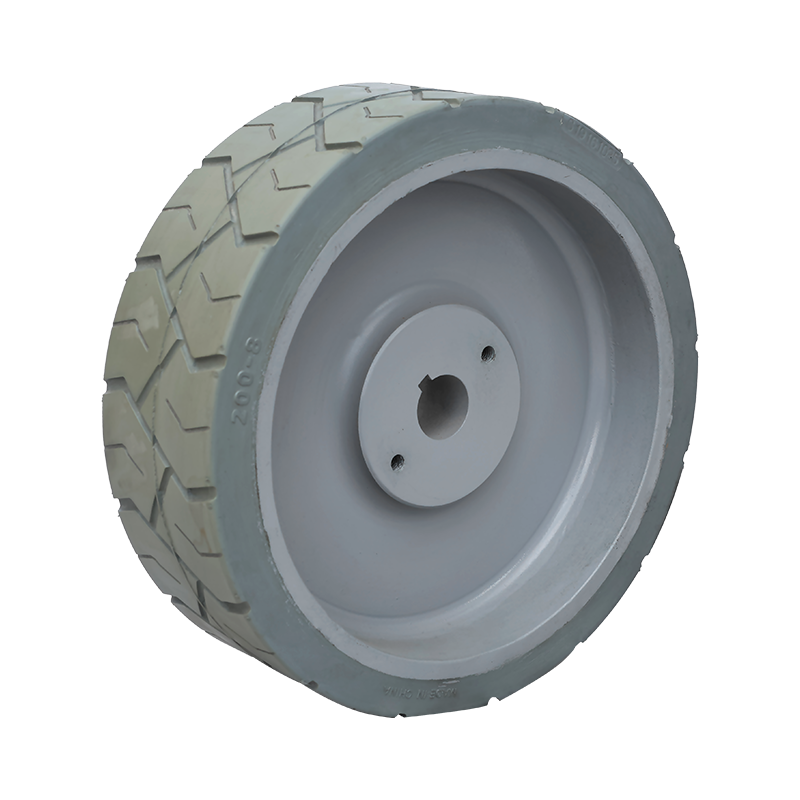
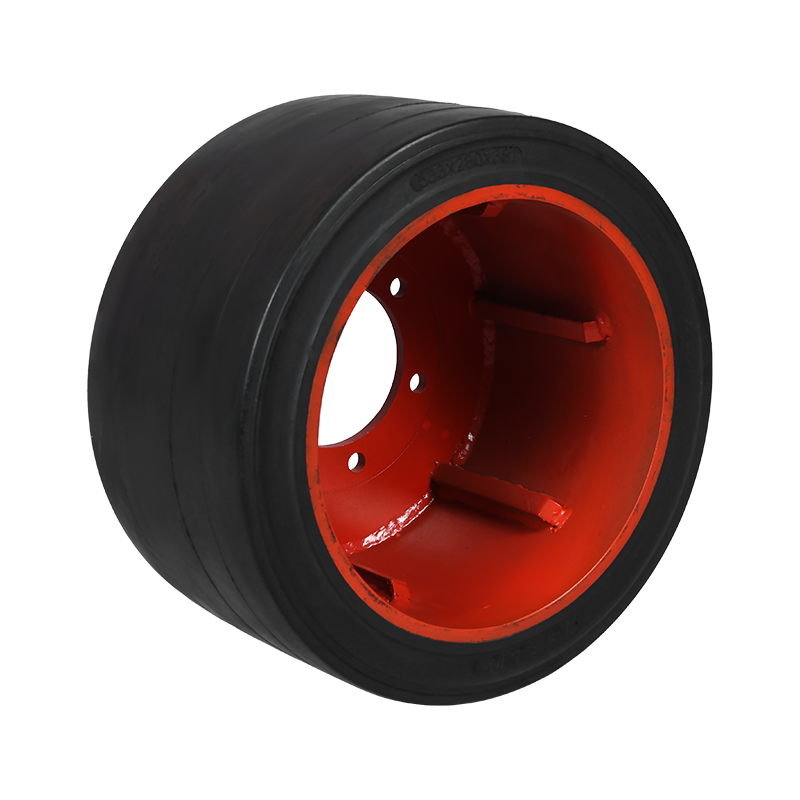
Press-on solid tires, for example, are bonded to a steel base and common on forklifts operating on warehouse floors, where stable load support and low maintenance matter more than comfort.
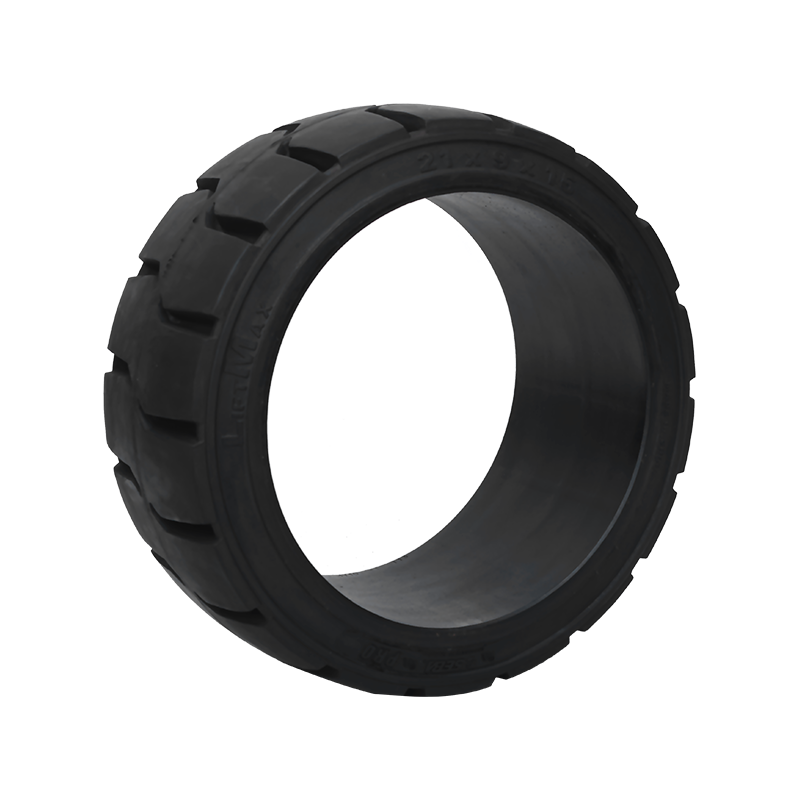 Press-On Solid Tires with Steel Rim for TrailersThese solid tires are designed for flat warehouse and trailer use, offering low rolling resistance and stable load support. Their steel rim construction prevents rubber detachment, making them a practical choice for forklifts and industrial equipment.View Product →
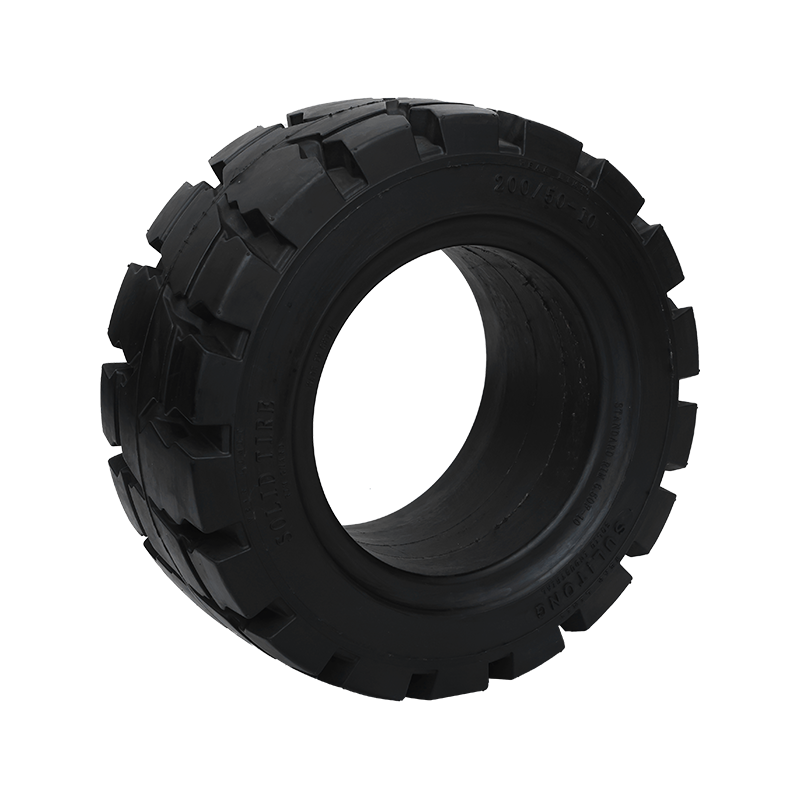
Foam-filled tires keep the appearance and ride characteristics of a pneumatic tire while remaining immune to most punctures, which makes them effective on construction sites covered with nails, rebar, and scrap metal, especially on aerial work platforms.
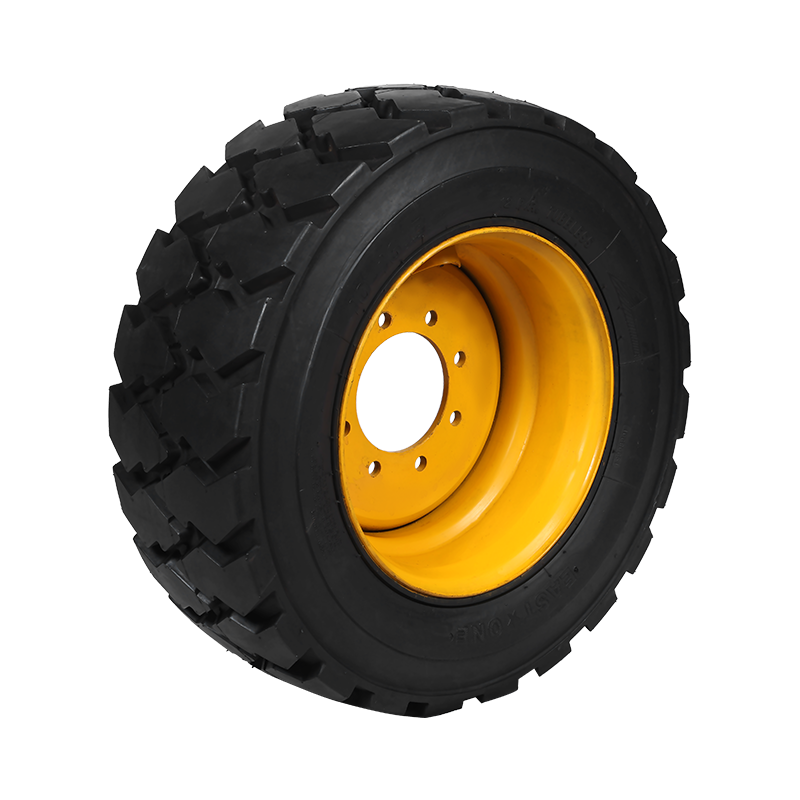 Foam-Filled Tires for Puncture Resistance on Construction SitesThese puncture-immune tires combine a pneumatic-like ride with solid tire stability, allowing continuous operation on debris-strewn sites. They suit aerial work platforms and machinery exposed to nails and scrap metal, minimizing downtime.View Product →
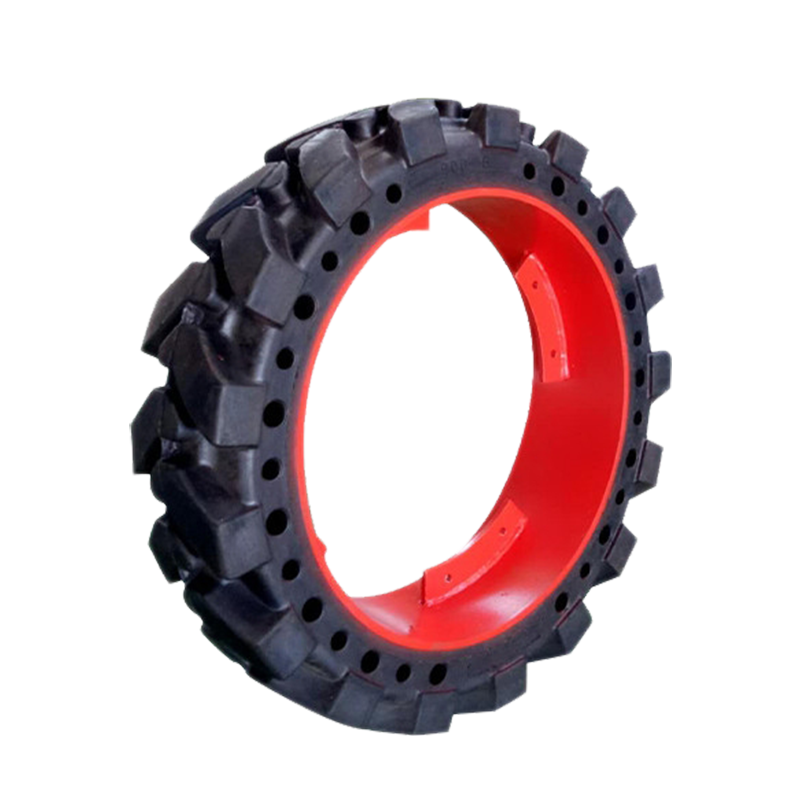
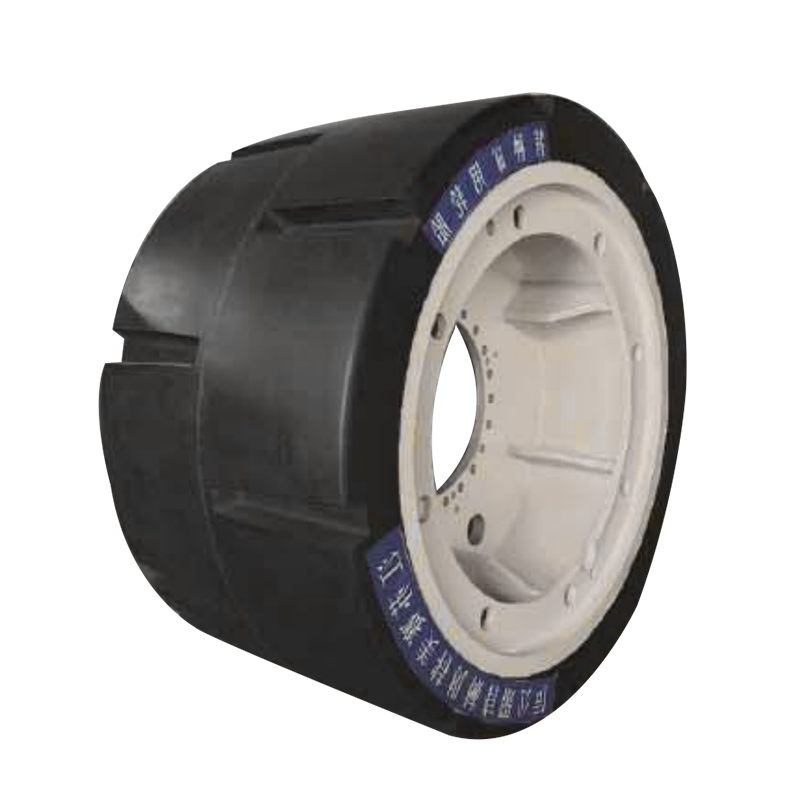
For mobile construction equipment such as skid steer loaders, tire selection depends on load capacity, tread pattern, and sidewall puncture resistance under heavy forces, the same balancing act as a car tire but at a much larger scale.
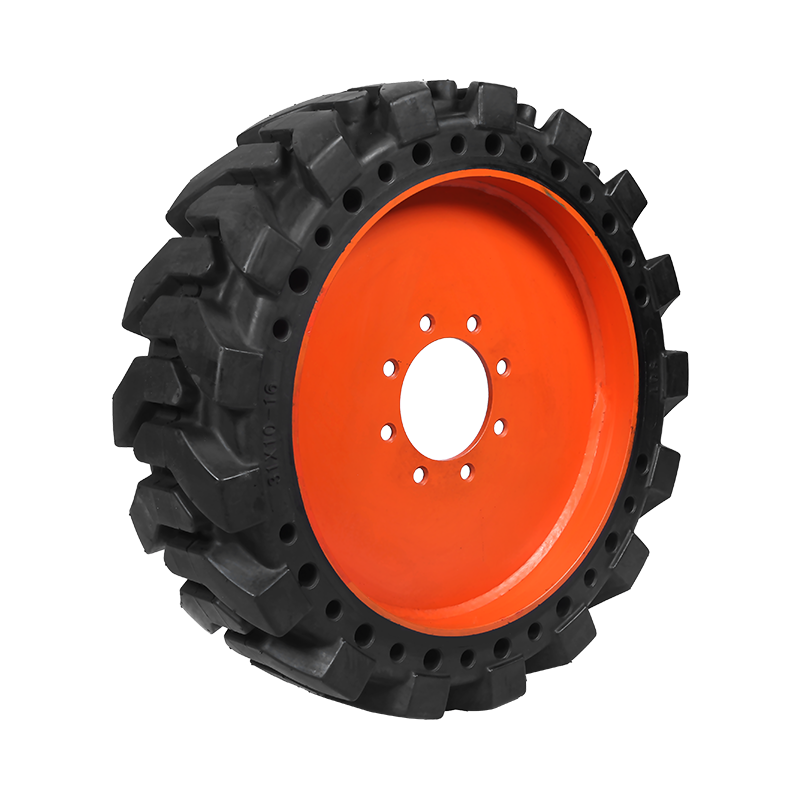 Skid Steer Tires with Deep Tread for Heavy-Duty TractionDesigned with a large-pitch transverse pattern, these tires provide strong grip and cut resistance for mobile construction equipment. Their wider pattern enhances stability and steering, making them reliable for skid steer loaders in demanding conditions.View Product →
Tires are among the highest-value components on any vehicle when measured by safety impact per dollar spent. The practical rules are simple: choose the category that matches your climate and use, respect load and speed ratings, check pressure monthly, and replace the tire when wear or age reaches the limits. Whether the vehicle is a family sedan, a delivery van, or a forklift moving pallets in a warehouse, the tire is the only part that meets the ground. Choose it deliberately, and maintain it consistently.



CONTACT US
-

Email: SMT001@saimeite-tyre.com
-

Phone: +86-18451337018No. 1, Renmin South Road, Yandu District, Yancheng City, Jiangsu Province, China