
 English
 한국어
한국어 Français
 Español

Bracket Truck Tires: A Practical Guide for Industrial Fleet and Port Yard Managers
Search for the phrase bracket truck tires and you will land in two different industries at the same time. One of them is drag racing, where "bracket" describes a style of competition and the rubber involved is a soft, sticky racing slick. The other is heavy industry, where a bracket truck is a piece of yard equipment and the tires are thick, load-bearing industrial rubber built to survive years of stop-start work. This guide deals with the second world.
We have been building and supplying industrial tires for material handling and construction equipment for years, and bracket truck tires are among the questions our customers raise most often. The difficulty is that the term itself is not standardized, so before comparing compounds and tread depths it helps to agree on what the machine actually is, what it carries, and how it is used.
Content
- 1 What Counts as a Bracket Truck
- 2 Why Tire Choice Matters So Much Here
- 3 Construction Options for Bracket Truck and Crane Tires
- 4 Specifications to Confirm Before You Order
- 5 Matching the Tire to the Operating Surface
- 6 Maintenance Habits That Stretch Tire Life
- 7 How We Support Bracket Truck and Crane Fleets
What Counts as a Bracket Truck
In ports, railway freight yards, steel plants and container depots, "bracket truck" is a loose label. It gets applied to low-profile heavy-duty transfer vehicles, to the yard trucks that shuttle trailers between quays and stacks, and sometimes to the end carriages and trolley assemblies that sit beneath a gantry crane. Different regions and different manufacturers use the word in different ways, and some fleets call the same machine a yard hustler, a straddle carrier, a coil buggy or simply a transfer truck.
What stays consistent is the duty. These machines carry very heavy loads at very low speeds, they start and stop constantly, and they spend their working lives on concrete, steel decking or hard-packed gravel. A tire in that role is not asked to deliver comfort or grip at highway speed. It is asked to hold its shape under load, resist cuts and heat, and do the same thing again tomorrow. That is why the first practical step in tire selection is not the tire at all, but the machine specification: laden weight, number of wheels in contact, load per wheel, rim type, and the working height the unit has to maintain.
Why Tire Choice Matters So Much Here
On a passenger car, a tire is a consumable. On a bracket truck or a gantry crane, it is closer to a structural part of the handling system. Outer diameter sets ground clearance and working height. Section width decides how the load spreads across the floor. Load capacity defines the safe working limit of the whole unit.
The economics are equally blunt. Yard equipment earns money by moving loads, and a tire failure takes a machine out of service at exactly the moment the yard is busiest. Experienced fleet managers therefore look at cost per operating hour rather than purchase price, and they would rather buy a heavier, correctly specified tire once than replace a cheap one twice in the same season.
Construction Options for Bracket Truck and Crane Tires
Most industrial fleets choose between three constructions. Each solves a different problem, and each has a trade-off worth understanding before you commit a whole fleet to it.
Press-On Solid Tires
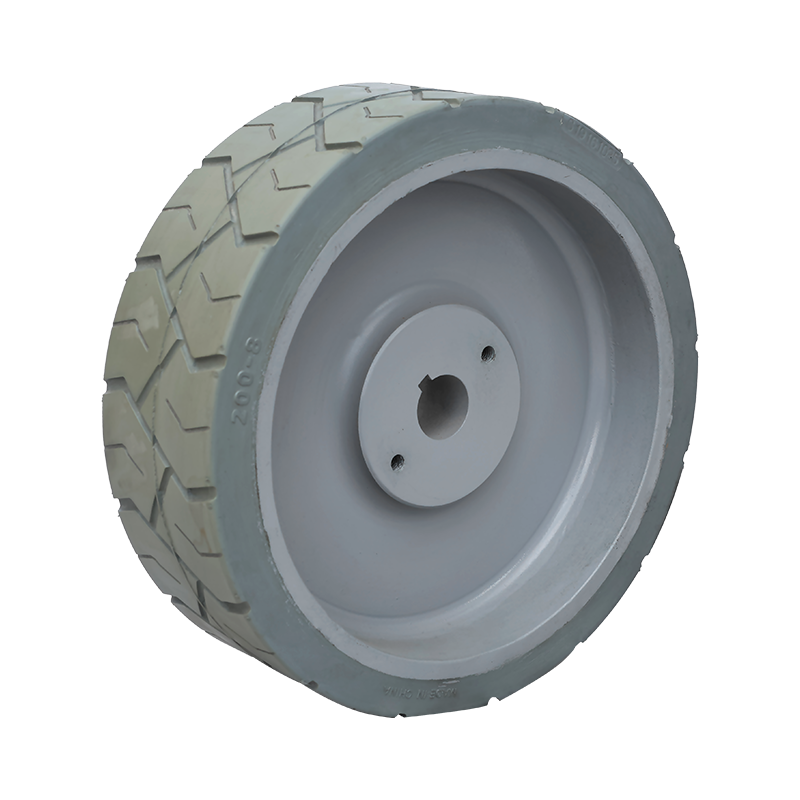
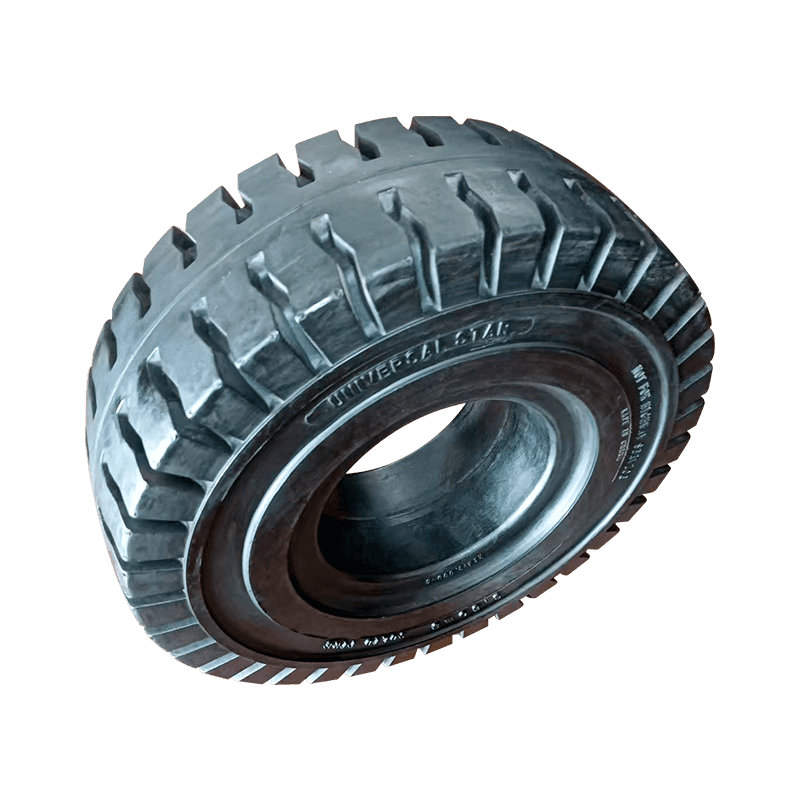
A press-on solid tire is a thick rubber band pressed onto a steel rim under high interference. There is no air cavity to puncture, no sidewall to flex badly, and no flat to repair. The result is excellent load capacity and a very stable footprint, which is exactly what gantry cranes and heavy transfer trucks need at low speed on prepared surfaces. Wear is gradual and visible, so replacement can be planned instead of improvised. The trade-off is ride quality and a speed limit that must be respected.
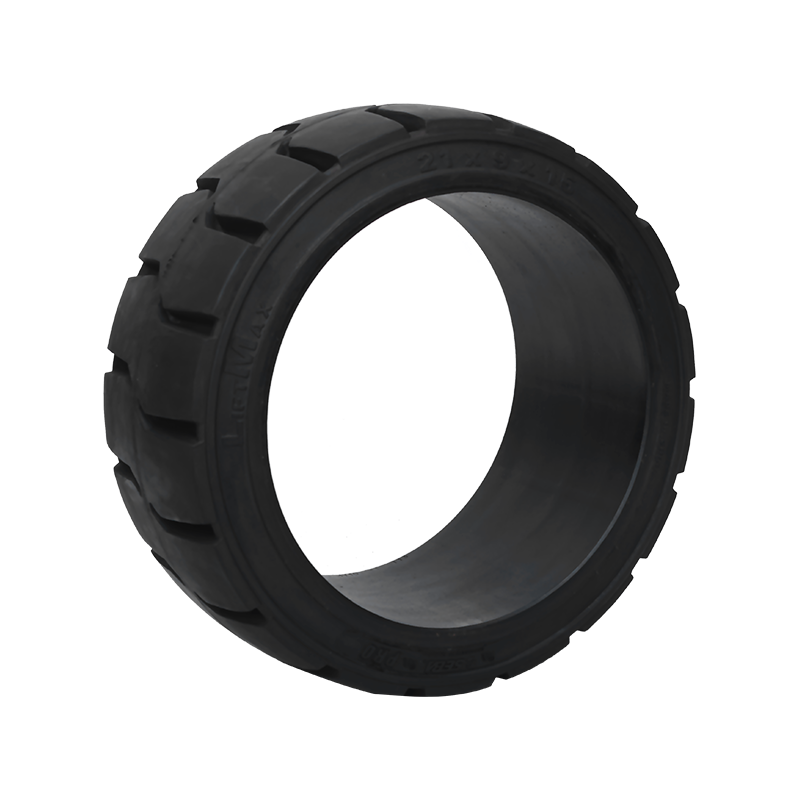 Press on solid tyresIt has a strong road grip, braking performance, stable and safe driving with load, small rolling resistance, and extremely low energy consumption. It is used in traile...View Product →
Foam-Filled Tires
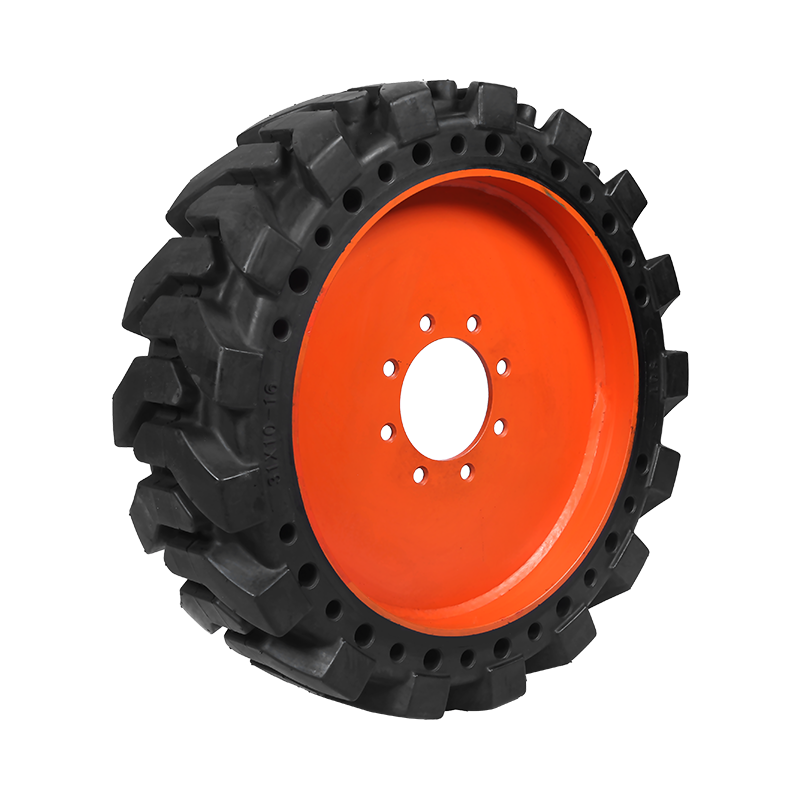
A foam-filled tire begins as a pneumatic casing and is filled with a resilient polyurethane compound. It becomes puncture-proof while keeping some of the cushioning and grip of an air-filled tire. Fleets choose this route when a machine works outdoors on rougher ground, or when existing pneumatic tires have to be converted without changing rims and hubs. Foam filling adds weight, so axle loadings should be recalculated before conversion, not after.
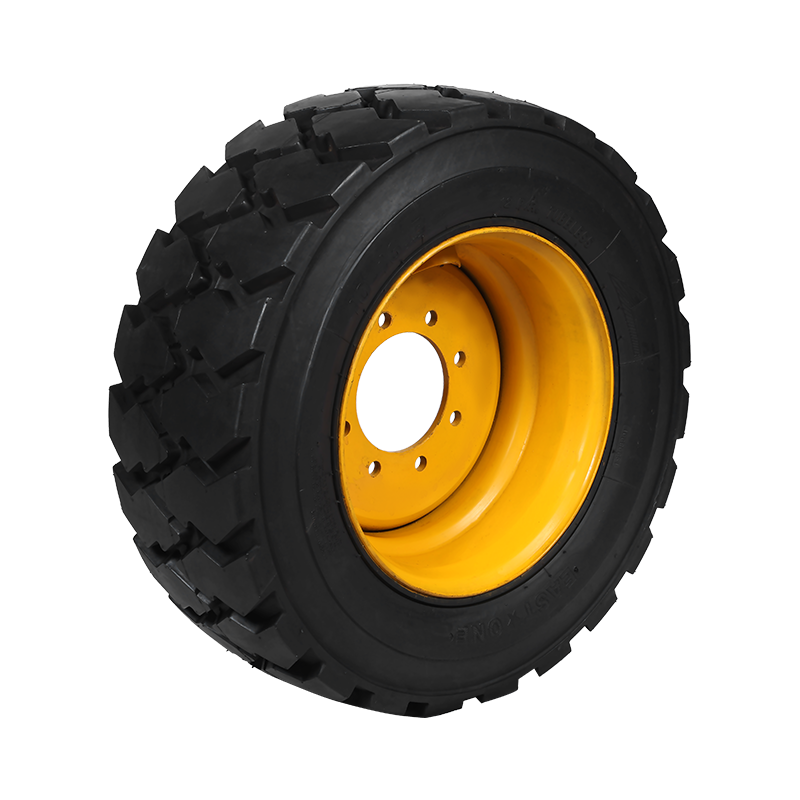 Foam filled tiresCombining the advantages of pneumatic tires and solid tires, it not only has the high load-bearing capacity and stability of solid tires, but also has the high elastic...View Product →
Heavy-Duty Pneumatic Tires
Where travel distances are longer, or surfaces are rough enough to punish a solid tire, a heavy-duty pneumatic or semi-solid tire can still be the better answer. It absorbs shock, protects the drivetrain and rolls more easily, but it brings back the risk of punctures and the routine of pressure checks. For yards littered with swarf, scrap or nails, that risk is usually too high.
Specifications to Confirm Before You Order
The table below collects the data points that most often cause a wrong order. It is worth completing before you contact any supplier, including us.
| Parameter | Why it matters | What to check |
|---|---|---|
| Outer diameter | Sets ground clearance and working height | Measure tires in service, not just the manual |
| Width and section | Affects stability and load spread | Confirm frame and fender clearance |
| Center bore and rim fit | Press-on bands rely on precise interference | Record rim part numbers and wear |
| Load capacity per tire | Defines the safe limit of the machine | Divide laden axle load, then add margin |
| Tread pattern and depth | Controls traction and floor marking | Smooth for concrete, lugged for gravel |
| Compound hardness | Balances cut resistance against heat | Harder lasts longer but runs hotter |
| Rated speed | Industrial tires are low-speed by design | Never use them on road-going trucks |
Matching the Tire to the Operating Surface
The same bracket truck can wear two very different tires depending on where it works, so surface conditions deserve as much attention as load figures.
- Container terminals and indoor concrete: smooth or lightly patterned tread, non-marking compounds where floor appearance matters, high load capacity.
- Railway yards and mixed gravel: deeper patterns for traction and cut-resistant compounds that survive ballast and embedded rail fixings.
- Steel mills and foundries: heat-resistant compounds and robust sidewalls, accepting a shorter service life in exchange for reliability near hot material.
- Cold stores and refrigerated docks: compounds that stay flexible at low temperature instead of hardening and cracking.
Gantry crane applications add one further constraint. Because the crane travels on rails or a prepared track, dimensional accuracy and consistent diameter across the set matter as much as tread design. We looked at that in more detail in our article on the role of gantry crane tires in industrial applications.
Maintenance Habits That Stretch Tire Life
- Inspect weekly for flat spots, chunking, embedded metal and sidewall cracking.
- Record tread depth and rotate positions when a set wears unevenly.
- Feel for heat after a shift; a tire that is hot to the touch is overloaded or misaligned.
- Keep the yard clean, since even the toughest solid tire suffers from steel swarf.
- Track cost per operating hour rather than purchase price.
- Store spare bands flat, out of sunlight and away from ozone sources.
How We Support Bracket Truck and Crane Fleets
Jiangsu Saimeite Machinery Co., Ltd. has been supplying industrial tires and running-gear components from Jiangsu, China since 2009. Our production site covers around 30,000 square meters, and our published annual supply figures include 100,000 solid rubber tires, 100,000 shock absorbers, 200,000 track pads and 100,000 steel rims. We work to ISO 9001 quality management and have delivered large-volume programs for overseas equipment manufacturers, including a multi-year aerial work platform tire contract in North America.
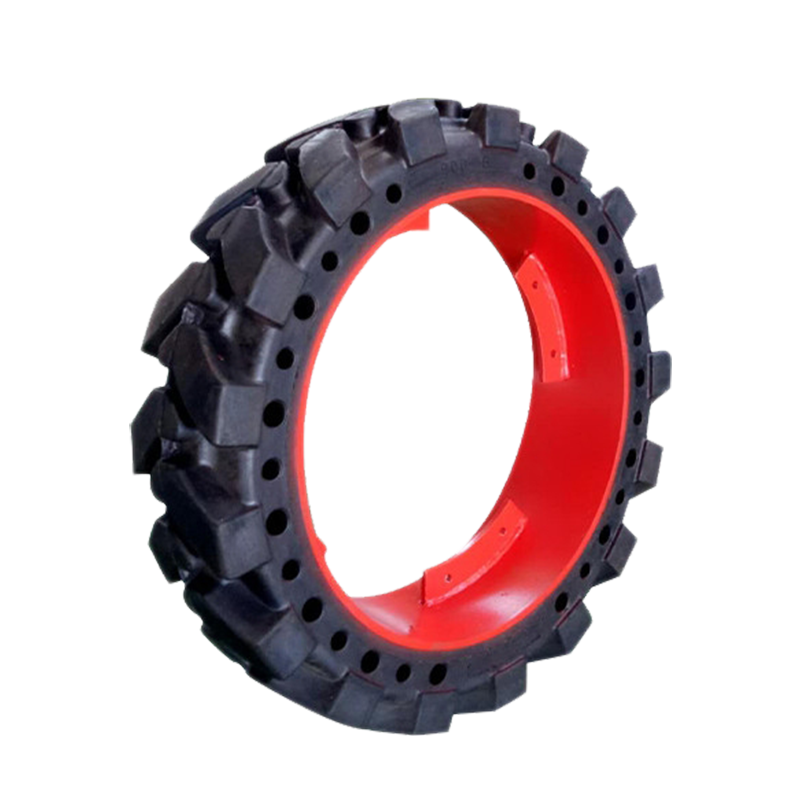
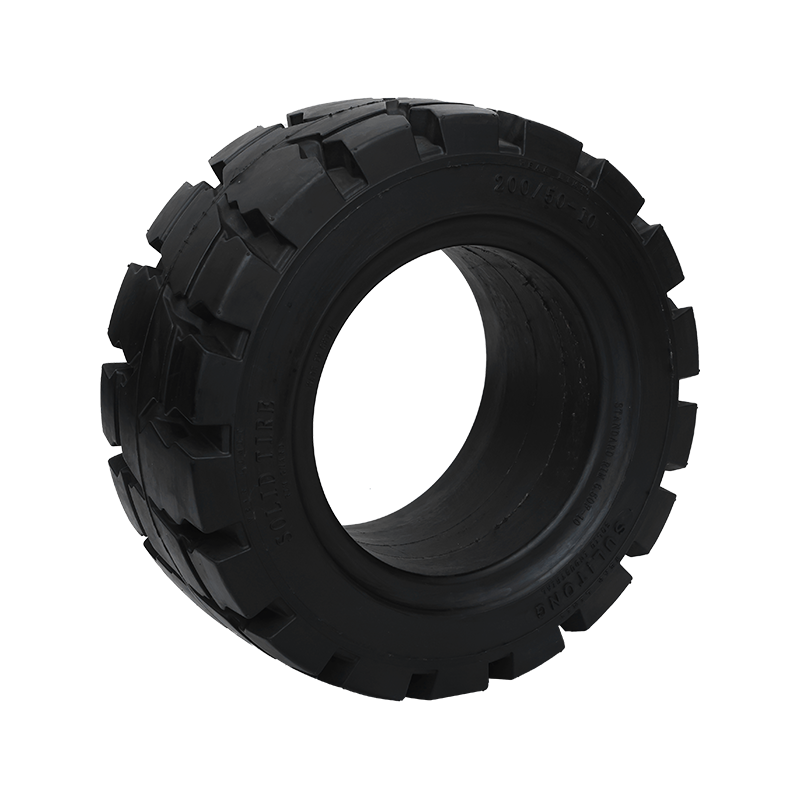
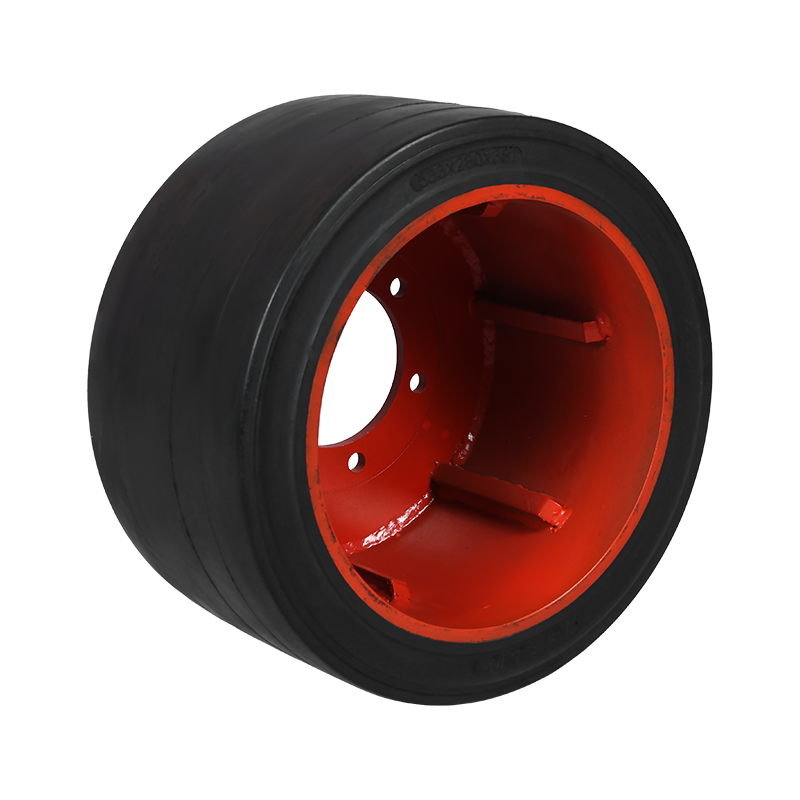
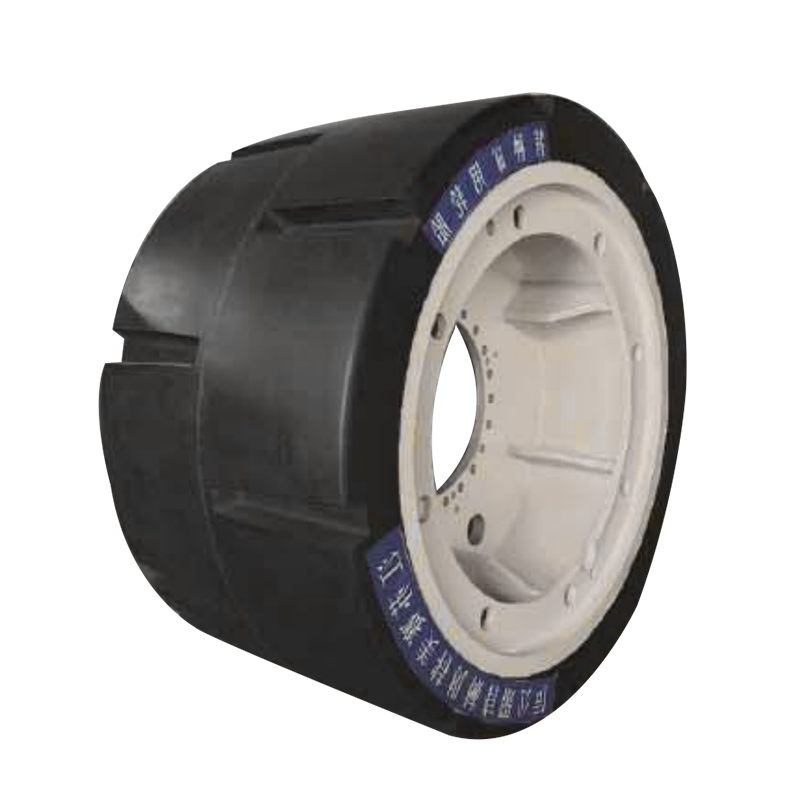 Bracket truck and gantry crane tireThis tire is specially designed for the mining industry. It is used on support trucks and support trailers to provide high-load-bearing transportation or support funct...View Product →
Our bracket truck and gantry crane tire range is built for exactly the duty described above: high load, low speed, long hours and very little tolerance for downtime. Because we also produce rims and related components, we can discuss a complete wheel assembly rather than a tire alone, which usually removes a whole layer of fitting problems.
If you would like to review dimensions, compounds or load ratings before requesting a quotation, our downloadable resource page holds the technical documents we share with customers. When you do get in touch, it helps to send the machine's laden weight, the number of wheels, the rim designation, the typical travel surface and the shift pattern. With those five facts we can normally recommend a construction and a size in a single reply.
Bracket truck tires are a small line in a yard's budget and a very large factor in its uptime. Get the construction right, verify the dimensions, maintain them with a little discipline, and the machines keep moving.
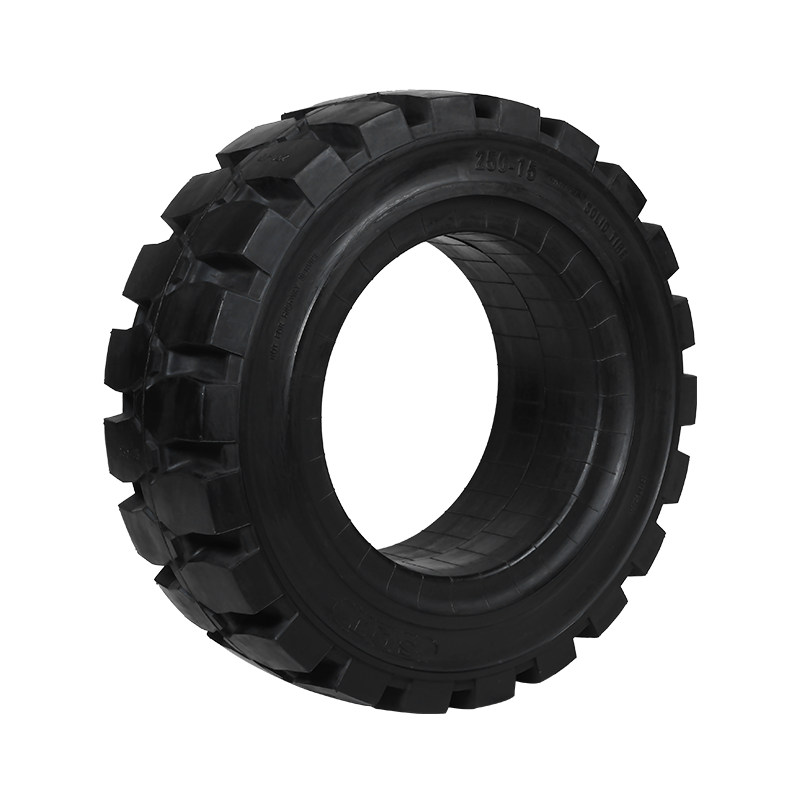



CONTACT US
-

Email: SMT001@saimeite-tyre.com
-

Phone: +86-18451337018No. 1, Renmin South Road, Yandu District, Yancheng City, Jiangsu Province, China