
 English
 한국어
한국어 Français
 Español

Construction Equipment Tires: A Practical Buyer's Guide for Fleets and OEMs
Construction equipment tires rarely fail at a convenient moment. A flat on a wheel loader stops the stockpile; a torn sidewall on a skid steer ends the shift early. Our factory has been producing solid and specialty tires for industrial and off-highway machines since 2009, and one lesson keeps repeating: most premature failures trace back to a specification mismatch or a maintenance habit, not to a bad batch of rubber. This guide explains what these tires endure, how the main constructions compare, and how to match a tire to the machine in front of you.
Content
What Construction Equipment Tires Have to Survive
A tire on a construction machine spends its working life at low speed but under brutal torque and load. It steers while standing still, rolls over rebar and broken concrete, and works in dust, slurry, and the occasional puddle of fuel or hydraulic oil. Unlike a highway truck, most of these machines have limited suspension travel, so the tire absorbs impacts that would otherwise reach the frame.
- High load at low speed. A loader may carry several tonnes on four tires and creep at walking pace under full bucket weight for hours, which builds internal heat and stresses the bead area.
- Puncture and cut risk. Rebar, screws, glass, sharp gravel, and demolition debris sit exactly where tires roll. Air-filled tires lose pressure; solid tires resist better but still suffer sidewall damage against curbs and steel edges.
- Abrasion. Concrete dust, asphalt millings, and slag act like grinding paste, so tread and sidewall compounds must balance cut resistance against wear life.
- Pivoting and scrubbing. Loaders, skid steers, and compact machines turn hard on the spot, scrubbing rubber against the surface. Flat spots and rapid shoulder wear usually begin here.
- Contamination. Oil, solvents, and hot surfaces degrade rubber faster than normal wear does.
The practical consequence is simple: construction tire selection has to begin with the job, not with the catalogue.
Solid, Foam-Filled, or Air-Filled: Three Constructions Compared
Almost every tire on a construction or industrial machine follows one of three constructions. Each solves a different problem and each carries its own trade-offs in ride quality, cost, and repair options.
Solid and Press-On Tires
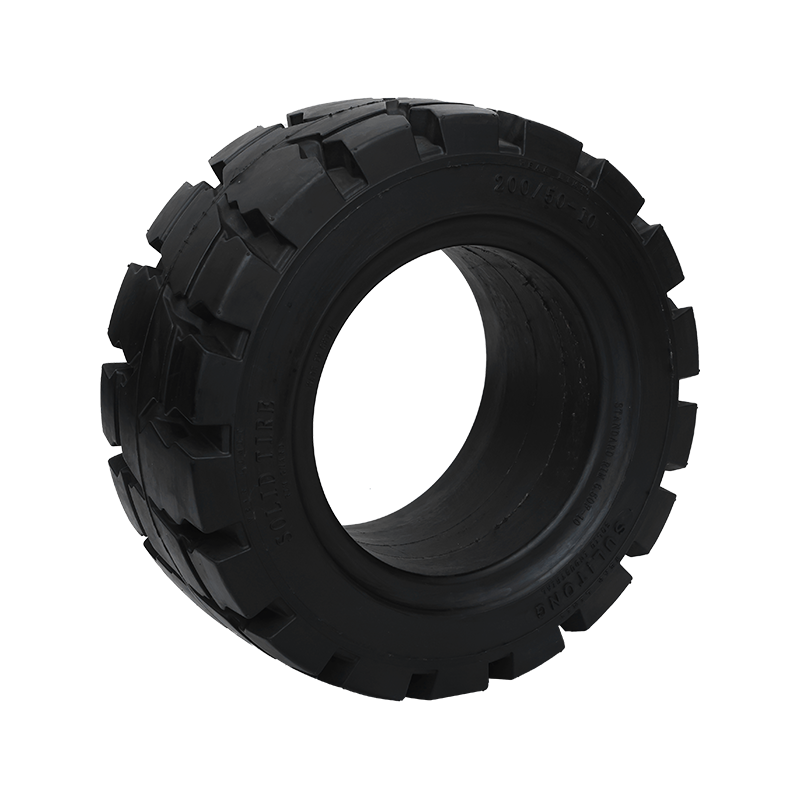
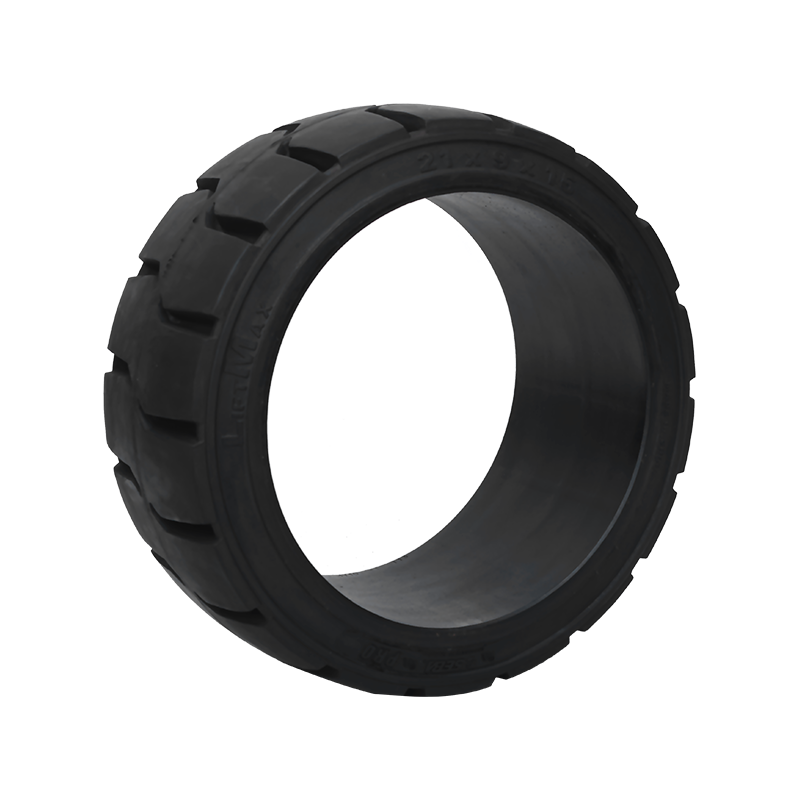
Solid rubber tires carry the load in a thick rubber body instead of air. Press-on solid tyres are pressed onto a steel band or rim and are standard on forklifts and other industrial trucks. They cannot be punctured flat, hold their shape under heavy loads, and last a long time in abrasive environments. The trade-offs are a firmer ride, greater shock transfer to the machine, and the need to replace them before the rubber reaches its minimum thickness.
Foam-Filled Tires
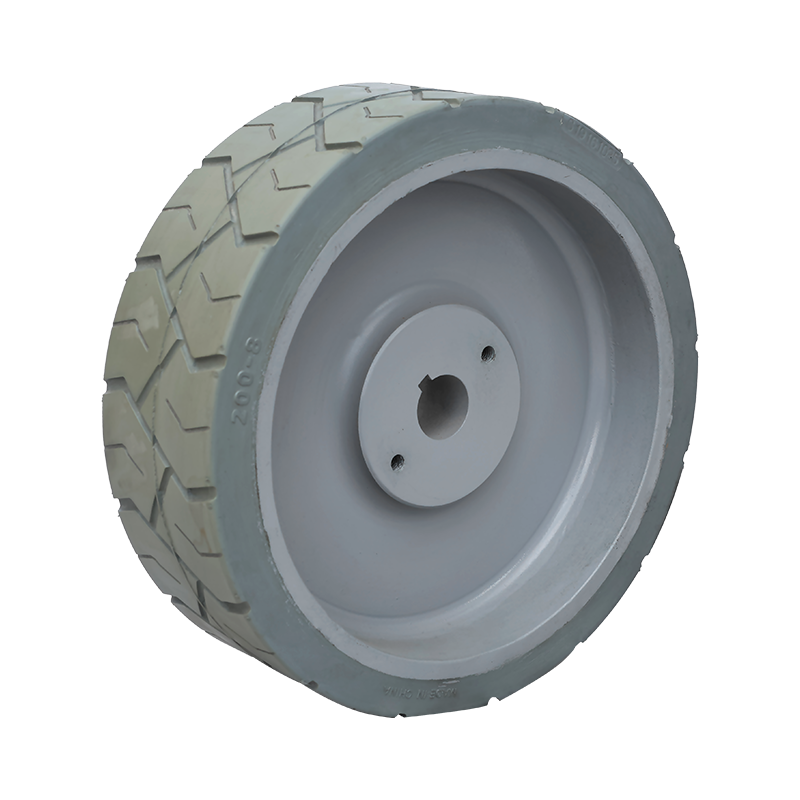
Foam-filled tires begin as pneumatic casings and are filled with a foam compound instead of air. They keep a more forgiving ride than a pure solid tire, cannot be deflated by a nail, and are widely used on aerial work platforms, where a flat tire at height is a safety issue as much as a schedule problem. Their main limitations are added weight and the fact that a damaged casing usually cannot be repaired.
Air-Filled and Pneumatic Tires
Pneumatic tires still make sense on larger machines that travel at higher speeds or cover long distances, such as wheel loaders moving between stockpiles or machines that must travel on public roads. They offer the best ride and the lowest purchase price, but they demand disciplined pressure checks and accept a genuine risk of punctures and sidewall cuts in demolition and recycling work.
| Tire construction | Puncture resistance | Ride comfort | Typical machines | Key maintenance point |
|---|---|---|---|---|
| Solid and press-on | Excellent | Firm, higher shock transfer | Forklifts, industrial trucks, some platforms | Replace before minimum rubber thickness |
| Foam-filled | Excellent | Moderate | Boom lifts, scissor lifts, rough yards | Watch for casing damage and foam separation |
| Pneumatic | Low to moderate | Best | Wheel loaders, road-travel machines | Pressure checks and sidewall inspection |
Matching Tires to the Machine in Front of You
Wheel loaders work in quarries, yards, and road projects, carrying heavy bucket loads over uneven ground. Tire selection here balances cut resistance, tread depth, and load capacity. A deep, reinforced tread helps on abrasive ground, and the rim and inflation pressure must match the machine's rated load at its actual working speed.
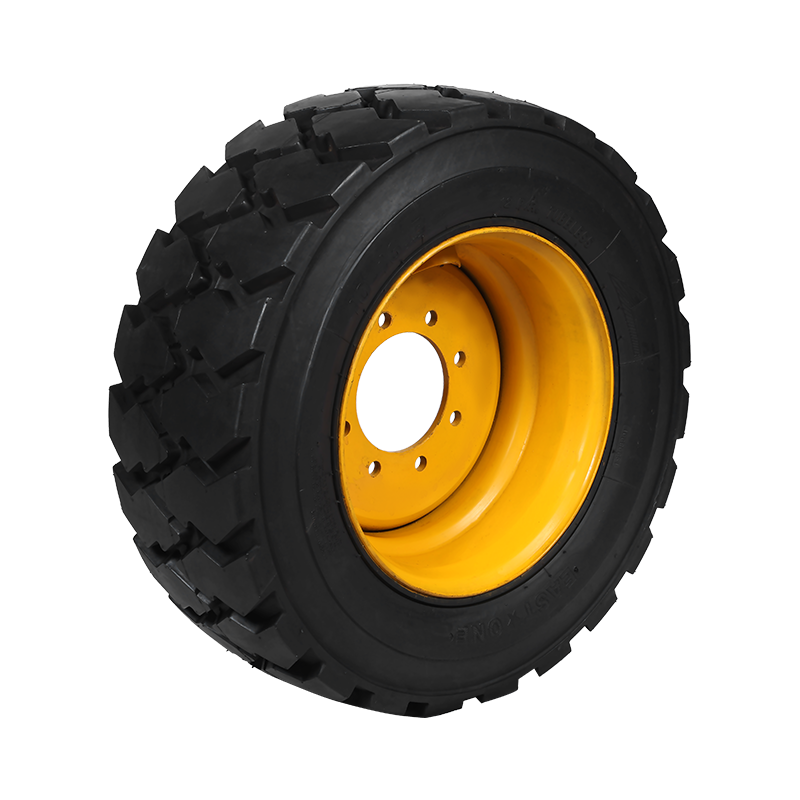
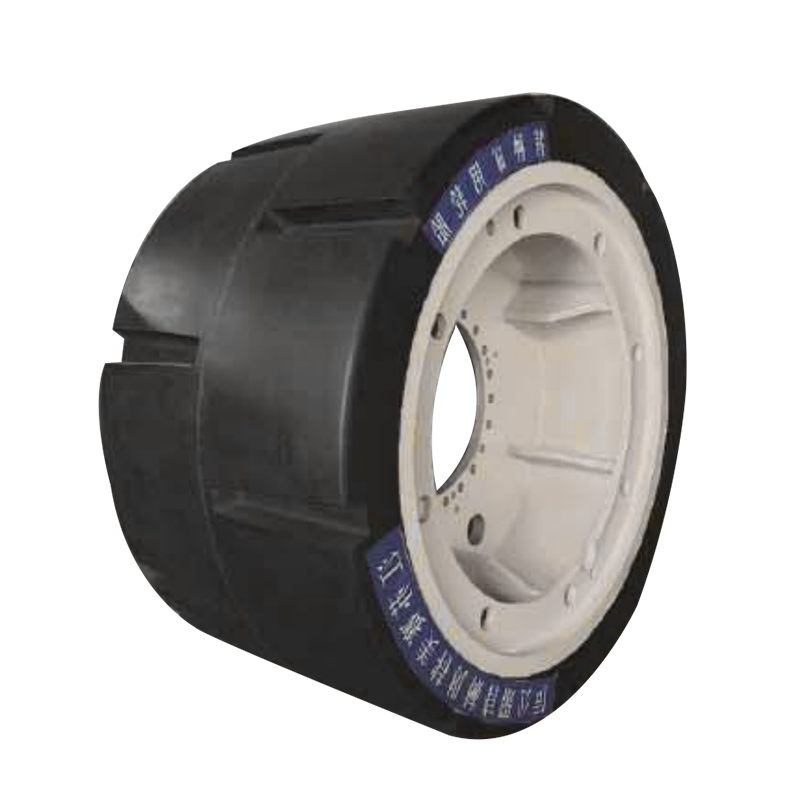
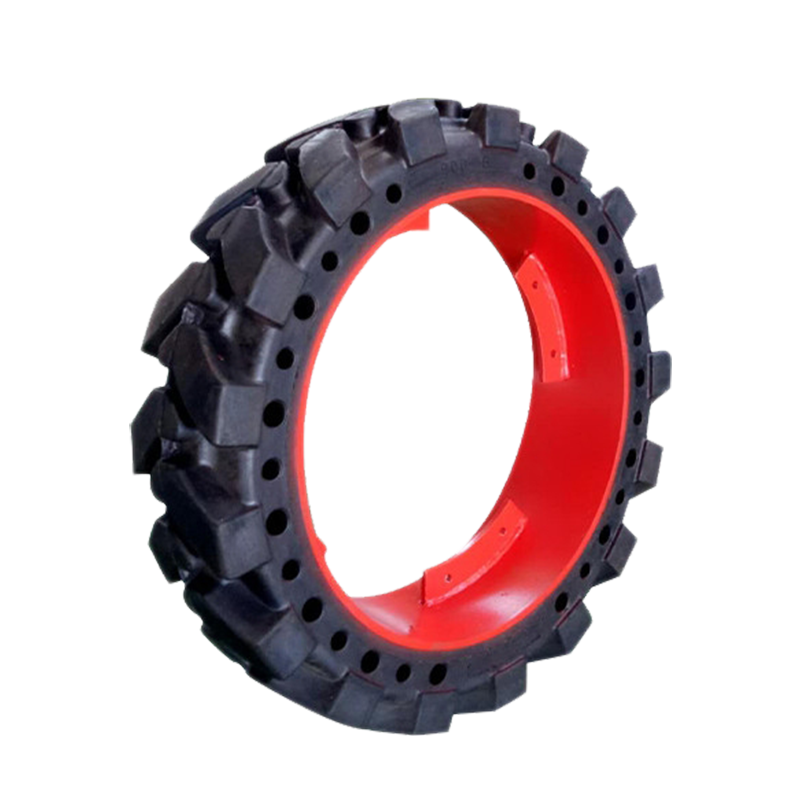 Wheel loader tiresThe tire adopts a special structural design, which has strong load performance, strong rigidity, low rolling resistance and low energy consumption; the precisely desig...View Product →
Skid steers present the opposite problem. They are small, agile, and almost constantly pivoting on the spot. Their tires need aggressive shoulders and compounds that resist scrubbing, because a skid steer can ruin a soft tire within a few hundred hours of tight turning on concrete. Foam filling is a popular upgrade wherever punctures are routine.
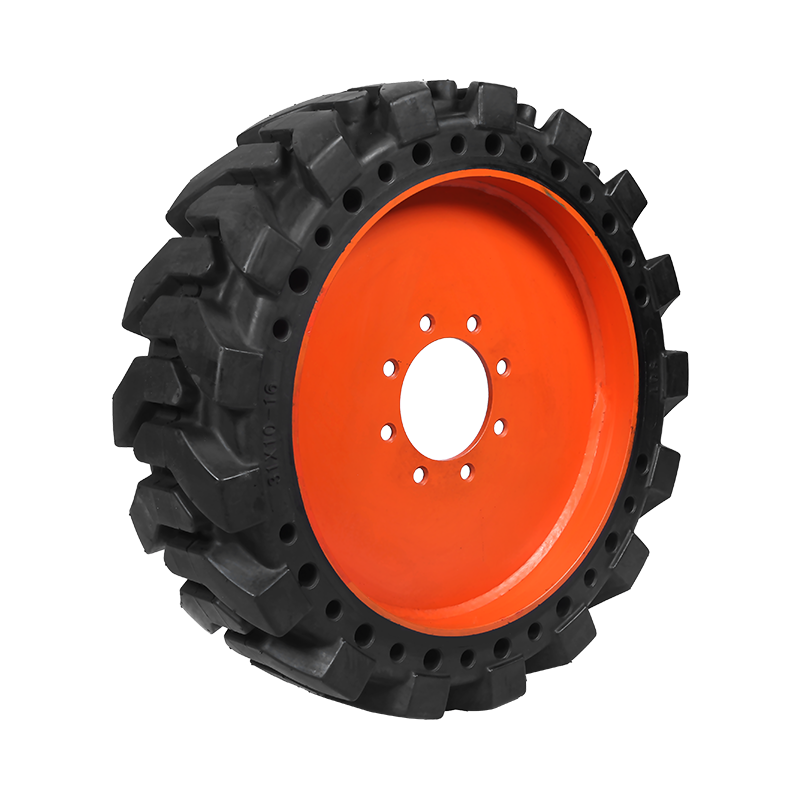 Skid steer tiresThe large-pitch transverse pattern design enables the tire to have good passing performance and super gradability; the wider pattern width enables the tire to not only...View Product →
Milling machines and cold planers work inches away from hot asphalt and freshly cut edges, often in narrow lanes where downtime is expensive. Their tires are generally solid or heavily reinforced and are sized for stability rather than speed.
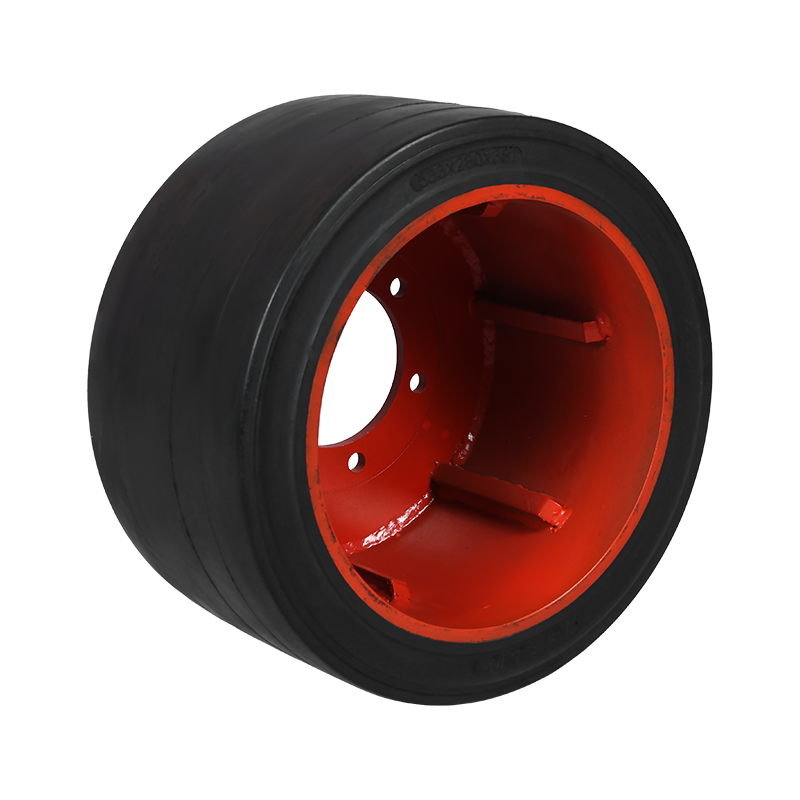 Milling machine tyresThe special tread formula design is suitable for harsh operating environments, making the vehicle safe and reliable to use. Smooth design, low resistance, easy to move...View Product →
The same reasoning applies to aerial work platforms, forklifts, and gantry cranes: identify the load, the surface, the indoor or outdoor setting, and the consequences of a flat, then choose the construction that fits. If you want a deeper background read, our industry notes on what you need to know about construction equipment tires cover how the category developed.
A Practical Selection Checklist
Before ordering, work through the following points. They take a few minutes and prevent most of the mistakes we see.
- Calculate the load per wheel, not the load per machine, and compare it with the rated capacity at the machine's real working speed.
- Confirm how far and how fast the machine travels, since long road transfers rule out some solid and press-on options.
- Look at the surface, because a polished warehouse floor calls for a different compound from a quarry floor full of sharp rock.
- Decide whether non-marking rubber is required, as indoor warehouses, food plants, and finished floors often demand it.
- Check the rim, because press-on tires, multi-piece rims, and standard wheels are not interchangeable.
- Ask what a flat tire actually costs; if a puncture stops a production line, foam-filled or solid tires usually justify their price.
- Compare total cost of ownership across the expected service life rather than purchase prices alone.
Maintenance Habits That Extend Tire Life
Most construction tires do not simply wear out; they are worn out by neglect. A few routine habits make a measurable difference.
- Check inflation pressure weekly on pneumatic tires, always with a gauge rather than by eye.
- Inspect tread and sidewalls after every shift on demolition, milling, and recycling work, where damage starts small.
- Rotate tires where the machine allows, and keep duals matched in size and wear.
- Keep rubber away from oil, solvents, and hydraulic leaks, and clean with water rather than aggressive degreasers.
- Train operators to avoid unnecessary spinning and scrubbing, which destroys tread far faster than rolling does.
- Record replacement intervals, since a sudden change in wear rate usually points to misalignment or a worn bearing.
Manufacturing Background and Support
Jiangsu Saimeite Machinery Co., Ltd. produces tires for aerial work platforms, forklifts, skid steers, wheel loaders, milling machines, bracket trucks, and gantry cranes, along with press-on solid tyres. The company states that it passed ISO 9001 quality management certification in May 2018 and completed a second technical upgrade in July 2018 that added a production line for 200,000 aerial work platform tires per year. Its published supply figures list 100,000 solid rubber tires, 100,000 shock absorbers, 200,000 track pads, and 100,000 steel rims annually; those numbers are company statements rather than independently audited figures.
For buyers, the practical value of that background lies in the range of equipment covered. A fleet running loaders, skid steers, and lifts can source several categories from one supplier and keep specifications consistent. Technical documents and product literature are available in the download section, and our team can review your machine list, load data, and working surface to recommend a construction and compound.
Key Takeaways
- Match the construction to the job: solid where punctures are frequent, foam-filled where ride and safety both matter, pneumatic where travel speed and distance dominate.
- Load per wheel, working speed, and surface condition decide most of the specification.
- Pressure and inspection discipline extend tire life more than any single purchase decision.
- Buy on total cost of ownership across the full service life.
Construction equipment tires occupy a small line in the budget and a large line in the schedule. Choosing them deliberately, and maintaining them consistently, keeps machines working and projects moving.



CONTACT US
-

Email: SMT001@saimeite-tyre.com
-

Phone: +86-18451337018No. 1, Renmin South Road, Yandu District, Yancheng City, Jiangsu Province, China