
 English
 한국어
한국어 Français
 Español

Construction Machinery Tyres: A Practical Buyer's Guide from the Factory Floor
Construction machinery tyres lead a rougher life than almost anything else on rubber. A wheel loader crossing a demolition site rolls over rebar, broken concrete, dropped bolts and gravel that would finish an ordinary tyre inside a single shift. Everything about the tyres we make, from the compound and the sidewall to the bore and the tread depth, exists because of that reality.
We are Jiangsu Saimeite Machinery. Our manufacturing operation began producing tyres in 2017, and today we supply solid, foam-filled and press-on tyres to equipment builders, rental fleets and maintenance teams working in exactly those conditions. What follows is the practical version of what we have learned: which tyre form suits which machine, where tyres fail first, and what is worth checking before you place an order.
Content
What Counts as a Construction Machinery Tyre
In the simplest terms, construction machinery tyres are the tyres fitted to machines that work rather than travel. They rarely see highway speeds. What they do see is high static load, tight turning circles on sloped or rutted ground, and constant contact with abrasive debris.
In our own catalogue that covers a fairly specific set of machines:
- Wheel loaders working quarry floors, stockpiles and haul roads
- Skid steer loaders in demolition, municipal and agricultural work
- Boom lifts, scissor lifts and other aerial work platforms
- Forklifts, including the smaller electric mini forklifts used in warehouses
- Milling machines stripping asphalt and concrete surfaces
- Bracket trucks and gantry cranes handling containers and heavy loads
Notice how few of these run on ordinary air-filled tyres. Most sites prefer solid rubber, foam-filled or press-on designs, because a flat tyre in the middle of a pouring job costs far more than the tyre itself. If you would like the longer background, we keep a primer in our industry notes on the foundation of construction equipment tyres, covering how compounding and construction differ from highway rubber.
Why These Tyres Are Built Differently
A tyre that spends its life at walking pace under several tonnes of static load is a different engineering problem from one that spends its life at motorway speed. Three differences matter most.
Compound and tread
Site rubber is formulated for cut and abrasion resistance rather than low rolling resistance at speed. Tread blocks are deeper and more widely spaced so that gravel and wet mud clear themselves instead of packing into the grooves. That is why a loader tyre can look almost agricultural next to a truck tyre of similar size.
Sidewall and rim protection
The sidewall takes the hits that would otherwise reach the rim. Extra thickness, a reinforced shoulder and, on some patterns, a rim guard flange keep kerbs, rebar ends and concrete edges away from the wheel. On press-on tyres, the steel band and tight bore tolerances do similar work, holding the tyre firmly on the hub under heavy side loads.
Heat, the quiet enemy
Solid and foam-filled tyres flex less than pneumatics, so they build heat differently, and thick rubber sections hold that heat in. Bore design, rubber hardness and the way the tyre sits on the rim all affect how quickly it cools. Heat is one of the main reasons a solid tyre fails early, which is why we ask about duty cycle and shift length before recommending a compound.
Matching the Tyre to the Machine
There is no universal construction tyre, and buying on size alone is a common mistake. The same nominal dimensions can arrive with different compounds, tread depths and bores, and a tyre that performs beautifully on a scissor lift indoors can be entirely wrong for a loader in a quarry. The table below is the shorthand we use in conversation with customers.
| Machine | Usual tyre form | Ground it meets | What matters most |
|---|---|---|---|
| Wheel loader | Solid or heavy pneumatic | Quarry floors, stockpiles, haul roads | Cut resistance, load capacity |
| Skid steer loader | Solid or foam-filled | Demolition, yards, farm and municipal work | Traction, sidewall toughness |
| Scissor lift | Solid, non-marking option | Slab floors, indoor and compact sites | Stability, floor protection |
| Boom lift | Foam-filled or solid | Rough ground, gravel, new-build sites | Puncture resistance, grip |
| Forklift | Press-on solid | Warehouse, dock and yard floors | Bore fit, wear life, rolling resistance |
| Milling machine | Solid | Asphalt and concrete surfaces | Heat tolerance, consistent contact |
| Gantry crane, bracket truck | Solid | Ports, rail yards, container yards | Extreme load, slow-speed stability |
If you are specifying for a wheel loader, the two figures that decide everything else are axle load and the surface you work on most often. Abrasion resistance matters far more in a quarry than in a paved yard, and paying for it where it is not needed simply raises the cost per hour.
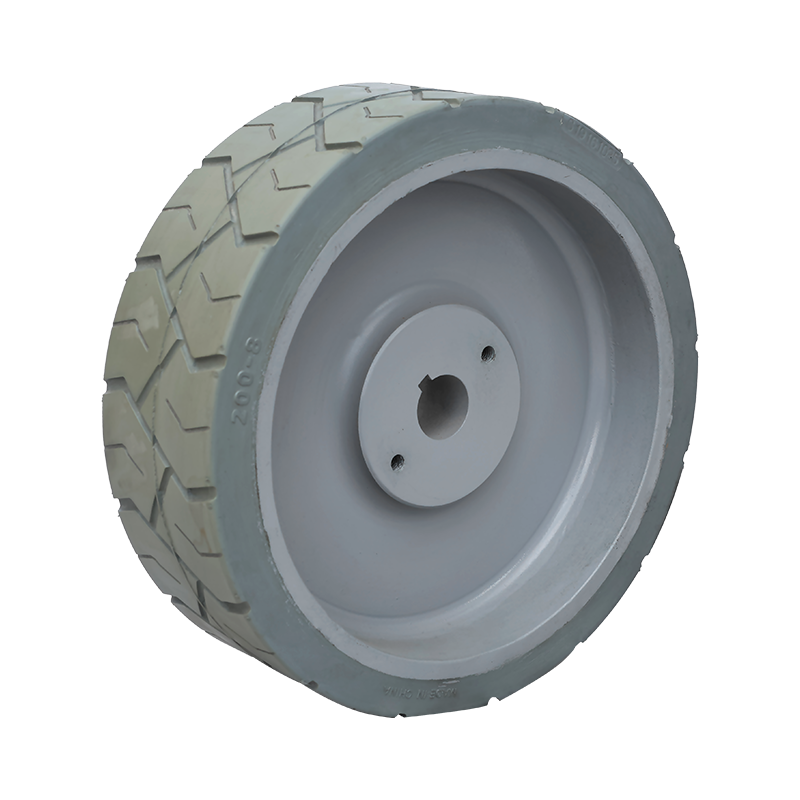
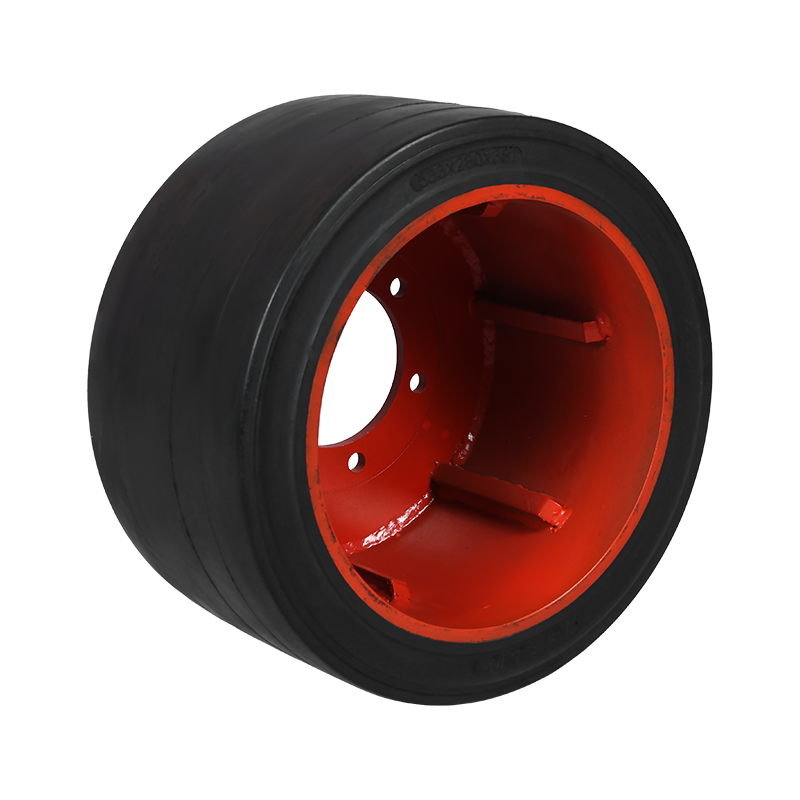
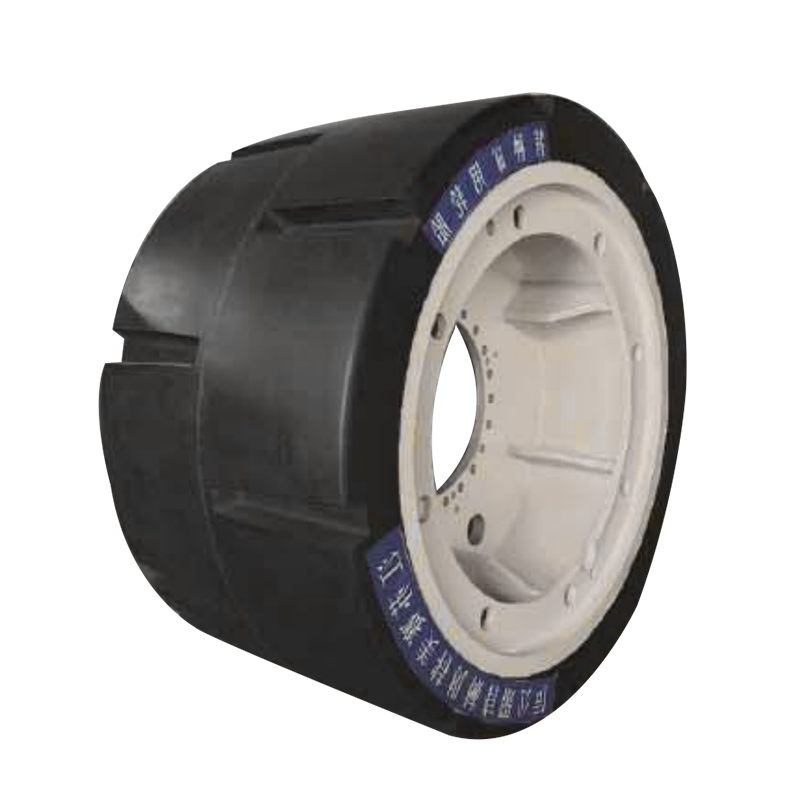
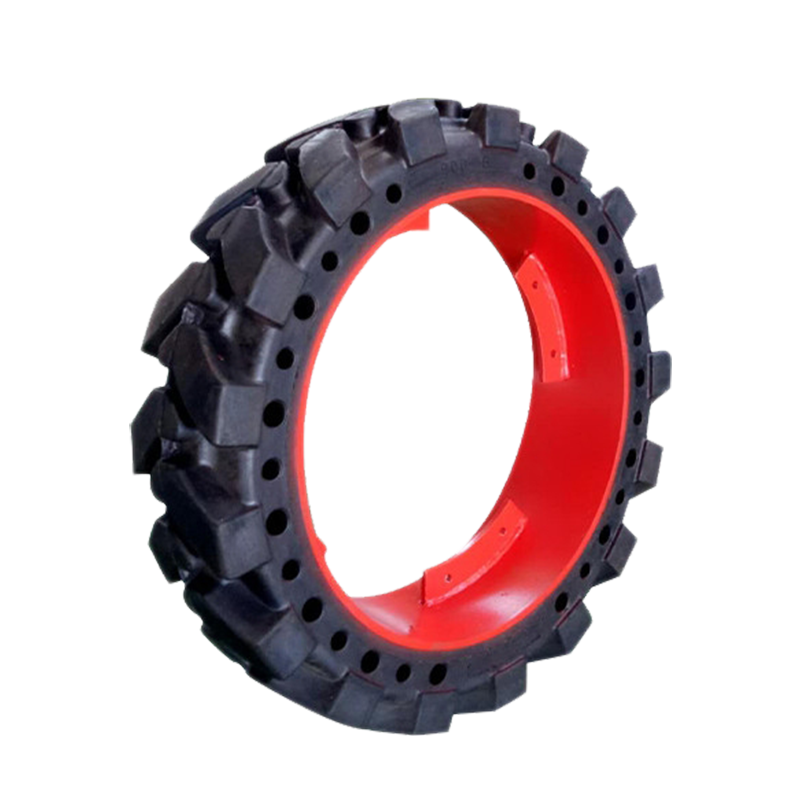 Wheel Loader Engineering Tires for Port and Industrial UseFor wheel loader specifications where axle load and surface matter, these engineering tires list varied sizes and load ratings at 10, 16, and 25 MPH.View Product →
Solid, Foam-Filled or Press-On?
Customers ask us this constantly, and the honest answer is that it depends on what you are protecting against.
- Solid rubber tyres remove the air cavity altogether. They suit heavy, low-speed machines and floors littered with sharp metal, and they are the default choice for forklifts, scissor lifts and many loaders.
- Foam-filled tyres keep the pneumatic casing but replace the air with a flexible filler. You get much of the ride comfort and grip of an air-filled tyre with none of the puncture risk, which is why they are popular on boom lifts and rough yards.
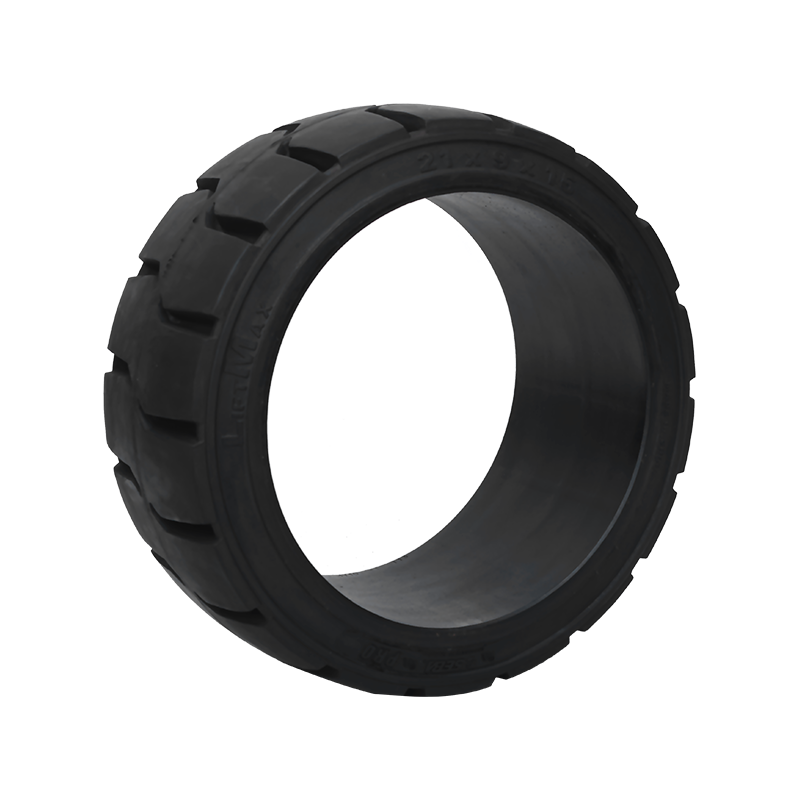
- Press-on tyres are solid rubber bonded to a steel band that presses onto the wheel hub. They are the workhorse of the materials handling world, easy to change and inexpensive to run, provided the bore is right.
As a rule of thumb: choose foam-filled when ride quality and traction on uneven ground matter, choose solid when the risk of sharp debris is high, and choose press-on when fast, low-cost replacement cycles matter more than anything else.
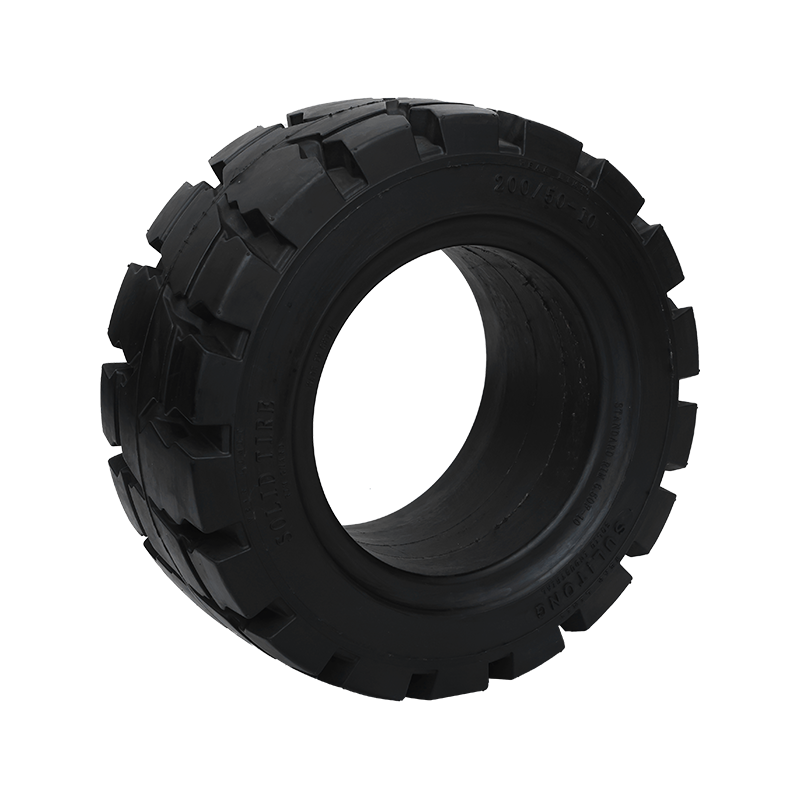
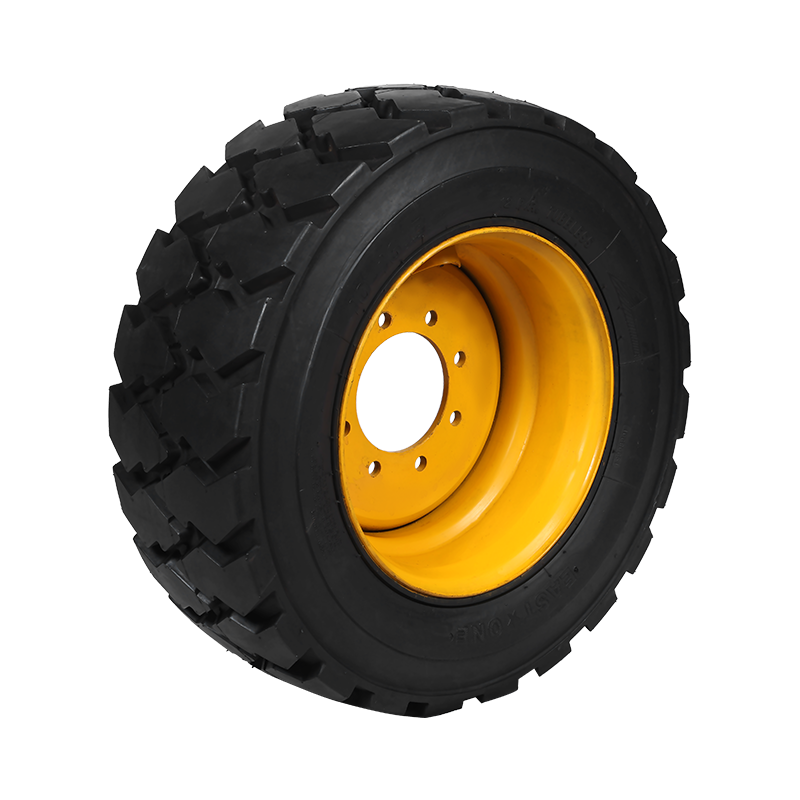 Foam Filled Tires for Skid Steers and Compact LoadersWhen ride quality and traction on uneven ground matter, these puncture-resistant foam filled tires combine solid-tire load capacity with pneumatic-like comfort for demanding environments.View Product →
Where Construction Tyres Fail First
Skid steers and compact loaders are probably the hardest-worked machines we supply for. They turn on the spot, climb kerbs, work on broken ground and rarely get a gentle operator. Almost every premature failure we investigate traces back to one of five causes:
- Incorrect load rating for the actual axle load, especially when attachments or counterweights are added
- Running the wrong compound on highly abrasive ground, which wears tread away in weeks rather than months
- Under-inflation or over-inflation of foam-filled and pneumatic casings, both of which shorten service life
- Heat build-up from long shifts without breaks, particularly on solid tyres in summer conditions
- Bore or rim damage from careless fitting, which lets the tyre creep on the hub and cracks the bead area
None of these are exotic problems, and all of them are cheaper to prevent than to repair. A simple daily walk-around, checking for embedded metal, sidewall cuts and movement on the rim, catches most of them early.
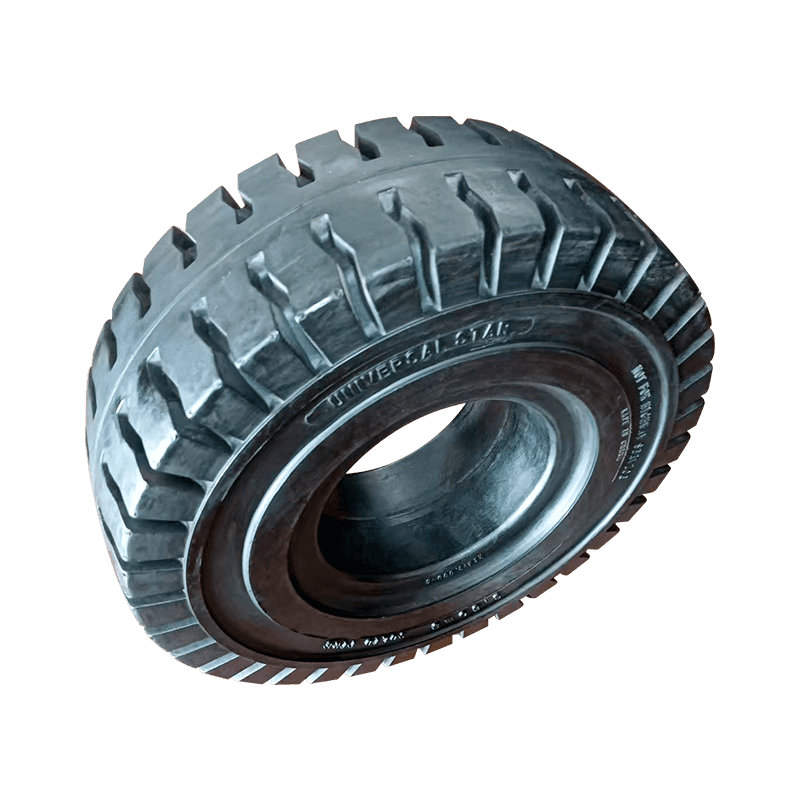
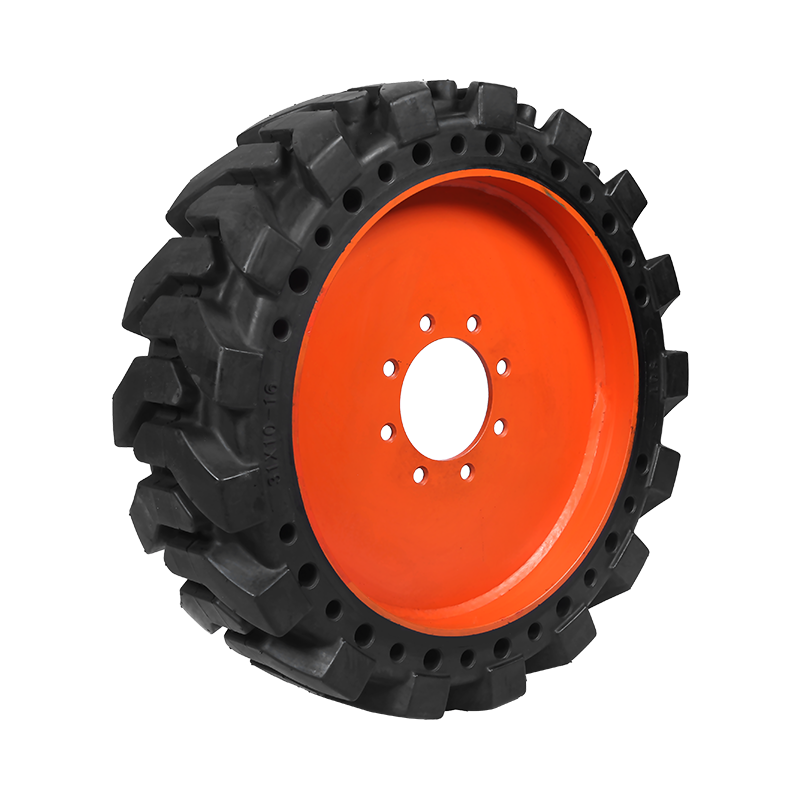 Skid Steer Tires for Construction, Road, and Airport UseFor skid steer loaders in tough environments, these tires offer a large-pitch transverse pattern, wider profile, and cut- and tear-resistant compound across listed sizes.View Product →
Choosing a Supplier When You Cannot Visit the Plant
Most of our overseas customers buy without ever standing on our factory floor, which means the specification has to be right on paper. Four pieces of information save an enormous amount of time:
- The machine make and model, plus any attachment that changes the load
- Wheel or rim dimensions, including bore diameter and bolt pattern
- The surfaces the machine works on and the typical shift length
- Whether non-marking rubber is required, for example on polished warehouse floors
Send those across and the selection narrows quickly. We also keep technical documents and specification sheets available through our download centre, so you can compare dimensions and compounds before committing to an order.
What We Bring to the Table
Jiangsu Saimeite Machinery operates a 30,000 square metre plant and, according to our company records, holds assets of around 30 million US dollars. Our stated annual supply capacity covers 100,000 solid rubber tyres, 200,000 track pads, 100,000 steel rims and 100,000 shock absorbers, alongside the tyre lines described above. Company records trace our roots to 2009, with the formal establishment of the present manufacturing entity in May 2017 and trial production beginning later that year.
Quality systems followed quickly. We passed ISO 9001 certification in May 2018, completed a second technical upgrade in July 2018 that added a production line capable of 200,000 aerial work vehicle tyres a year, and were recognised as a Yancheng municipal engineering technology centre in August 2018. In November 2017 we signed a contract with the American OTR Group for 200,000 aerial work vehicle tyres annually, a project that remains one of the clearest signals of what our solid tyre lines can deliver at scale.
Construction machinery tyres are rarely the most expensive part of a machine and almost never the most glamorous, but they decide how many productive hours you get out of it. Getting the form right, whether that is solid, foam-filled or press-on, is worth more than chasing the lowest unit price.
If you are working through a specification for loaders, skid steers, lifts, forklifts or milling machines, send us the machine details and the surfaces you work on. We will tell you plainly which of our tyres fits, and just as importantly, which one does not.



CONTACT US
-

Email: SMT001@saimeite-tyre.com
-

Phone: +86-18451337018No. 1, Renmin South Road, Yandu District, Yancheng City, Jiangsu Province, China