
 English
 한국어
한국어 Français
 Español

Eco-Friendly Non-Marking Tires: A Practical Guide for Industrial Fleets
Walk into a well-run warehouse, food plant or electronics hall and one thing stands out before anything else: the floor. No dark arcs down the aisles, no smeared rubber trails at the corners, no grey scuffing where the forklifts turn. That cleanliness is not only the work of the night-shift crew. It starts with the tires on the trucks. Eco-friendly non-marking tires are built for exactly these workplaces, where equipment has to keep moving without leaving a signature behind.
The name carries two promises, and they come from different parts of the tire. One is about what the rubber deposits on the ground. The other is about what the tire saves over a working life that stretches across several conventional replacements.
Content
What Makes a Tire Non-Marking, and Where the Eco-Friendly Side Comes In
The non-marking part
Carbon black is the ingredient behind the deep black colour of a conventional industrial tire, and it contributes a good share of the abrasion resistance as well. It is also the material that rubs off onto a polished floor when a forklift turns under load. Non-marking compounds replace most or all of that carbon black with light-coloured fillers such as silica and clay, so the rubber that transfers to the floor is nearly invisible instead of a black streak. The tread still wears, but what it leaves behind barely shows.
It helps to know that non-marking is a spectrum rather than a switch. A tire can run clean when new and start leaving faint traces once the tread is badly worn or the compound has aged in a warm, oily environment. The useful question is not whether a tire is non-marking, but which compound it uses and how it behaves halfway through its service life.
The eco-friendly part
Environmentally, these tires earn their green credentials in three places, and only one of them is about the rubber itself.
- Materials. Non-marking compounds cut out much of the heavy pigment and processing additive load of black rubber, and many modern formulations include reclaimed rubber content.
- Service life. A solid or press-on tire typically outlasts several pneumatic tires doing the same work, so fewer tires are manufactured, shipped and scrapped over the same operating hours.
- Avoided waste. Solid tires cannot be punctured, so they are rarely pulled off a machine early for a flat. Press-on tires are fitted as a rubber band pressed onto a reusable metal wheel, which keeps that wheel in service for years.
Why Non-Marking Tires Pay for Themselves
Floor repair is the cost most people underestimate. A scuffed epoxy or polished concrete floor in a distribution centre rarely gets touched up square by square; the damaged aisle has to be closed, ground back and recoated, usually at an inconvenient time. For a large facility, one resurfacing project can cost more than several years of tires.
The quieter savings are just as real. In food, beverage and pharmaceutical plants, dark rubber transfer is a hygiene and audit issue rather than a cosmetic one. In electronics and cleanroom environments, loose particles put yield at risk. And in any building that receives visitors, a scuffed floor says something about how the operation is run.
If you want the short version of why these tires keep turning up in fleet budgets, the main benefit of solid non-marking tires comes down to one idea: they solve a floor problem and a tire problem at the same time.
Where These Tires Do Their Best Work
Non-marking compounds are usually specified in five broad kinds of workplace:
- Food, beverage and pharmaceutical plants, where hygiene rules and washdown routines make dark rubber transfer a genuine concern.
- Electronics, semiconductor and cleanroom manufacturing, where residue and particles are measured rather than tolerated.
- Airports, hospitals, exhibition halls and public buildings, where floors are both expensive and highly visible.
- Print, paper and packaging operations, where ink, dust and pale floors make any marking obvious.
- High-gloss retail, cold storage and automated warehouses, where narrow aisles and robotic traffic demand consistent traction without damage.
The machine matters as much as the venue. A scissor lift creeping across a finished epoxy floor indoors is a very different application from a counterbalance forklift in the same building, because wheel diameter, load per wheel and mounting method all change the specification.
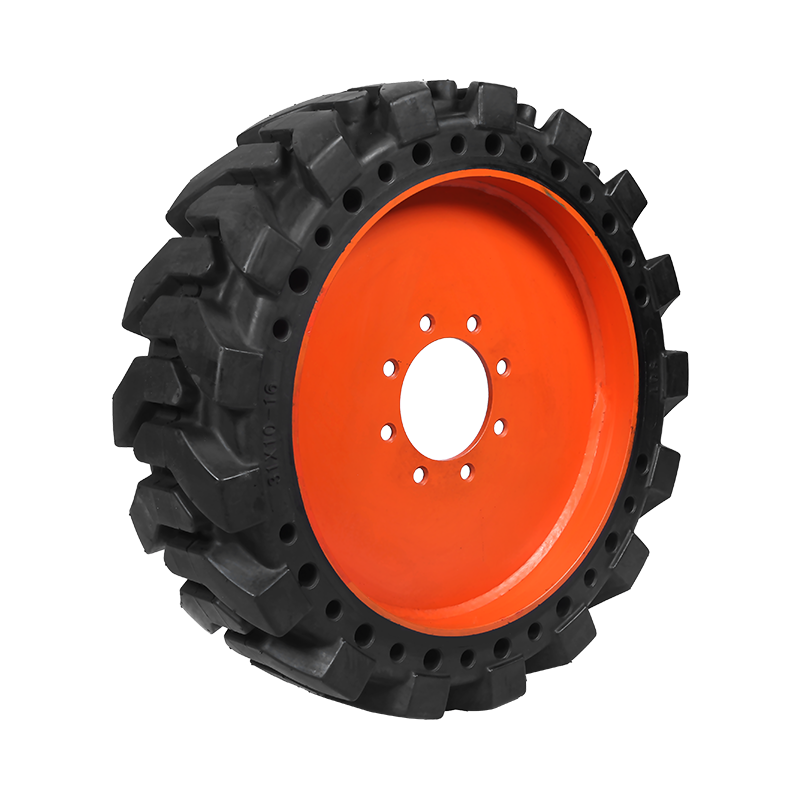
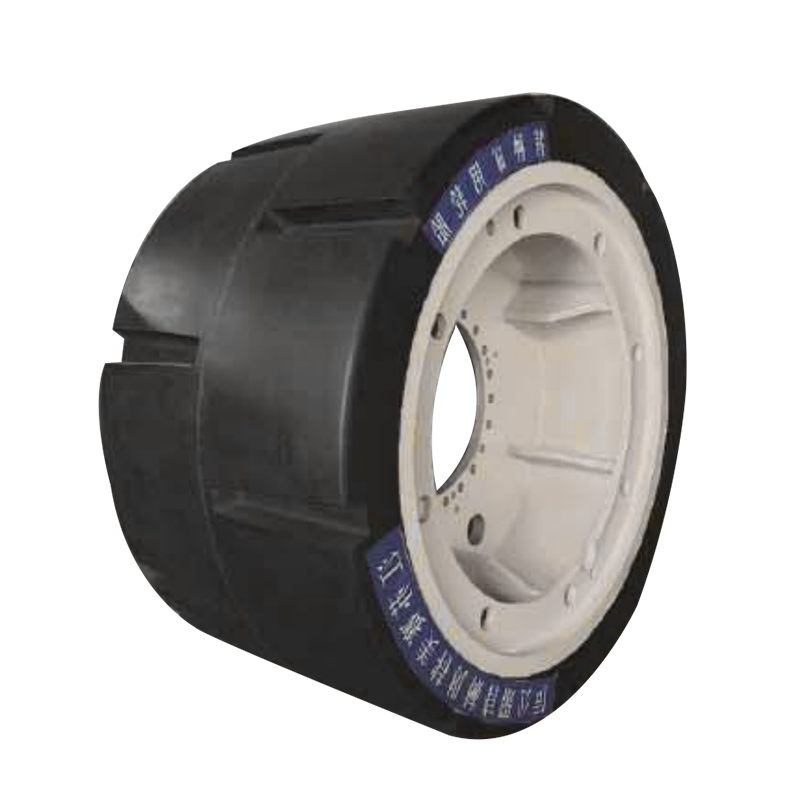
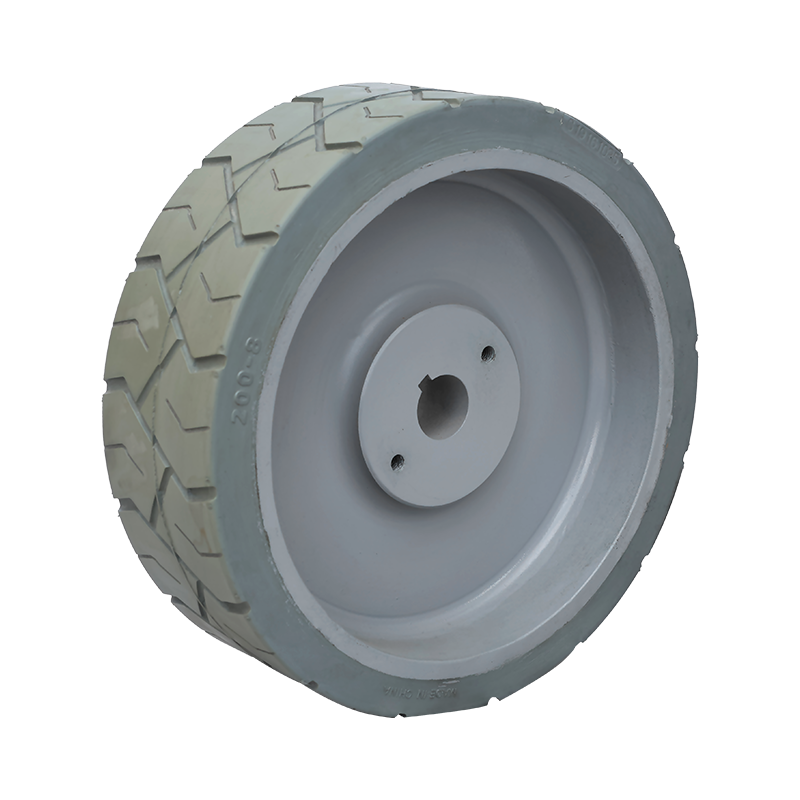 Non-Marking Scissor Lift Tires for Indoor and Outdoor PlatformsFor scissor lifts working on finished floors, these non-marking tires offer deeper tread, self-cleaning patterns and size options across common lift models.View Product →
Lighter electric trucks follow their own logic. A three-wheel electric forklift in a narrow aisle needs a smaller footprint and a softer ride than a heavy diesel machine, which is why these tires are specified separately rather than borrowed from a general catalogue.
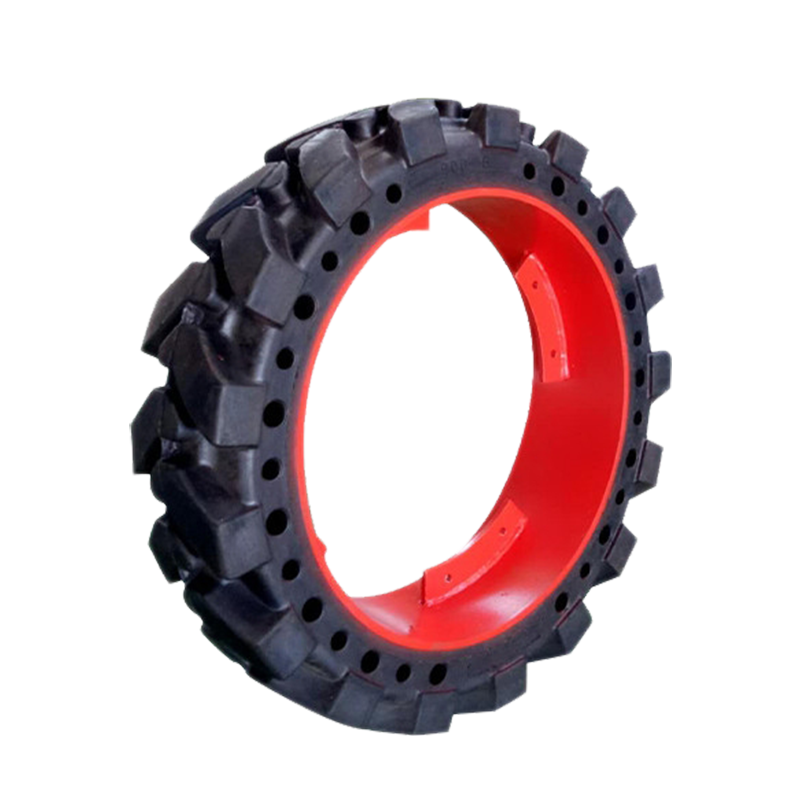
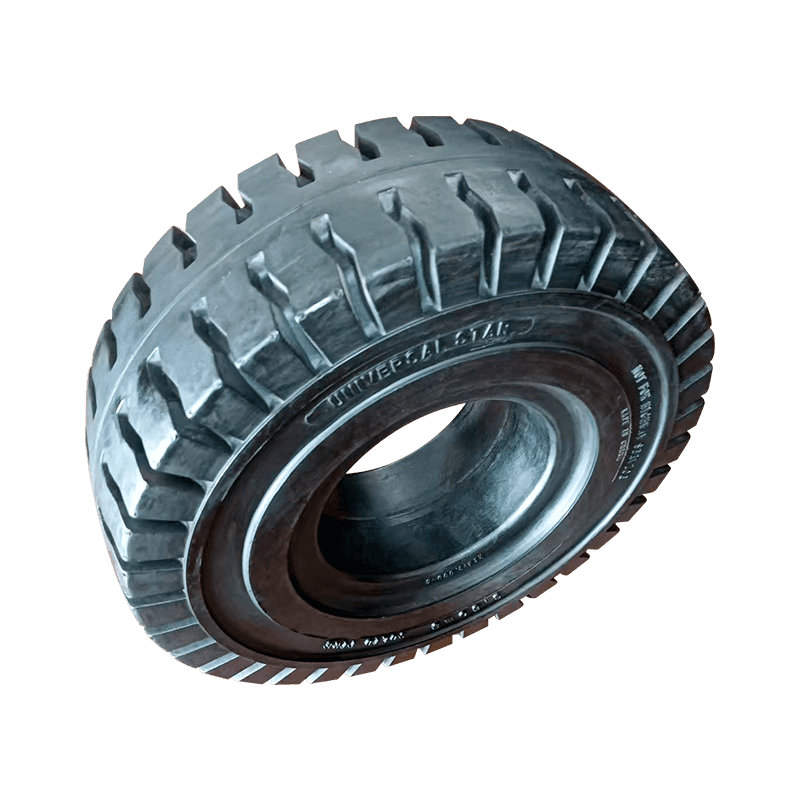 Run-Flat Electric Mini Forklift Tires for Narrow Aisle WorkFor electric mini forklifts, these run-flat tires combine tire and steel rim, resist detachment, reduce energy use, and suit narrow-aisle, harsh operating conditions.View Product →
Solid, Foam-Filled or Pneumatic?
Once you know the floor and the machine, the next decision is the tire type itself. The four options below cover almost every industrial application, and each one trades something away.
| Option | Puncture risk | Marking behaviour | Service life | Where it fits |
|---|---|---|---|---|
| Press-on solid | None, solid rubber | Non-marking compound available | Very long, wheel is reused | Counterbalance forklifts and heavy industrial trucks |
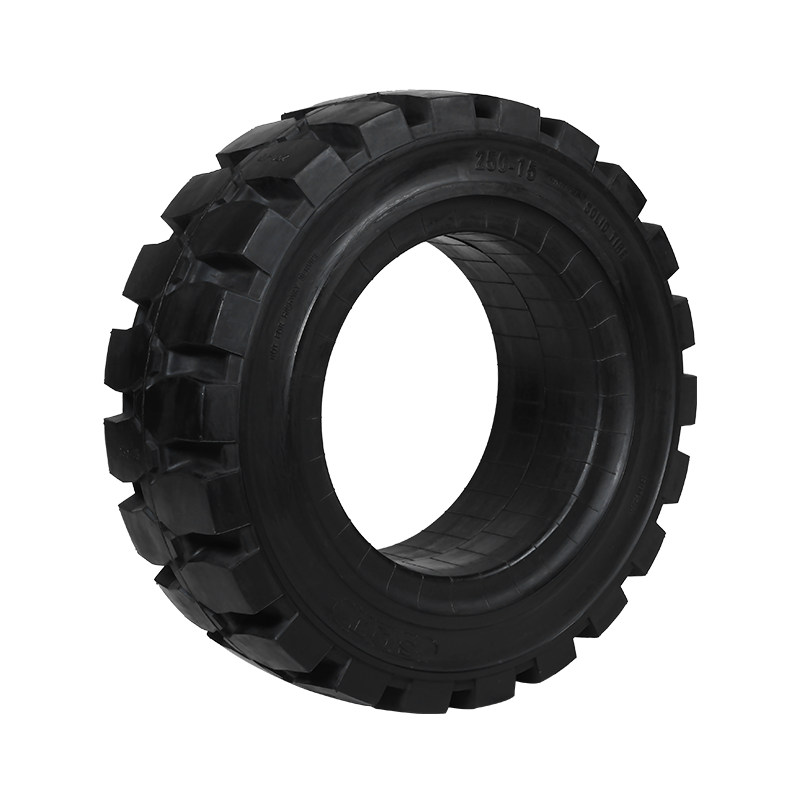
| Moulded solid | None, solid rubber | Non-marking compound available | Very long | Scissor lifts, boom lifts and skid steer loaders |
| Foam-filled | No air to lose, foam core | Depends on the outer compound | Long, casing can still be cut | Rough yards and sites with scrap or debris |
| Pneumatic | High, a sharp object ends the shift | Usually marks floors | Shortest of the four | Outdoor, high-speed and soft ground work |
For indoor work on finished floors, the solid options usually win on both counts: no punctures to interrupt a shift, and a compound that can be formulated not to mark the surface.
Choosing the Right Eco-Friendly Non-Marking Tire
Most ordering mistakes trace back to skipping one of these six checks.
- Start with the load per wheel, not the tire size. A sidewall number is a dimension, not a capacity.
- Match the mounting system: press-on band, three-piece rim or one-piece wheel. Get this wrong and the tire never sits properly.
- Ask about compound hardness. Softer rubber rides better and protects the floor; harder rubber lasts longer but transmits more shock.
- Confirm the non-marking grade rather than the marketing claim, and ask how it behaves at the end of the tread life.
- Check the working environment. Oil, chemicals, washdown, cold storage and heat all push you toward different compounds.
- Request the documentation: compound data sheets, load curves and dimensional drawings.
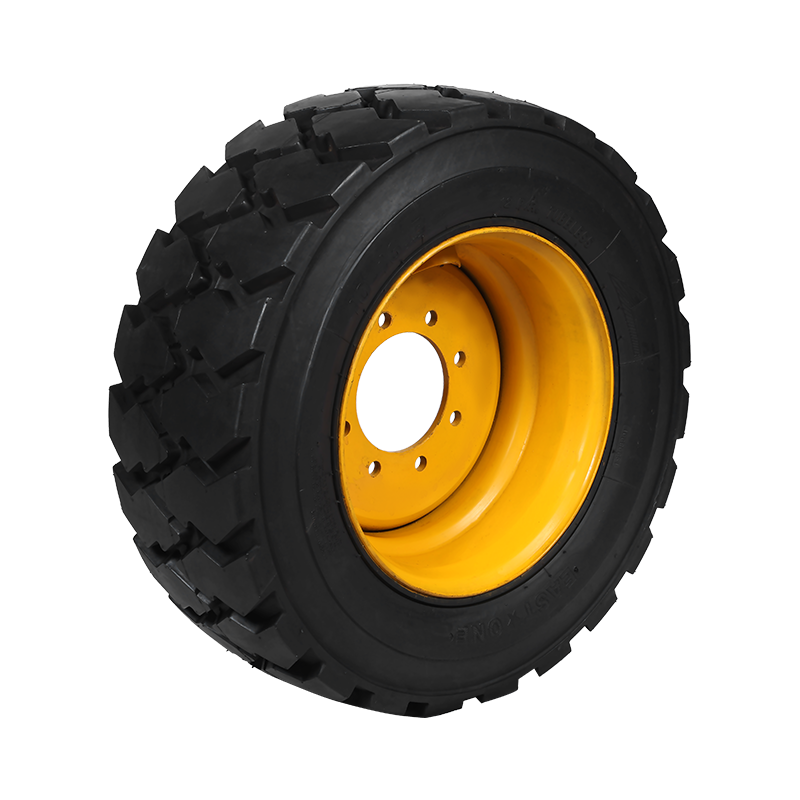
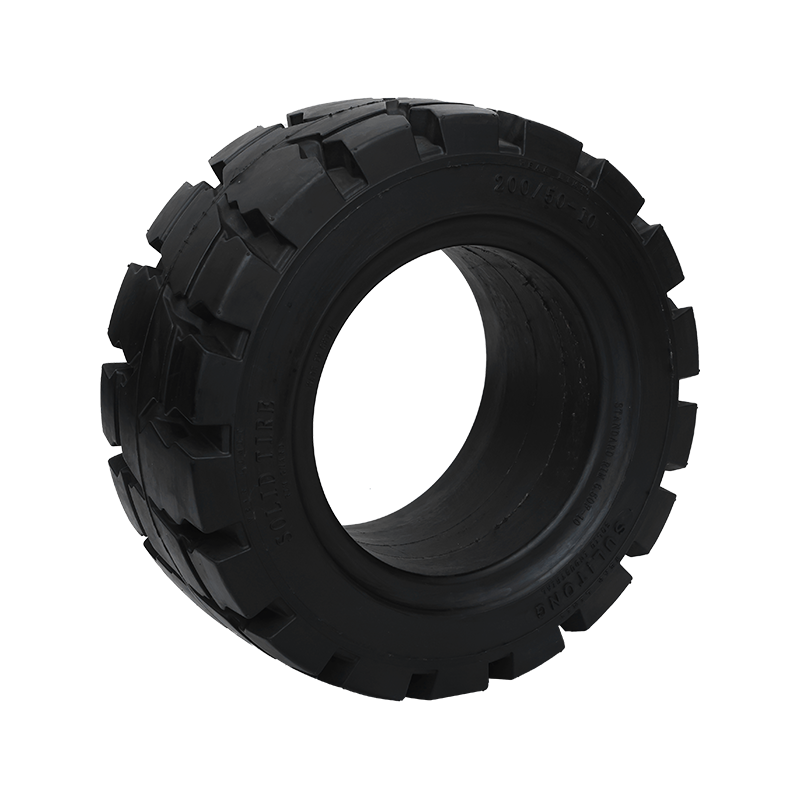
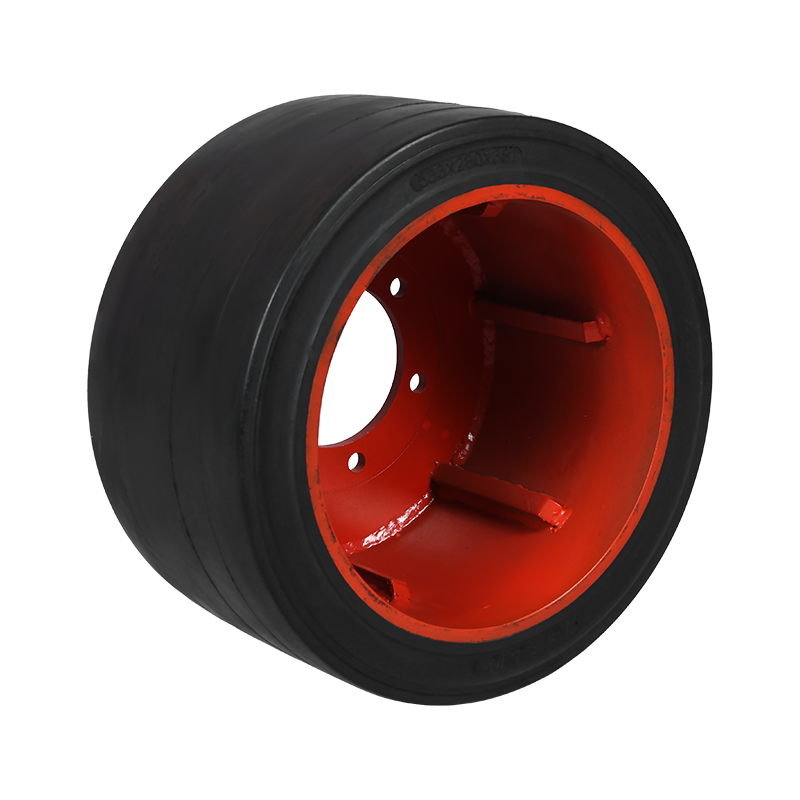
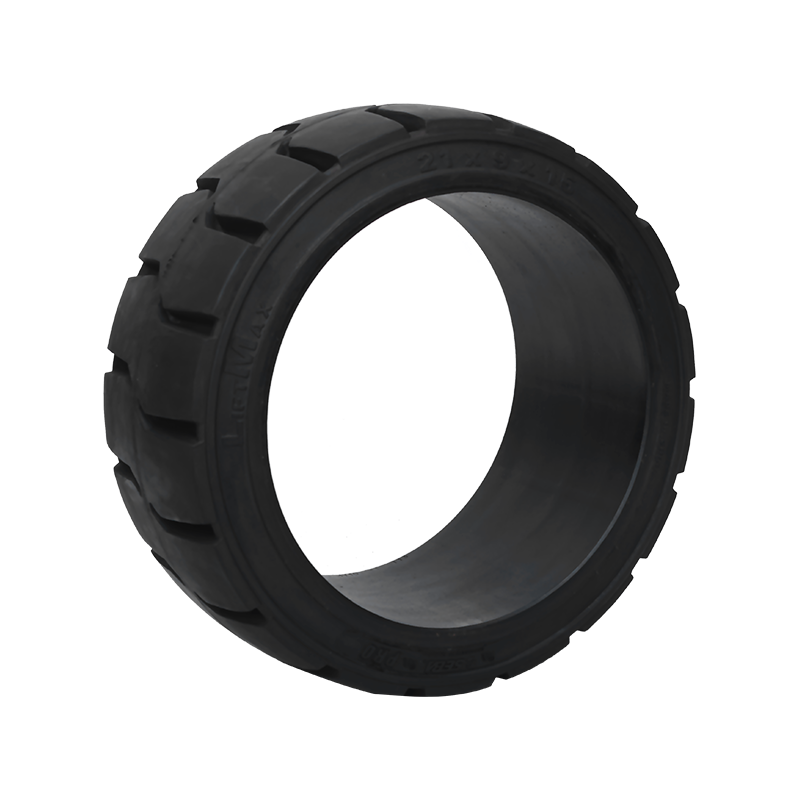 Press-On Solid Forklift Tires with Steel RimFor counterbalance forklifts, these press-on solid tires bond high-density tread to steel rims, offering grip, braking stability and lower cost per operating hour.View Product →
Press-on solid tires deserve a closer look if you run counterbalance forklifts, because the rubber band wears out long before the metal wheel does. Choosing the right band means the wheel stays, the rubber is replaced, and the cost per operating hour falls with every cycle.
Specification sheets and dimensional drawings are collected in our download section if you would rather compare numbers than descriptions.
Maintenance Habits That Stretch Tire Life
Even a well-made compound gives up early if it is abused. A few habits make a measurable difference.
- Check wear at fixed intervals instead of waiting until handling feels wrong; solid tires often wear unevenly on the drive axle.
- Keep floors clear of metal scrap and swarf, which cut into soft non-marking compounds faster than they damage black rubber.
- Avoid sustained overloading, especially on ramps and dock plates.
- Store spare tires away from direct sunlight and from ozone sources such as electric motors and welding equipment.
- Record replacement hours per machine; the pattern tells you which aisles and shifts are hardest on rubber.
Eco-friendly non-marking tires are an unusual product in that the green argument and the practical argument point the same way. A tire that lasts several service cycles, never goes flat and leaves nothing on the floor reduces waste, downtime and cleaning cost at the same time.
If you are working through a tire decision for forklifts, scissor lifts or a mixed fleet, tell us what you are running and where. We have been supplying solid and specialty tires for industrial vehicles since 2009, and the most useful part of that experience is usually knowing which questions to ask before the order goes out.



CONTACT US
-

Email: SMT001@saimeite-tyre.com
-

Phone: +86-18451337018No. 1, Renmin South Road, Yandu District, Yancheng City, Jiangsu Province, China