
 English
 한국어
한국어 Français
 Español

Industrial Forklift Tires: How to Pick the Right Type, Spot Wear Early, and Get the Most Miles Out of Every Set
Industrial forklift tires are one of the highest-impact maintenance decisions in any warehouse, distribution center, or industrial operation. The wrong tire choice leads to accelerated wear, increased operator fatigue, higher fuel consumption, floor damage, and — most critically — compromised load stability and safety. Yet tires are frequently treated as an afterthought, replaced reactively when a forklift starts pulling or a tire visibly chunks out, rather than managed proactively as a core component of fleet performance. This guide covers everything you need to make informed decisions: tire types and their applications, how to read wear, when to replace, and how to extend service life through operational and maintenance practices.
Content
- 1 The Three Main Types of Industrial Forklift Tires
- 2 How to Choose the Right Forklift Tire for Your Operation
- 3 Reading Forklift Tire Size Markings
- 4 Wear Indicators: How to Know When Forklift Tires Need Replacing
- 5 Forklift Tire Replacement: What the Process Actually Involves
- 6 How Operational Practices Directly Affect Forklift Tire Life
- 7 Total Cost of Ownership: Thinking Beyond the Sticker Price
- 8 Building a Forklift Tire Management Program
The Three Main Types of Industrial Forklift Tires
Forklift tire technology falls into three fundamental categories, each built around a different construction principle and suited to different operational environments. Choosing correctly between them is the single most important tire decision you will make.
Solid Rubber Tires (Press-On and Pneumatic Profile)
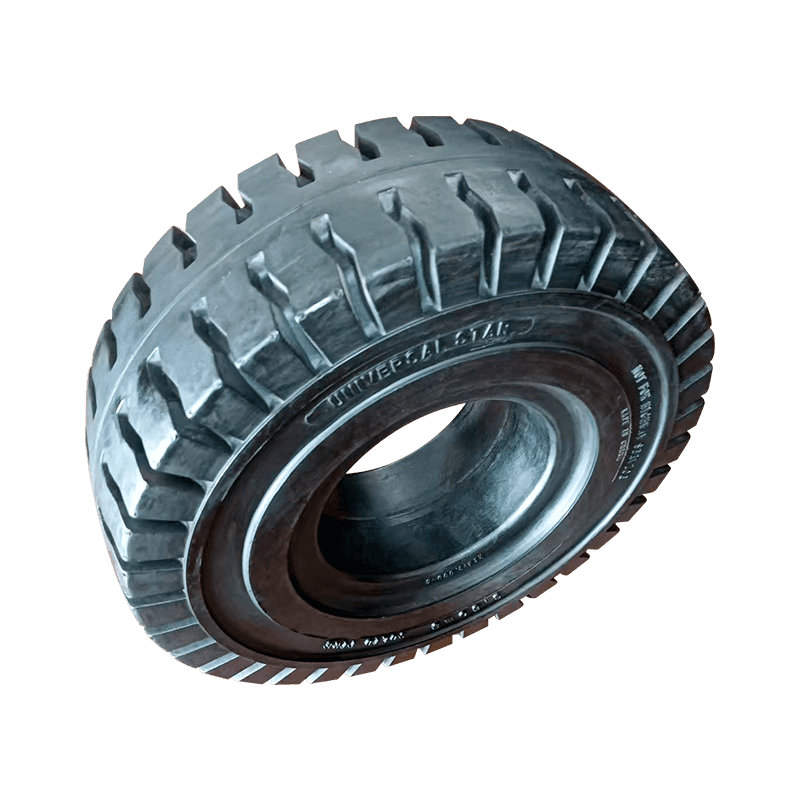
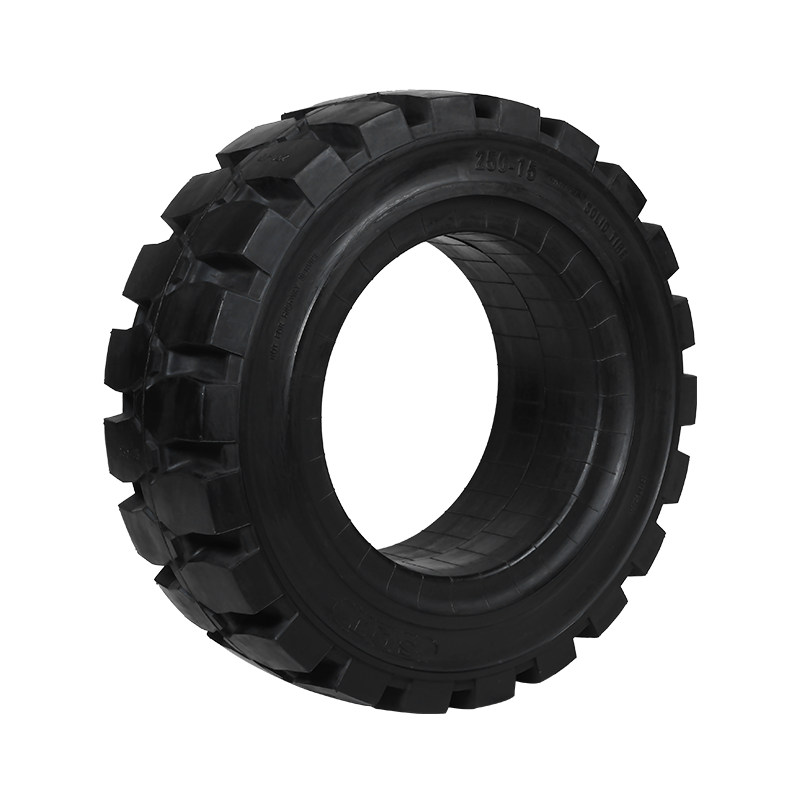
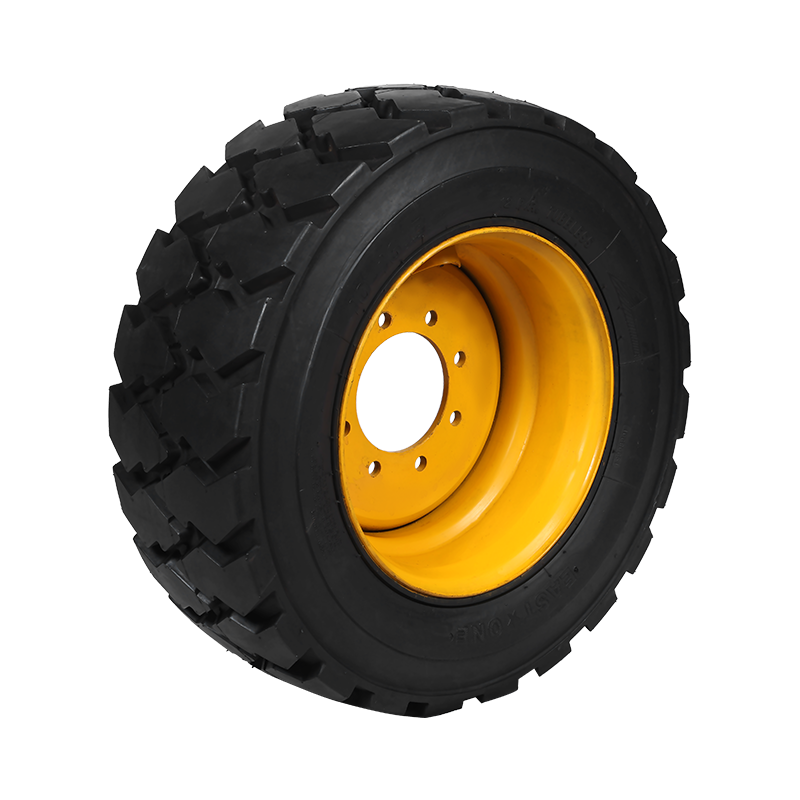
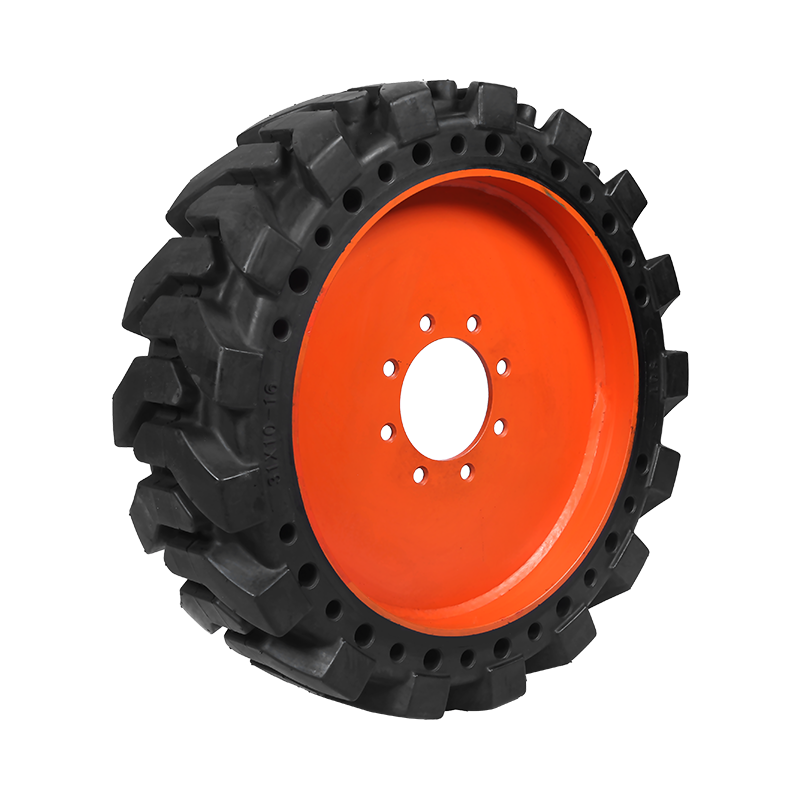
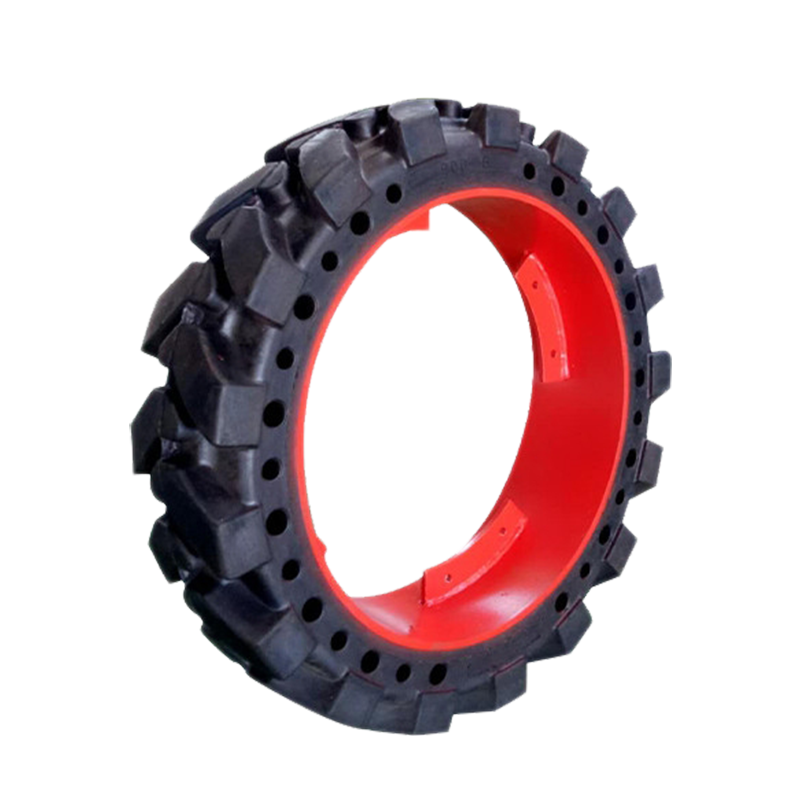
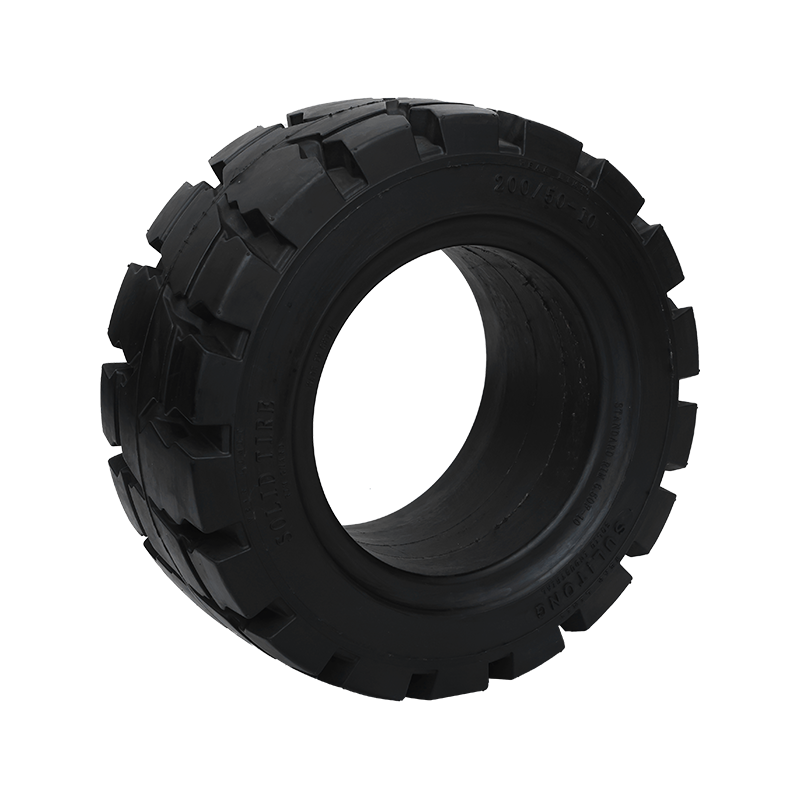
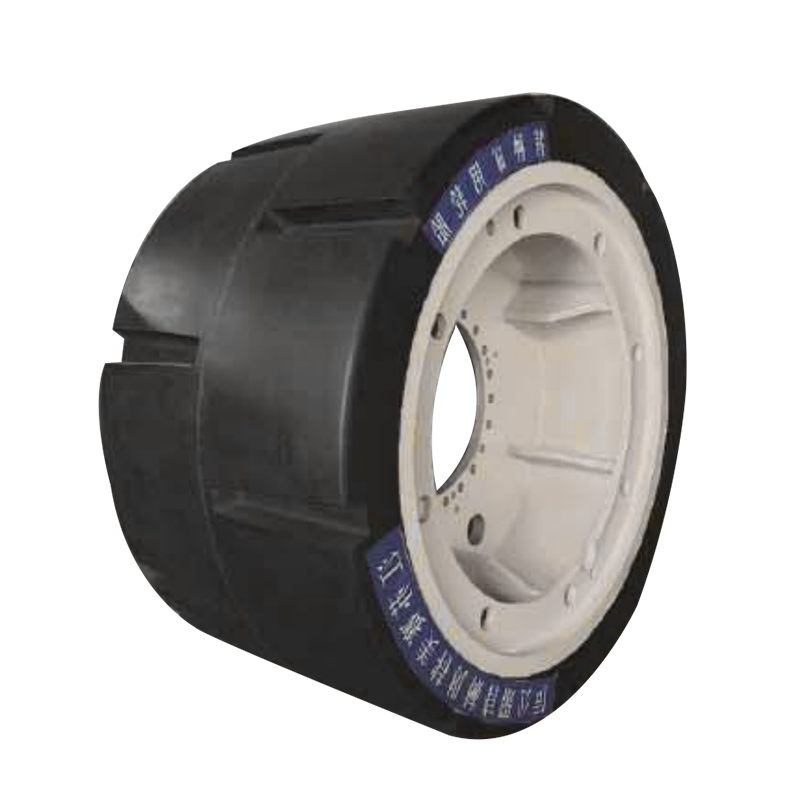
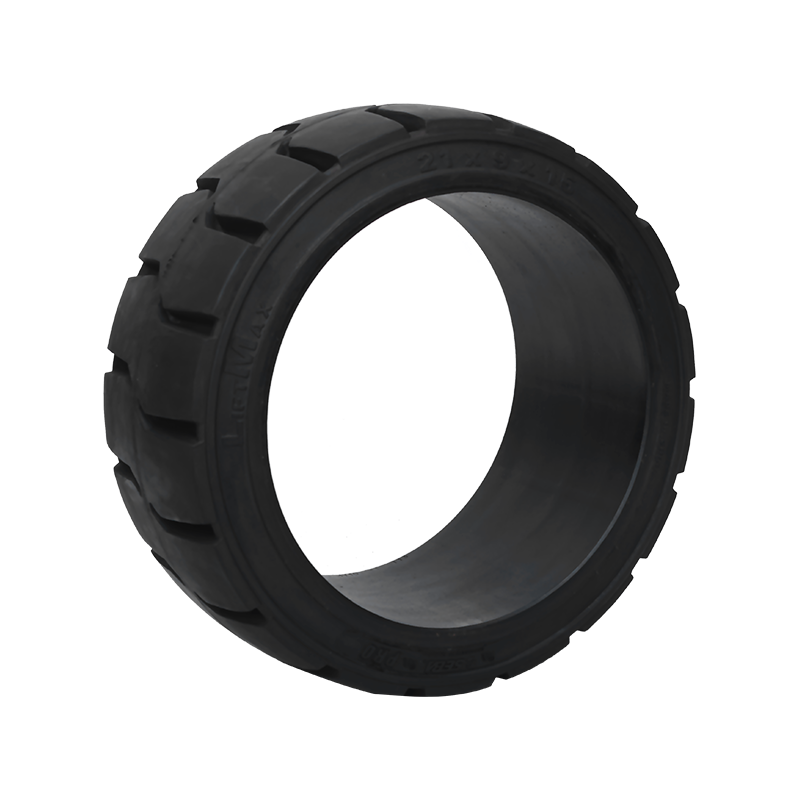
Solid forklift tires are made entirely from rubber compound with no air chamber. They are the dominant tire type for indoor industrial use and are available in two mounting formats: press-on band tires, which are pressed directly onto a steel wheel rim and locked by interference fit, and solid pneumatic-profile tires, which have the external shape of a pneumatic tire but are solid rubber throughout and mount on a standard split rim.
The defining advantage of solid rubber forklift tires is that they cannot go flat. In operations running multiple shifts on tight schedules, a flat tire causes immediate downtime and potential load drops — risks that solid tires eliminate entirely. They also resist punctures from nails, metal scrap, broken pallets, and other debris common on industrial floors. Their load capacity is high and consistent, and they require no inflation pressure monitoring. The trade-off is ride quality: solid tires transmit more vibration to the operator and the load than pneumatic alternatives, which matters more for operator comfort on long shifts and for sensitive load handling.
Pneumatic Forklift Tires
Pneumatic forklift tires are air-filled, either in a standard tube-type or tubeless configuration. They provide a significantly more cushioned ride than solid tires because the air column absorbs shock and vibration from uneven surfaces. This makes them the preferred choice for rough outdoor terrain — gravel yards, construction sites, lumber yards, dock areas with expansion joints, and any surface with significant irregularity where solid tires would transmit damaging shocks to the chassis, the load, and the operator.
Pneumatic industrial forklift tires have a deeper tread pattern than solid tires and provide better traction on loose or wet surfaces. The limitation is that they are susceptible to punctures and flats, require regular pressure monitoring, and cost more to maintain over time in environments with puncture hazards. Foam-filled pneumatic tires are a hybrid option: they have the external profile of a pneumatic tire for ride quality and traction, but the air cavity is filled with polyurethane foam, eliminating the flat tire risk while retaining much of the ride compliance of an air-filled tire.
Cushion Tires
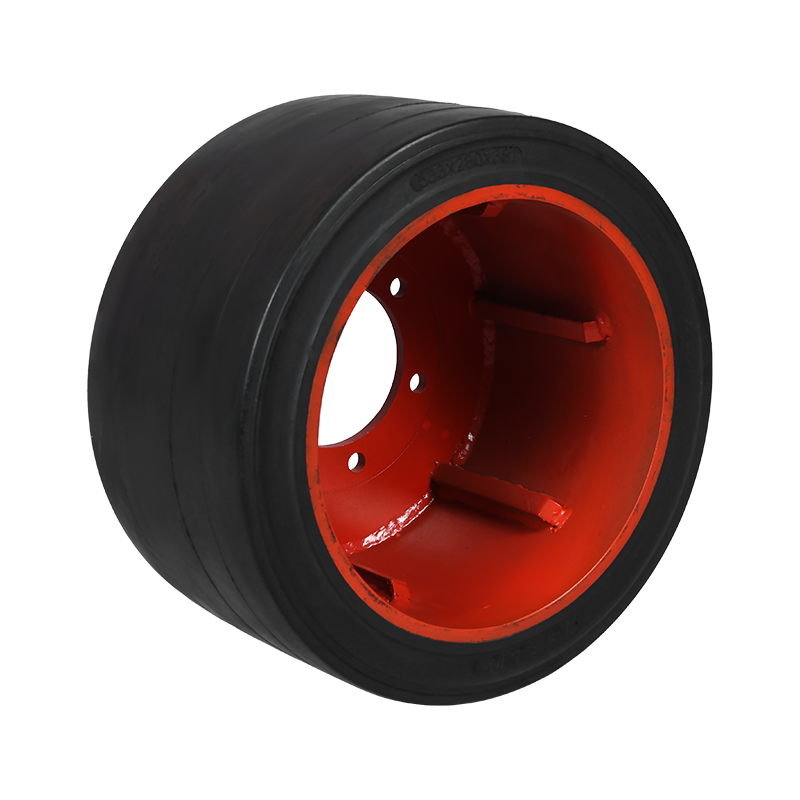
Cushion tires are solid rubber tires with a smooth or lightly siped tread profile, designed specifically for electric forklifts operating on smooth, sealed indoor floors. They sit lower to the ground than pneumatic-profile solid tires, which lowers the forklift's center of gravity and improves stability in narrow-aisle and high-rack operations. Cushion tires are the standard fitment on electric counterbalance forklifts and reach trucks used in distribution centers and food warehouses. They are not suitable for outdoor use or uneven surfaces — their low profile and smooth tread provide minimal ground clearance and no meaningful traction on anything other than flat, clean concrete.
How to Choose the Right Forklift Tire for Your Operation
Matching the tire type to the operating environment is the foundation of forklift tire selection. Getting this wrong doesn't just accelerate wear — it can create safety hazards by degrading steering response, reducing load stability, and increasing the risk of tip-overs on uneven surfaces. Use the following framework to guide the selection process.
| Operating Environment | Recommended Tire Type | Key Reason |
| Smooth indoor concrete (warehouse, distribution) | Cushion or press-on solid | Low rolling resistance, floor protection, stability |
| Indoor with debris, metal scrap, or rough joints | Solid pneumatic-profile | Puncture immunity with improved ride over press-on |
| Outdoor paved surfaces (loading docks, yards) | Pneumatic or foam-filled pneumatic | Better traction, ride compliance on expansion joints |
| Rough outdoor terrain (gravel, construction, lumber) | Deep-tread pneumatic | Maximum traction and ground clearance |
| Mixed indoor/outdoor with puncture risk | Foam-filled pneumatic | No flat risk with pneumatic ride profile |
| Cold storage / food processing (epoxy floors) | Non-marking solid or cushion | No black marks on floor, chemical resistance |
Beyond environment, verify that the replacement tire matches the OEM load rating for your forklift. Forklift tires carry a load index rating that must meet or exceed the truck's rated capacity at the load center specified on the data plate. Installing an undersized tire degrades load stability and accelerates wear. When in doubt, consult the forklift manufacturer's parts manual or a certified tire supplier with the forklift model and serial number.
Reading Forklift Tire Size Markings
Industrial forklift tire sizes are marked in a specific format that differs from automotive tire sizing. Understanding the marking system is essential for ordering the correct replacement tire without relying solely on the part number of what was previously installed — which may itself have been an incorrect substitution.
The standard forklift tire size notation follows the format: Width x Outside Diameter - Rim Diameter, expressed in inches (e.g., 7.00 x 12 - 6PR) or in metric (e.g., 200/50-10). For press-on solid tires, the marking format is typically Outside Diameter x Width x Rim Diameter (e.g., 18 x 7 x 12-1/8). Key elements to verify when ordering:
- Section width: The overall inflated width of the tire, which must clear the fender and chassis components without rubbing.
- Rim diameter: Must match the wheel rim exactly — a tire that's one inch off in rim diameter will not seat correctly and poses a serious blowout or separation risk.
- Ply rating (PR): Indicates the structural strength of the tire carcass. Higher ply ratings indicate greater load capacity and puncture resistance — important for heavy-duty forklift applications.
- Tread pattern code: Manufacturers designate tread patterns (smooth, lug, ribbed) with letter codes. Match the tread pattern to the surface type, not just the dimensional spec.
Wear Indicators: How to Know When Forklift Tires Need Replacing
Forklift tire wear is monitored differently depending on tire type. Operating a forklift on worn-out tires is not just an equipment maintenance issue — it directly increases the risk of tip-overs, load drops, and loss of steering control, all of which are leading causes of serious workplace injuries. Establish a formal inspection routine that checks tire condition at defined intervals.
The 50% Wear Line on Solid Tires
Most solid forklift tires, including press-on and cushion types, are manufactured with a molded wear indicator line — typically a groove or a colored band embedded in the rubber at a depth that represents 50% of the usable tire material. When the tire wears down to this line, it must be replaced. At 50% wear, the tire has lost significant shock absorption capability, the forklift sits lower, mast geometry is affected, and load stability is measurably reduced. Many operations push solid tires past the wear line to extract more service life, but this false economy increases the risk of chunking, blowouts of the rim band interface, and accelerated wheel and bearing wear from the reduced cushioning.
Tread Depth on Pneumatic Forklift Tires
Pneumatic industrial forklift tires should be replaced when tread depth reaches 2/32" (1.6mm) — the same standard used for highway vehicles. In practice, for outdoor rough-terrain forklifts, earlier replacement at 4/32" is recommended because deeper tread contributes meaningfully to traction and self-cleaning capability on loose or wet surfaces. Use a tread depth gauge at multiple points around the circumference of each tire — uneven tread wear (more on one side or in the center) is a symptom of a mechanical problem that must be diagnosed and corrected before the new tires are installed.
Visual Defects That Require Immediate Replacement
Regardless of remaining tread depth or wear line position, any forklift tire exhibiting the following conditions must be removed from service immediately:
- Chunking or tearing: Large pieces of rubber missing from the tread or sidewall indicate carcass integrity failure. The tire can disintegrate further without warning.
- Sidewall cracking or cuts: Deep sidewall cracks or cuts expose the carcass to moisture and contamination, rapidly progressing to carcass failure.
- Flat spots: Caused by locked-wheel skids during emergency stops, flat spots create severe vibration and uneven loading that damages bearings, axles, and mast components.
- Separation of the press-on band from the rim: Any visible gap or movement between a press-on solid tire and its steel band means the interference fit has failed — the tire can detach from the wheel during operation.
- Exposed cords or steel belts: Visible carcass cords or steel belt material through the tread means the tire has worn through its structural layers and is at imminent risk of catastrophic failure.
Forklift Tire Replacement: What the Process Actually Involves
Understanding the replacement process helps operations managers plan for downtime, budget accurately, and avoid the frustration of discovering mid-job that additional equipment or labor is required. The replacement process varies significantly by tire type.
Press-On Solid Tire Replacement
Press-on solid tires require a tire press — a hydraulic press machine that generates several tons of force to push the old tire off the steel band and press the new tire on. This cannot be done with hand tools in the field. The forklift must be brought to a service center or mobile tire service must be arranged. The press-fit tolerance between the tire and band is precisely specified — a worn or out-of-round band will not hold a new tire correctly and must be replaced at the same time. Budget for complete wheel assembly inspection at each press-on tire replacement.
Pneumatic Tire Replacement
Pneumatic forklift tires mount on split-rim wheels, which require the lug nuts holding the two rim halves together to be removed before the tire can be dismounted. Split-rim assemblies under pressure are extremely dangerous — OSHA mandates the use of a restraining device (tire cage) when inflating split-rim assemblies, and this work should only be performed by trained technicians. Foam-filled pneumatic tires require a specialty foam injection service at a tire shop equipped for the process.
Replacing Tires in Sets
On drive axles (the rear axle on counterbalance forklifts, which is the steering axle), always replace tires in matched pairs. Mismatched tread depth between left and right tires on the same axle creates uneven rolling diameter, which causes the forklift to pull to one side, increases steering effort, and causes premature wear on the newer tire. On dual-tire rear axles, replace all four tires together whenever the differential in wear between the oldest and newest tire exceeds 2/32" of tread depth.
How Operational Practices Directly Affect Forklift Tire Life
Tire wear rate in forklift operations is heavily influenced by how the equipment is driven and maintained. Operations that manage driving behavior and surface conditions can extend industrial forklift tire life by 30 to 50% compared to unmanaged operations running the same equipment on the same surfaces. These are the highest-impact factors:
- Aggressive turning: Spinning the drive wheels while turning — particularly zero-radius turns on concrete — generates intense frictional heat and causes rapid tread wear and flat-spot formation. Operators should slow to a near stop before initiating tight turns, especially with loaded forks.
- Hard braking: Locking the drive wheels under hard deceleration creates flat spots immediately. Encourage operators to use smooth, progressive braking and to keep travel speeds appropriate for the load and aisle conditions.
- Floor condition: Cracked, pitted, or debris-laden floors dramatically accelerate tire wear and increase the risk of chunking on solid tires. Maintaining clean, smooth floor surfaces is one of the most cost-effective tire life extension measures available. Repairing floor cracks and removing metal debris from travel aisles pays back quickly in reduced tire replacement frequency.
- Overloading: Operating a forklift above its rated capacity compresses tires beyond their design limits, generating excess heat, accelerating tread wear, and risking carcass failure. Enforce load limits strictly — overloading simultaneously damages tires, axle bearings, and hydraulic systems.
- Inflation pressure management for pneumatic tires: Under-inflated pneumatic forklift tires run hot, wear rapidly on the outer tread edges, and are more susceptible to carcass damage from impacts. Over-inflated tires wear faster in the center tread and transmit more shock to the chassis. Check inflation pressure at the start of each shift with a calibrated gauge — not by visual inspection, which is unreliable.
- Chemical and thermal exposure: Forklifts operating in chemical plants, food processing facilities, or near heat sources experience accelerated rubber degradation. Select tire compounds specifically rated for chemical resistance or high-temperature environments when these conditions are present.
Total Cost of Ownership: Thinking Beyond the Sticker Price
The purchase price of a set of industrial forklift tires is rarely the most important cost variable. Total cost of ownership — which accounts for service life, downtime, labor for replacement, floor damage, and fuel or energy consumption — paints a very different picture and often justifies investing in a premium tire over a budget option.
Consider a warehouse running three-shift operations on electric counterbalance forklifts. A budget cushion tire might cost 30% less per set but wear out in 800 operating hours versus 1,400 hours for a premium compound tire from a tier-one manufacturer. Over 4,200 hours, the budget tire requires more than five replacement sets; the premium tire requires three. The premium tire wins on parts cost alone before accounting for labor, press machine rental, and the productivity cost of taking a forklift out of service more frequently.
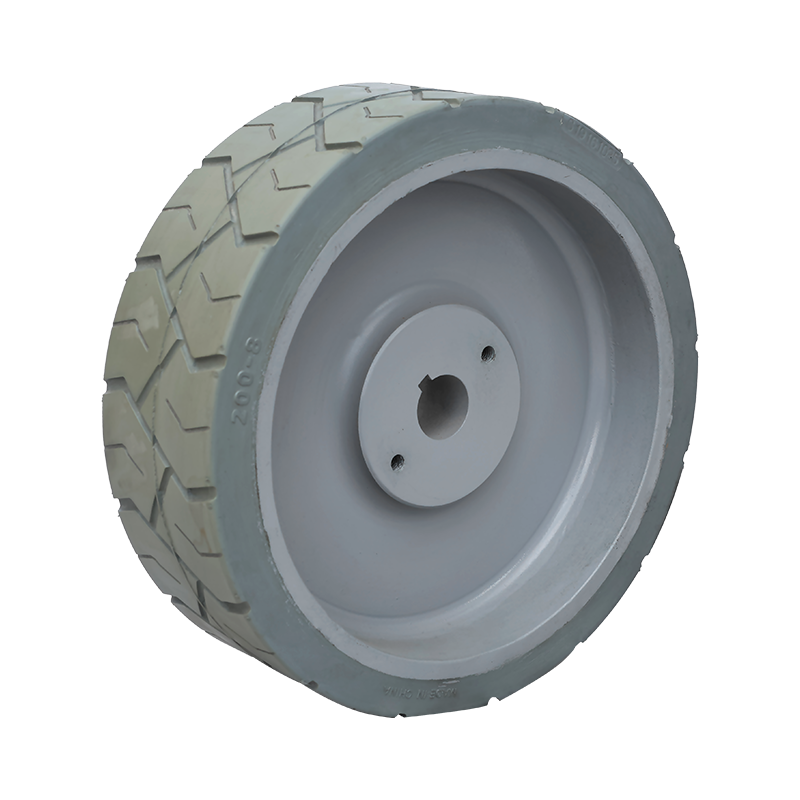
Non-marking tires — a premium variant of cushion and solid tires that use a light-colored rubber compound instead of carbon-black — cost more per set but eliminate the floor cleaning costs and food safety audit issues that black tire marks create in food distribution and pharmaceutical warehouses. For these applications, non-marking tires are not a luxury — they are the economically rational choice when total operational cost is calculated.
Building a Forklift Tire Management Program
Operations with more than three to five forklifts benefit significantly from a structured tire management program rather than ad hoc replacement when tires visibly fail. A formal program reduces unplanned downtime, improves safety compliance, and provides data to optimize tire selection over time. Key elements of an effective program include:
- Scheduled inspection intervals: Define a standard inspection frequency — typically weekly for high-utilization forklifts and monthly for low-use equipment. Record tread depth or wear line measurements for each tire at each inspection.
- Replacement threshold policy: Document the specific wear measurements or visual conditions that trigger mandatory replacement, and enforce these consistently across all operators and supervisors. Remove the subjectivity that leads to "running it a little longer" decisions.
- Tire life tracking by forklift unit: Record installation date, tire brand and type, and replacement date for each unit. This data identifies outliers — a forklift that wears tires significantly faster than the fleet average has a mechanical or operational problem that should be investigated.
- Vendor relationship and stocking agreement: For fleets running standardized tire specifications, negotiate a stocking agreement with your tire supplier so replacement sets are available within 24–48 hours. Emergency tire procurement at full retail price is one of the most avoidable costs in fleet maintenance.
- Operator training and accountability: Include tire care and inspection in operator certification training. Operators who understand how their driving habits affect tire life — and who are empowered to flag tire concerns without fear of being ignored — are your most valuable early warning system for developing tire problems.

CONTACT US
-

Email: SMT001@saimeite-tyre.com
-

Phone: +86-18451337018No. 1, Renmin South Road, Yandu District, Yancheng City, Jiangsu Province, China