
 English
 한국어
한국어 Français
 Español

Industrial Forklift Tires: Types, Selection Guide, and Best Practices for Maximum Service Life
Content
- 1 Why Industrial Forklift Tires Matter More Than Most Operators Realize
- 2 The Three Main Types of Industrial Forklift Tires
- 3 Forklift Tire Compounds and Tread Patterns Explained
- 4 Forklift Tire Size Specifications and How to Read Them
- 5 When to Replace Industrial Forklift Tires: Wear Indicators and Inspection Criteria
- 6 Matching Forklift Tire Type to Operating Environment
- 7 Industrial Forklift Tire Brands and Quality Tiers
- 8 Best Practices for Extending Industrial Forklift Tire Service Life
Why Industrial Forklift Tires Matter More Than Most Operators Realize
Industrial forklift tires are the single point of contact between a loaded lift truck and the operating surface, making them one of the most operationally critical and frequently underestimated components in any material handling fleet. The tire type, compound formulation, and condition directly affect load capacity, stability, operator comfort, floor surface preservation, fuel or energy consumption, and the overall safety of every lift cycle performed throughout the working day. A forklift operating on worn, mismatched, or incorrectly specified tires is not simply a maintenance issue — it is a measurable productivity liability and a genuine safety risk that can result in tip-over incidents, load drops, and accelerated damage to warehouse floors and racking systems.
The forklift tire market encompasses a broad range of designs, compounds, and construction types engineered for specific applications — from smooth-floor indoor electric counterbalance trucks to outdoor rough-terrain telehandlers operating on construction sites. Understanding the functional differences between these categories, and matching the correct industrial forklift tire specification to the application environment, is fundamental to achieving optimal fleet performance, minimizing unplanned downtime, and controlling tire replacement costs over the operational life of the equipment. This guide covers everything fleet managers, warehouse supervisors, and maintenance technicians need to make informed decisions about forklift tire selection, replacement timing, and maintenance practices.
The Three Main Types of Industrial Forklift Tires
Industrial forklift tires are manufactured in three fundamentally different construction types — cushion, pneumatic, and solid pneumatic — each with distinct performance characteristics that make them appropriate for specific operating environments and forklift designs. Selecting the wrong type for the application is the most expensive tire specification mistake a fleet manager can make, as it affects not just tire life but machine productivity and safety across every shift.
Cushion Forklift Tires
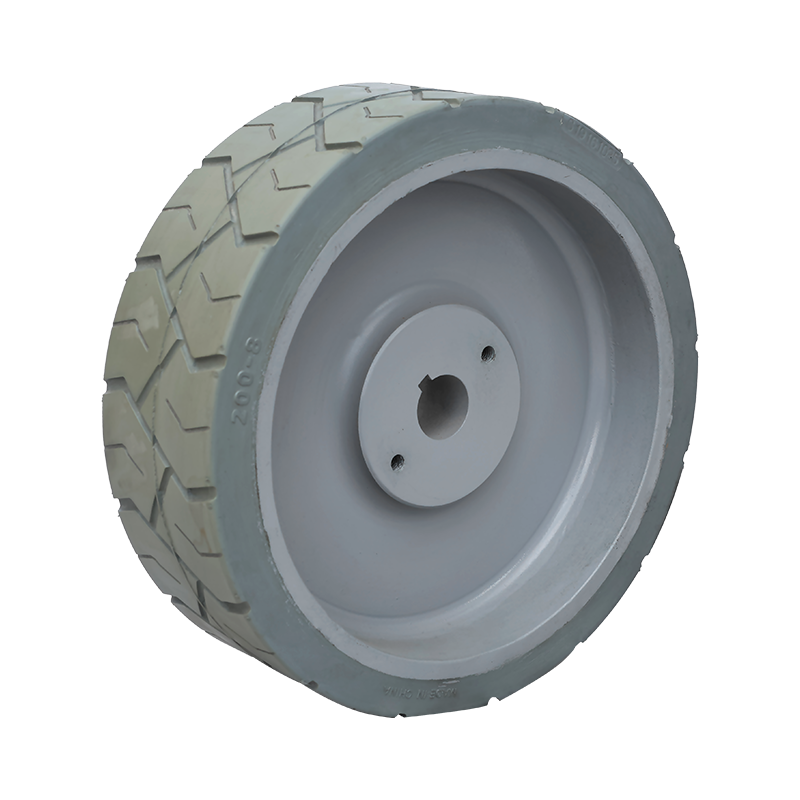
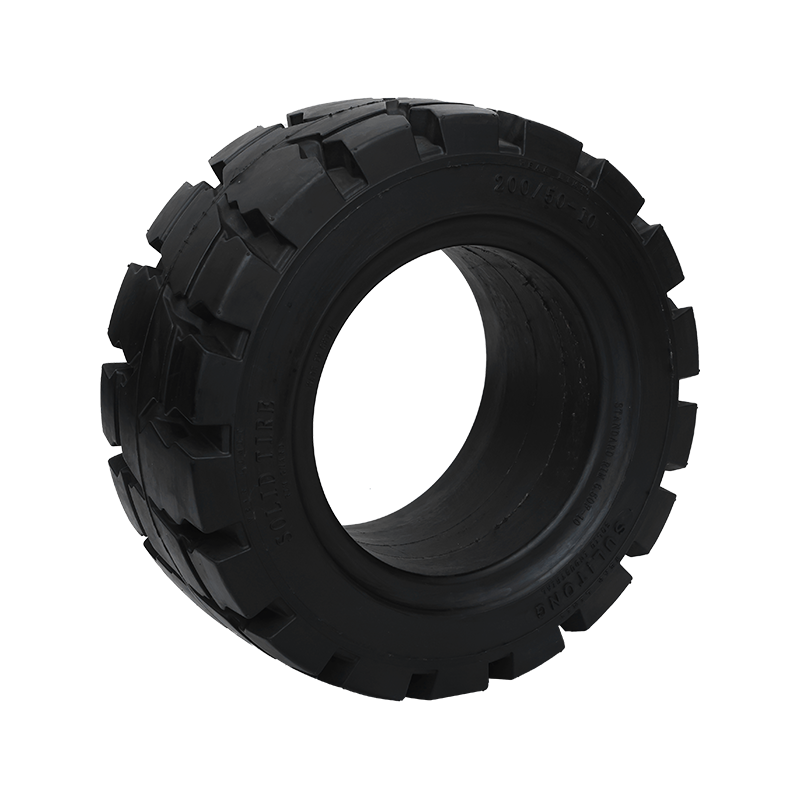
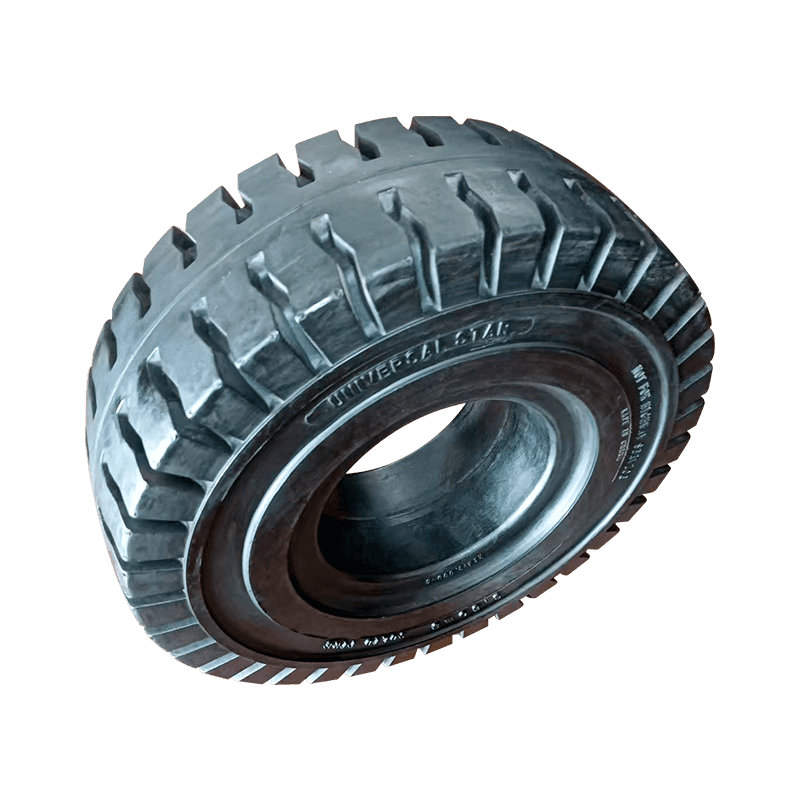
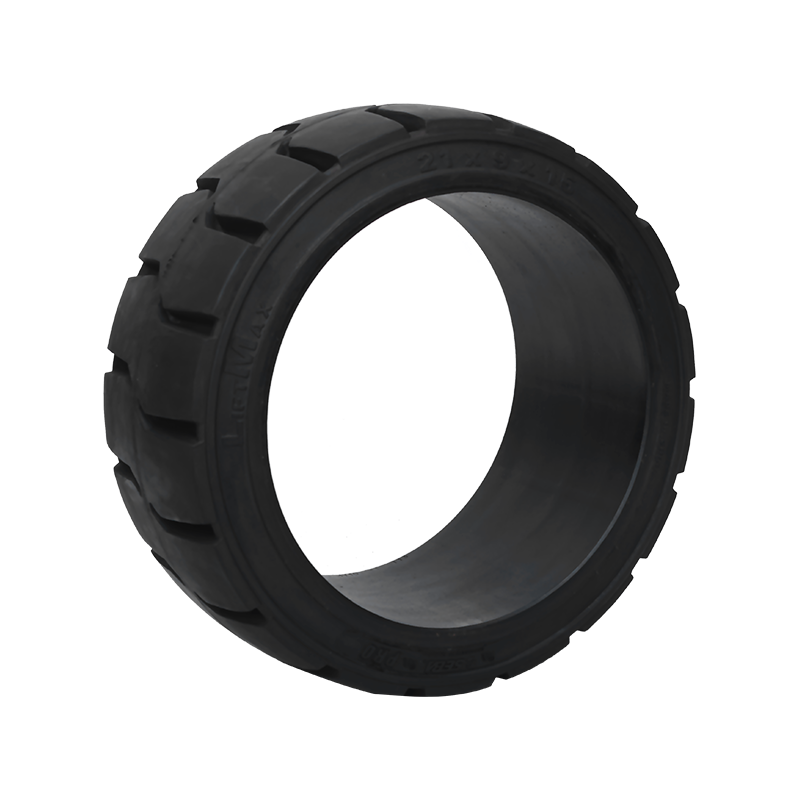
Cushion forklift tires are solid rubber tires pressed directly onto a steel band that mounts onto the forklift wheel rim. They have no air chamber, no inner tube, and no possibility of puncture or blowout. The rubber compound itself provides all the cushioning and load support, and the steel band provides the structural interface with the wheel. Cushion tires are designed exclusively for indoor use on smooth, hard, flat surfaces such as warehouse concrete floors, loading dock areas, and distribution center aisles. Their low profile and flat contact patch maximize load stability on level surfaces and allow the forklift to operate with a lower overall height — an important consideration in facilities with height-restricted racking systems or dock levelers. Cushion tires produce less vibration on smooth floors than pneumatic alternatives and provide excellent steering response due to their rigid, non-deflecting contact patch. However, their complete lack of air-cushion compliance makes them entirely unsuitable for outdoor use on uneven surfaces, expansion joints, or rough terrain where the rigid structure would transmit severe shock loads through the forklift frame and mast, potentially damaging hydraulic components and causing operator fatigue and injury.
Pneumatic Forklift Tires
Pneumatic forklift tires are air-filled tires structurally similar to automotive tires, built with textile or steel cord plies beneath a rubber tread compound, and mounted on split rims with inner tubes or tubeless bead seats. The air chamber provides significant shock absorption and surface conformity, making pneumatic forklift tires the standard choice for outdoor applications on asphalt, concrete, gravel, and uneven surfaces, as well as for forklifts that regularly transition between indoor and outdoor environments. They are available in both standard (bias-ply) and radial constructions — radial pneumatic forklift tires offer lower rolling resistance, better traction, and longer tread life than bias-ply equivalents, particularly on electric forklifts where energy efficiency directly affects battery range per charge. The primary disadvantage of pneumatic tires in industrial applications is puncture vulnerability — nails, wire, sharp debris, and glass on warehouse floors can cause sudden pressure loss that grounds the machine until the tire is repaired or replaced. Regular air pressure maintenance is also an operational discipline requirement that adds to fleet management overhead compared to solid tire alternatives.
Solid Pneumatic (Resilient) Forklift Tires
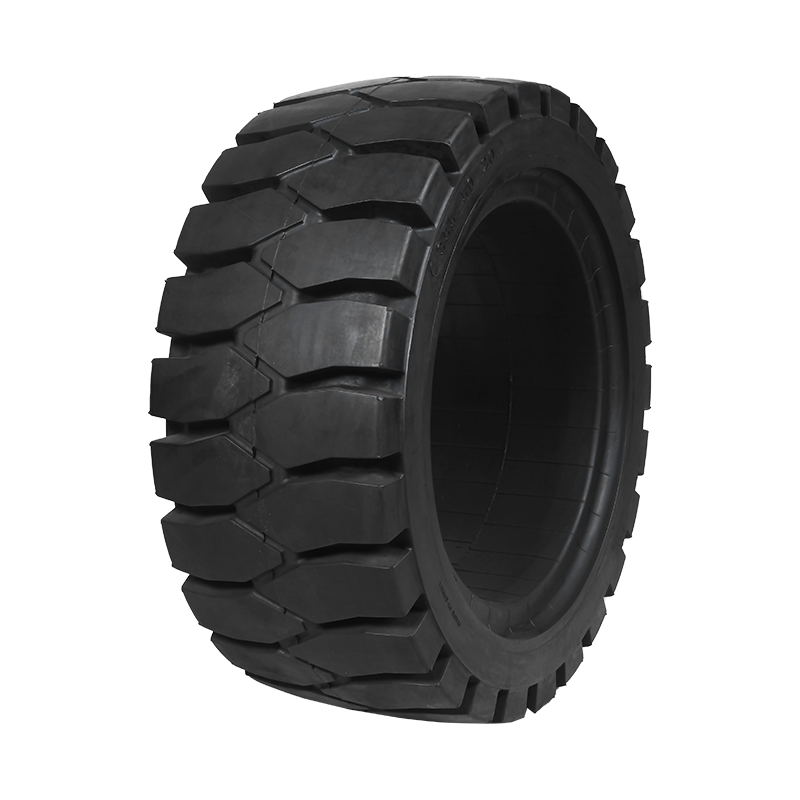
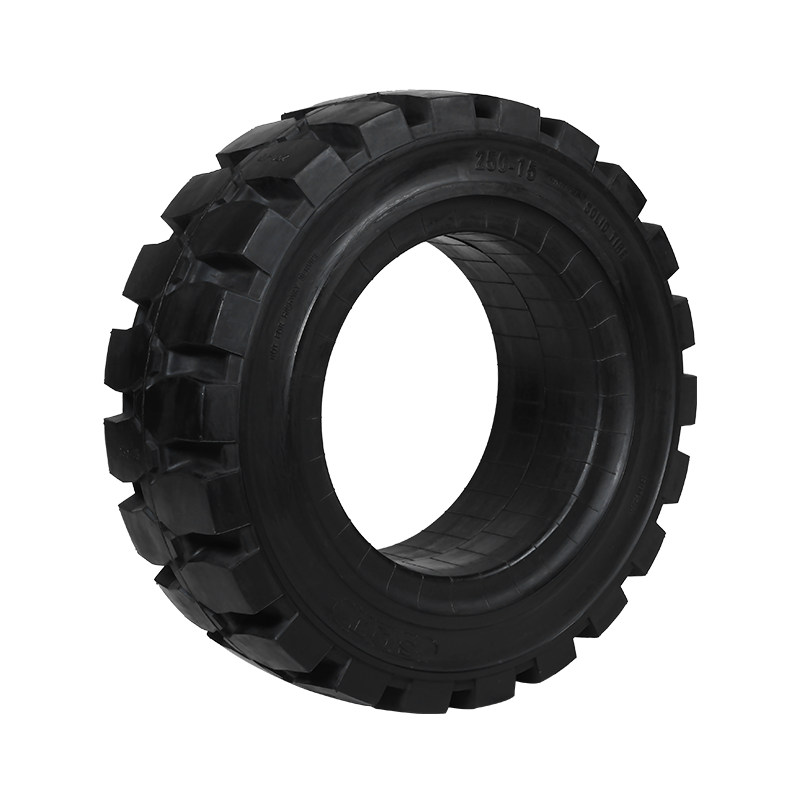
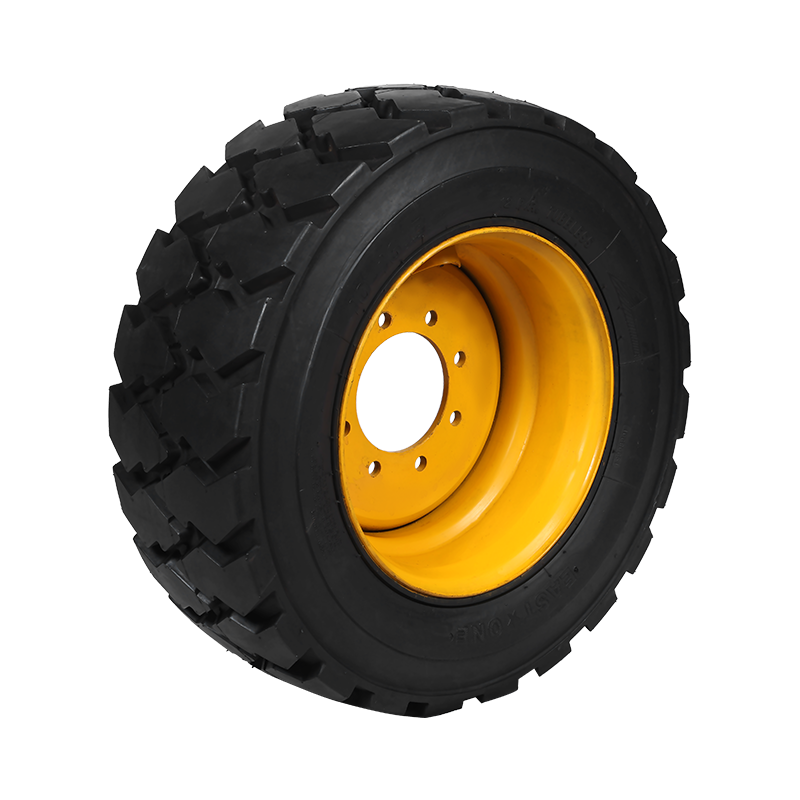
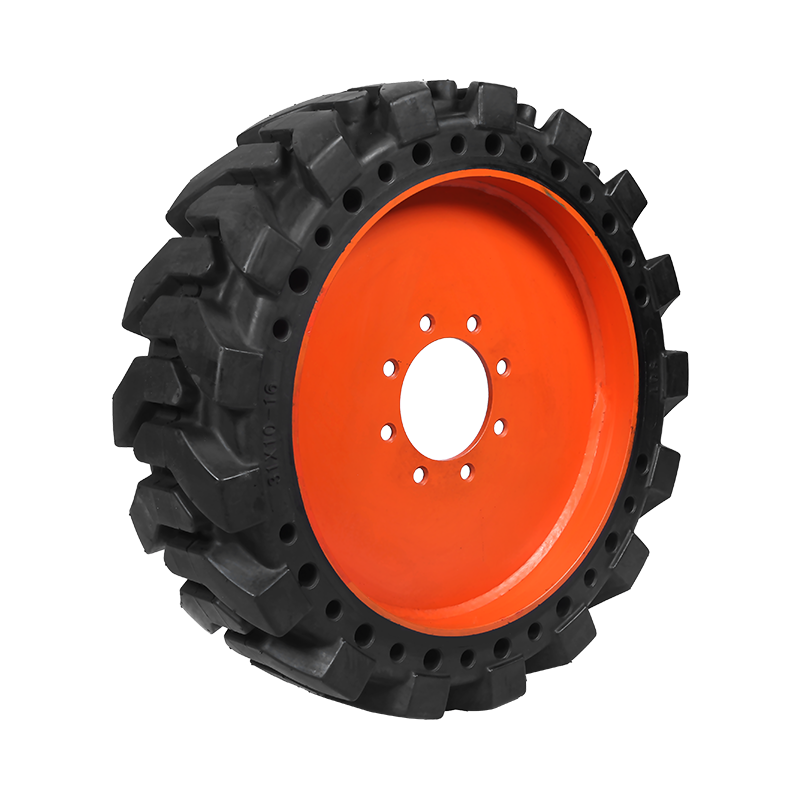
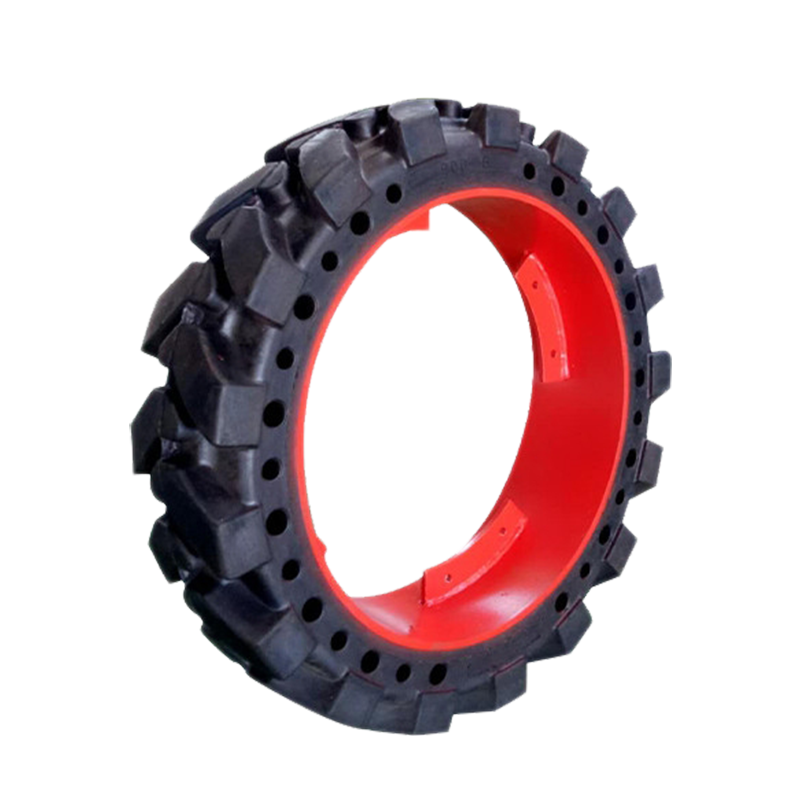
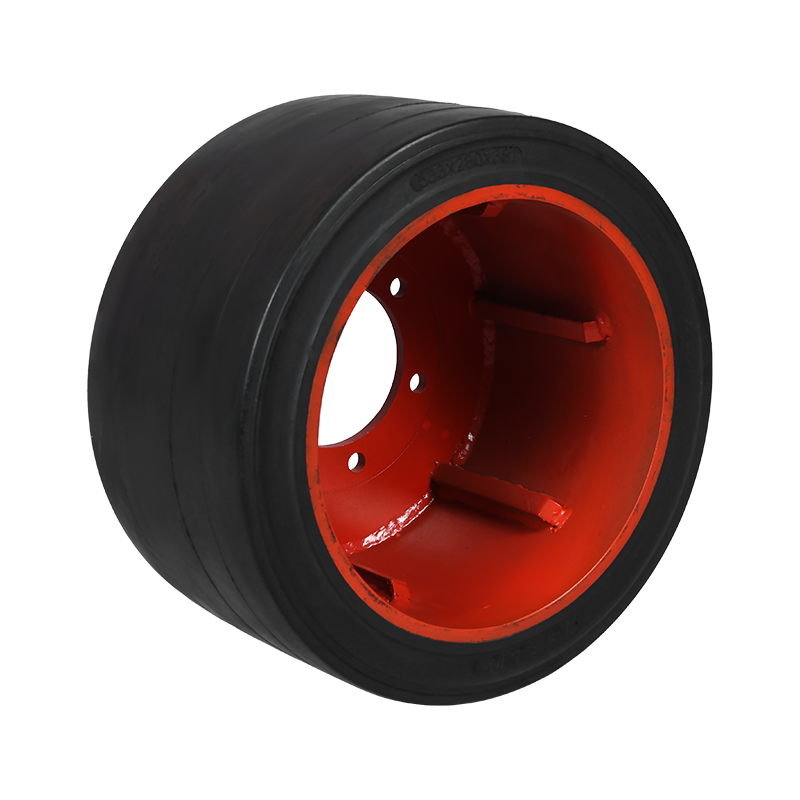
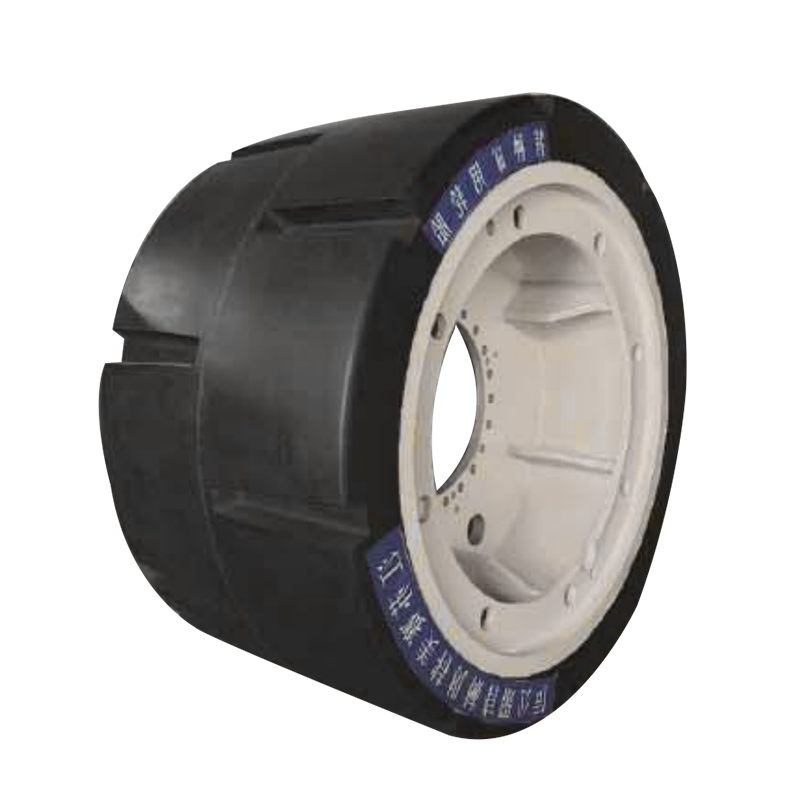
Solid pneumatic forklift tires — also called resilient tires or press-on pneumatic tires — combine the puncture-proof reliability of solid rubber construction with a profile and tread pattern designed to mimic the footprint and performance characteristics of air-filled pneumatic tires. They are constructed from multiple layers of rubber compound with different hardness ratings — a softer outer tread layer for grip and cushioning, a stiffer mid-layer for load support, and a hard rubber base layer bonded to the steel rim band. This layered construction provides meaningfully better shock absorption and traction than standard cushion tires while eliminating all puncture and pressure-maintenance concerns. Solid pneumatic forklift tires are used extensively in lumber yards, recycling facilities, steel service centers, construction material suppliers, and any outdoor or transitional environment where pneumatic tire punctures would be frequent and costly. They are heavier than equivalent pneumatic tires, which slightly increases counterbalance weight and can affect electric forklift energy consumption, but this disadvantage is outweighed in puncture-prone environments by the elimination of flat tire downtime.
Forklift Tire Compounds and Tread Patterns Explained
Beyond the basic construction type, industrial forklift tires are manufactured in multiple rubber compound formulations and tread pattern configurations that further optimize performance for specific operating conditions. These variations allow fleet operators to fine-tune tire selection beyond the broad cushion/pneumatic/solid pneumatic categories to address specific operational challenges.
Standard Black Rubber Compound
Standard black carbon-reinforced rubber compound is the baseline formulation for most industrial forklift tires across all construction types. Carbon black provides the primary reinforcing filler that gives the rubber compound its abrasion resistance, tensile strength, and load-carrying capacity. Standard compound tires deliver a good balance of wear life, traction, and cost-effectiveness for general-purpose applications on concrete and asphalt surfaces. They are the appropriate choice for the majority of warehouse, distribution, and outdoor yard applications where no specialized surface or load requirements dictate an alternative compound selection.
Non-Marking White or Gray Compound Tires
Non-marking forklift tires are compounded without carbon black, replacing it with silica or other light-colored reinforcing fillers that provide comparable mechanical properties without leaving black rubber transfer marks on flooring surfaces. These tires are mandatory in food processing facilities, pharmaceutical manufacturing plants, clean rooms, finished goods warehouses where light-colored flooring is aesthetically critical, and any application where tire marks on the floor surface are operationally or hygienically unacceptable. Non-marking forklift tires typically carry a slight cost premium over standard black compound tires and may exhibit marginally different wear characteristics, but in applications where floor marking is a compliance requirement, they are a non-negotiable specification.
Heat-Resistant and Cold-Storage Compound Tires
Specialty compound formulations address the performance degradation that standard rubber compounds experience at temperature extremes. Heat-resistant forklift tires are compounded with additives that stabilize the rubber matrix at elevated ambient temperatures encountered in foundry operations, ceramic facilities, glass manufacturing, and proximity to industrial ovens and furnaces — environments where standard tires soften, chunk, and wear at accelerated rates. Cold-storage forklift tires are formulated with plasticizers that maintain rubber flexibility and grip at temperatures down to -30°C in freezer warehouse environments, where standard compound rubber becomes brittle, develops surface cracking, and loses traction on ice-contaminated surfaces. Specifying the correct temperature-range compound for these environments is a critical safety and cost consideration, as standard tires used in extreme temperature applications may fail in a fraction of their normal service life.
Tread Pattern Selection
Tread pattern on forklift tires serves different functions than on highway vehicle tires, because forklift operating speeds are low and hydroplaning is rarely a concern. Smooth or near-smooth tread patterns on cushion and solid tires maximize the rubber-to-floor contact area, optimizing traction and load stability on clean, smooth concrete — the standard indoor warehouse application. Lug tread patterns on pneumatic and solid pneumatic outdoor tires provide bite into loose surfaces, gravel, mud, and soft ground, preventing wheel spin under load on the non-paved surfaces common in outdoor storage yards and construction sites. Block tread patterns provide an intermediate performance level suitable for transitional applications moving between smooth indoor floors and rough outdoor surfaces, offering acceptable traction in both environments without fully optimizing for either.
Forklift Tire Size Specifications and How to Read Them
Industrial forklift tires use size designation systems that differ from passenger vehicle and truck tire conventions, and correctly reading and matching tire size specifications is essential for ensuring the replacement tire fits the wheel, provides the correct load radius, and maintains the machine's rated lift capacity and stability. Installing the wrong tire size can raise or lower the forklift's center of gravity, change the effective load center distance, and invalidate the machine's rated capacity plate — a serious safety and liability issue.
| Tire Type | Size Format Example | Dimension Meaning | Notes |
| Cushion Tire | 18 × 7 – 8 | OD × Width – Rim Diameter (inches) | All dimensions in inches; rim diameter is steel band ID |
| Solid Pneumatic | 28 × 9 – 15 | OD × Width – Rim Diameter (inches) | Same format as cushion; larger OD for outdoor profile |
| Pneumatic (Imperial) | 7.00 – 12 | Section Width – Rim Diameter (inches) | Bias-ply format; ply rating also specified |
| Pneumatic (Metric) | 200/50 – 10 | Width(mm) / Aspect Ratio – Rim Diameter (inches) | Common on European and Asian forklift models |
The outer diameter (OD) specification is the most critical dimension for cushion and solid tires because it directly determines the loaded height of the forklift and affects mast tilt geometry and load center calculations. When replacing tires with a different brand or compound, verify that the replacement tire's OD matches the original specification to within ±3 mm. A tire with a significantly larger OD raises the machine, changes the tipping angle, and may cause the counterweight to contact the ground during rearward mast tilt — a dangerous condition that cannot always be detected without careful measurement. Always reference the forklift manufacturer's tire specification plate on the machine before ordering replacement industrial forklift tires.
When to Replace Industrial Forklift Tires: Wear Indicators and Inspection Criteria
Determining the correct time to replace forklift tires is an operational and safety judgment that should be based on objective inspection criteria rather than simple calendar intervals or mileage estimates. Forklift tires wear at rates that vary enormously depending on surface conditions, load weights, operating speeds, turning frequency, and operator technique — making visual and dimensional inspection the only reliable replacement decision tool.
The 2-Inch Safety Line on Cushion and Solid Tires
Most cushion and solid forklift tire manufacturers mold a wear indicator line — commonly called the "2-inch line" or "safety line" — into the tire sidewall at a specific distance from the tire base. When the top surface of the tire wears down to the level of this line, the tire has reached its minimum safe operating thickness and must be replaced. Operating a forklift on tires worn below the safety line means the remaining rubber layer is too thin to provide adequate cushioning, the steel band may be at risk of contact damage, and the load-carrying capacity of the tire is compromised below the machine's rated requirements. In practice, many fleet operators apply a proactive replacement policy that initiates tire replacement when the wear surface is within 3–5 mm of the safety line rather than waiting until the line is reached, because scheduling tire replacement proactively during planned maintenance intervals eliminates the operational disruption of an emergency replacement when the line is reached unexpectedly mid-shift.
Chunking, Tearing, and Flat Spots
Beyond simple wear depth, the condition of the tire surface requires inspection for damage that requires replacement regardless of remaining tread depth. Chunking — the loss of large pieces of rubber from the tread surface — occurs when tires are subjected to severe lateral scrubbing during tight turns, operated on surfaces with sharp debris, or used in applications beyond their load or temperature rating. A chunked tire has an irregular contact surface that causes severe vibration, reduces traction, and can shed additional material into sensitive areas of the warehouse floor. Flat spots develop on solid and cushion tires when a heavily loaded forklift is parked in one position for extended periods, particularly in warm environments where rubber creep occurs under sustained compression. Minor flat spots may round out after a warm-up period of operation, but severe flat spotting that persists after warm-up produces a characteristic rhythmic thumping vibration that cannot be corrected without tire replacement.
Pneumatic Tire Inspection Criteria
Pneumatic forklift tires require inspection for both tread wear depth and structural integrity. Tread wear should be assessed at multiple points around the circumference and across the tread width — uneven wear patterns indicating alignment problems, overloading, or chronic over/under-inflation should trigger both tire replacement and a mechanical inspection to identify the root cause. Sidewall inspection must check for cuts, bulges, cracking, and impact breaks that may indicate internal ply damage compromising the tire's pressure retention and load capacity. Any pneumatic forklift tire showing sidewall bulging — indicating internal ply separation — must be removed from service immediately regardless of tread depth, as a bulge indicates imminent blowout risk under operating load and pressure.
Matching Forklift Tire Type to Operating Environment
The single most impactful tire specification decision is matching the construction type and compound to the specific operating environment. The following framework helps fleet managers systematically evaluate operating conditions and arrive at the correct tire specification for each machine in the fleet.
- Smooth Indoor Concrete Only, No Debris Risk: Cushion tires in standard or non-marking compound as appropriate. Smooth tread profile for maximum contact area and traction on clean concrete. This is the highest-performance, lowest-cost option for pure indoor applications on counterbalance electric or LP forklifts.
- Indoor with Occasional Debris, Dock Plates, or Expansion Joints: Solid pneumatic tires with smooth or lightly lugged tread provide better impact absorption than cushion tires for surfaces with minor irregularities while retaining puncture-proof operation. Suitable for forklifts operating near loading docks where outdoor debris is occasionally tracked in.
- Outdoor Paved Surfaces, Clean Asphalt or Concrete Yard: Pneumatic tires in radial construction for lowest rolling resistance and best tread life on hard outdoor surfaces, or solid pneumatic tires if puncture risk from debris is moderate to high in the yard environment. Lightly lugged or block tread pattern for all-weather traction.
- Outdoor Unpaved, Gravel, or Soft Ground: Deep-lug pneumatic tires, preferably in radial construction with reinforced sidewalls, provide maximum traction and surface compliance on loose, uneven ground. This is the standard specification for rough-terrain forklifts and telehandlers operating on construction sites and outdoor storage areas with unprepared surfaces.
- Mixed Indoor/Outdoor Transitional Use: Solid pneumatic tires with a block or intermediate lug tread pattern represent the most practical compromise for forklifts regularly transitioning between warehouse floors and outdoor yards. They eliminate flat tire risk while providing adequate traction and acceptable floor surface compatibility in both environments.
- Extreme Temperature Environments: Heat-resistant compound tires rated to the maximum ambient temperature for operations near furnaces, kilns, or heat-treating equipment; cold-storage compound tires rated to the minimum operating temperature for freezer warehouse forklifts. Standard compound tires in either extreme temperature application will exhibit dramatically reduced service life and potentially unsafe behavior.
Industrial Forklift Tire Brands and Quality Tiers
The industrial forklift tire market spans a wide quality spectrum from premium OEM-equivalent brands to economy imports, and the price difference between tiers does not always reflect a proportional difference in service life or performance. Understanding what differentiates quality tiers helps fleet managers make cost-effective purchasing decisions that account for total cost of ownership rather than unit purchase price alone.
Premium Tier: OEM and Established Specialist Brands
Premium industrial forklift tires from manufacturers such as Trelleborg, Continental, Solideal (Camso), Advance, and Michelin are engineered with application-specific compound formulations, precise dimensional tolerances, and documented load ratings verified through independent testing. These brands publish detailed application guides, compound selection matrices, and OD/width tolerance specifications that allow fleet managers to make confident specification decisions and compare performance data across compound options. Premium tire compounds typically deliver 20–40% longer service life than economy alternatives in equivalent applications, which frequently offsets their higher purchase price on a cost-per-operating-hour basis — particularly in high-utilization multi-shift operations where tire replacement labor cost is a significant component of total tire cost.
Mid-Tier and Economy Options
Mid-tier and economy forklift tire brands offer meaningful purchase price savings — often 30–50% below premium equivalents — and may provide acceptable performance in lower-intensity single-shift applications on well-maintained smooth floors. The primary risk with economy-tier industrial forklift tires is dimensional variability that can affect fit on the wheel rim and loaded OD consistency, and compound variability between production batches that makes wear life less predictable. For price-sensitive operations with moderate utilization and clean operating environments, economy tires can represent a legitimate cost management strategy. However, for high-utilization multi-shift operations, extreme temperature environments, or applications where tire failure would have significant safety or operational consequences, premium compound tires consistently deliver better total cost outcomes despite their higher unit price.
Best Practices for Extending Industrial Forklift Tire Service Life
Even the highest-quality forklift tires will wear prematurely if operated incorrectly or maintained poorly. The following best practices represent the most impactful interventions fleet managers and operators can implement to maximize tire service life and reduce the frequency and cost of replacement across the entire forklift fleet.
- Maintain Correct Inflation Pressure on Pneumatic Tires: Under-inflation is the single largest cause of premature pneumatic forklift tire failure, causing excessive sidewall flexing, internal heat buildup, and accelerated tread wear. Check and record inflation pressure at the start of each shift using a calibrated gauge — never estimate pressure visually. Over-inflation reduces traction, increases susceptibility to impact damage, and produces a harder ride that accelerates mechanical component wear throughout the forklift.
- Train Operators on Tire-Preserving Techniques: Operator behavior has a greater influence on tire wear than any other controllable variable. Aggressive spinning on acceleration, abrupt braking that locks drive wheels, and high-speed tight turns that scrub the tire sidewalls laterally across the floor surface all dramatically accelerate wear. Operator training programs that specifically address tire-preserving driving technique — smooth acceleration, gradual braking, wide turning radii, and reduced speed on turns — consistently reduce tire consumption by 15–30% in fleet studies.
- Keep Operating Surfaces Clean and Free of Sharp Debris: Regular sweeping and debris removal from operating aisles, dock areas, and yard surfaces is one of the most cost-effective tire life extension measures available. Wire, nails, metal shavings, broken pallets, and sharp stone fragments embedded in tires are the primary cause of chunking on solid tires and punctures on pneumatic tires. In facilities where floor debris is unavoidable — scrap metal processing, lumber handling, demolition waste sorting — solid pneumatic tire specification and a rigorous surface maintenance program should be implemented together.
- Rotate Tires Systematically on Multi-Tire Machines: On reach trucks and order pickers with multiple load wheel tires, and on counterbalance forklifts where rear steer tires wear differently from front drive tires, implementing a rotation schedule equalizes wear across the tire set and extends the time before any individual tire reaches its replacement threshold. Consult the forklift manufacturer's maintenance manual for rotation intervals and patterns specific to each model.
- Never Exceed the Machine's Rated Load Capacity: Chronic overloading of forklifts beyond their rated capacity applies forces to tires that exceed their design limits, causing accelerated tread wear, internal structural fatigue, and elevated risk of tire failure under load. Load capacity ratings are established with specific tire sizes and load ratings in mind — exceeding these ratings simultaneously stresses both the machine structure and the tires beyond their engineered limits.
- Replace Tires as Matched Axle Sets: Replacing only the most worn tire on a drive axle and leaving a significantly less-worn tire on the opposite side creates a diameter mismatch that causes differential wheel speeds during straight travel, forcing the differential to compensate continuously and producing lateral scrubbing wear on the newer tire. Always replace drive axle tires as a matched pair from the same manufacturer, compound, and production batch where possible to ensure consistent diameter and compound characteristics across the axle.
CONTACT US
-

Email: SMT001@saimeite-tyre.com
-

Phone: +86-18451337018No. 1, Renmin South Road, Yandu District, Yancheng City, Jiangsu Province, China