
 English
 한국어
한국어 Français
 Español

Scissor Lift Tires: How to Pick the Right Type, Size, and Compound for Your Machine
Content
- 1 Why Scissor Lift Tires Deserve More Attention Than They Usually Get
- 2 The Two Broad Categories of Scissor Lift and Their Tire Requirements
- 3 Solid Press-On Tires for Electric Scissor Lifts: Construction and Performance
- 4 How to Read Scissor Lift Tire Size Markings
- 5 Choosing Between Standard Black and Non-Marking Scissor Lift Tires
- 6 Rough-Terrain Scissor Lift Tire Options: Pneumatic vs. Foam-Filled
- 7 Scissor Lift Tire Wear: What to Inspect and When to Replace
- 8 Mismatched Tires and Why They Create Safety Problems
- 9 Getting the Most Life Out of Scissor Lift Tires
Why Scissor Lift Tires Deserve More Attention Than They Usually Get
Scissor lift tires are one of the most overlooked components on any aerial work platform fleet. Most operators and site managers focus their attention on platform capacity, working height, and power source — the big-ticket specifications that appear on rental quotes and purchase orders — while the tires are treated as a consumable afterthought replaced only when they are visibly destroyed or when a machine fails its pre-use inspection. This approach costs money, creates avoidable downtime, and in some cases introduces safety risks that would have been entirely preventable with a more deliberate tire management strategy.
The tires on a scissor lift are the only point of contact between the machine and the surface it operates on. They determine how effectively the machine can be maneuvered in tight spaces, how much vibration reaches the platform and the operator during travel, whether the floor surface beneath will be marked or damaged, and — most critically — how consistently the machine's stability envelope behaves under elevated load. A scissor lift with worn, incorrect, or mismatched tires does not perform the way its stability calculations assumed it would. That gap between assumed and actual performance is where incidents happen.
The good news is that scissor lift tire selection is not complicated once you understand the key variables. There are a relatively small number of tire types, a clear set of matching criteria, and a straightforward set of inspection and replacement principles that apply across virtually all electric and rough-terrain scissor lifts. This guide covers all of them in practical, usable terms for fleet managers, equipment supervisors, and anyone responsible for keeping scissor lift equipment operating safely and productively.
The Two Broad Categories of Scissor Lift and Their Tire Requirements
Before discussing specific tire types, it is worth establishing the fundamental split in scissor lift design that drives most tire specification decisions. Electric slab scissor lifts and rough-terrain scissor lifts have different operating environments, different weight distributions, different travel speeds, and different surface interaction requirements — and these differences translate directly into different tire needs.
Electric Slab Scissor Lifts
Electric slab scissor lifts — the compact, battery-powered machines found in warehouses, retail stores, logistics facilities, manufacturing plants, and commercial construction interiors — are designed for use on smooth, level, prepared surfaces. Their operating environment is typically finished concrete, epoxy-coated floors, polished warehouse slabs, or similar hard indoor surfaces. These machines are relatively lightweight, travel at slow speeds, and rarely encounter the surface irregularities, slopes, or debris that characterize outdoor construction environments. Their tire requirements center on floor surface compatibility, non-marking performance, minimal rolling resistance to preserve battery range, and a footprint that keeps floor contact stress within safe limits for the slab beneath.
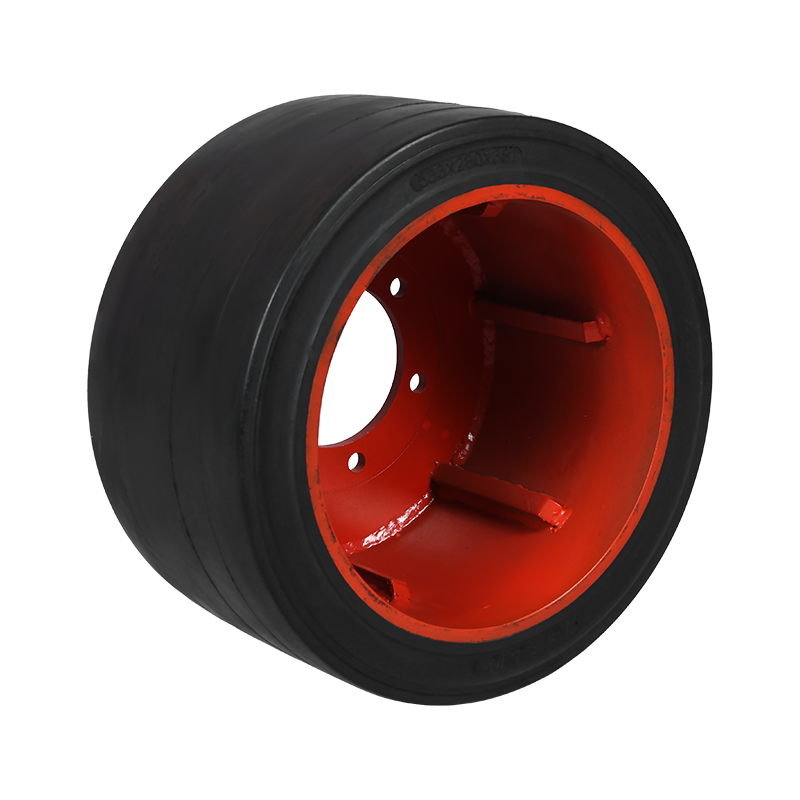
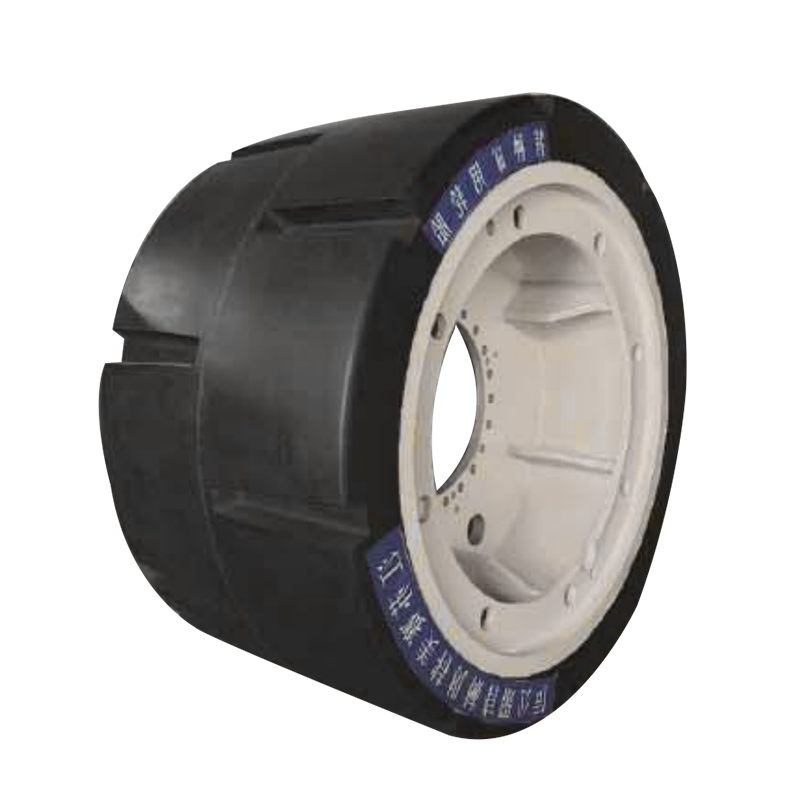
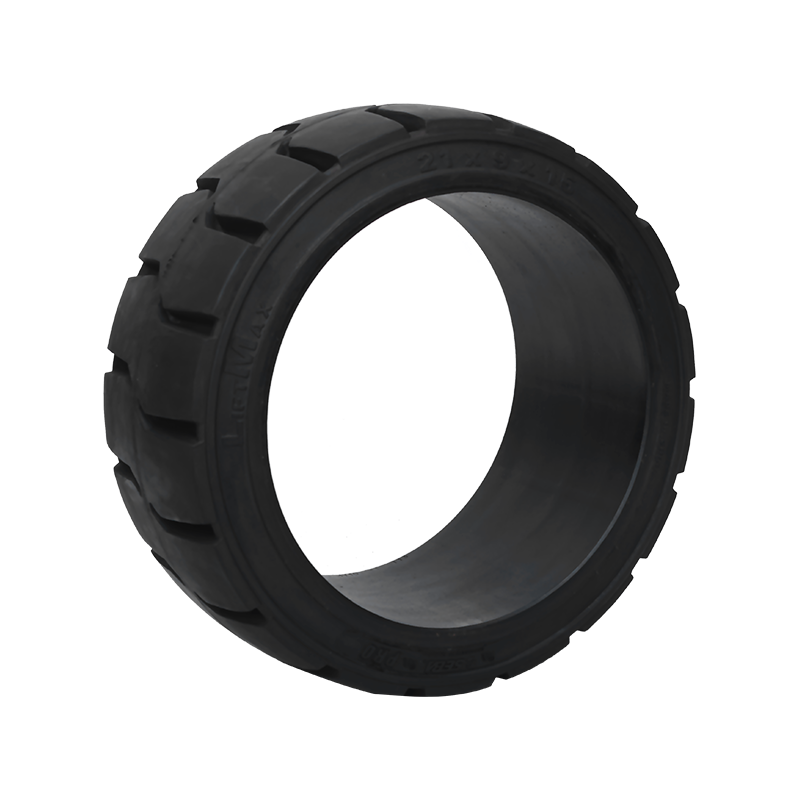
The vast majority of electric slab scissor lifts are supplied from the factory with press-on solid tires — smooth or lightly treaded solid rubber tires pressed directly onto steel wheel rims. These tires are simple, maintenance-free, and well-suited to the smooth indoor environment these machines operate in. The key tire decisions for slab scissor lift operators center on compound selection (standard black versus non-marking), wear monitoring, and ensuring correct size replacement when tires reach end of service life.
Rough-Terrain Scissor Lifts
Rough-terrain scissor lifts are heavier, larger, and more powerful machines designed for outdoor use on unprepared or semi-prepared ground — construction sites, agricultural settings, outdoor events, utility maintenance operations, and similar environments where the surface is uneven, potentially muddy, and frequently covered with debris. These machines have four-wheel drive in most configurations, larger platform capacities, and are built to handle grades and surface conditions that would be completely unsuitable for electric slab models. Their tire requirements are fundamentally different: traction on soft or loose ground, resistance to puncture from construction debris, sufficient sidewall strength to handle impacts from rocks and aggregate, and adequate load capacity for the higher machine weights involved.
Rough-terrain scissor lifts are most commonly fitted with pneumatic tires — either standard pneumatics or foam-filled pneumatics — that provide the ground-conforming flexibility, traction, and ride quality needed for outdoor terrain. Some operators in high-puncture-risk environments convert from standard pneumatics to foam-filled tires to eliminate downtime from punctures while retaining the performance characteristics of the pneumatic tire casing and tread design.
Solid Press-On Tires for Electric Scissor Lifts: Construction and Performance
Press-on solid scissor lift tires are the dominant tire type for electric slab models across all major manufacturers — JLG, Genie, Skyjack, Haulotte, MEC, and others. Understanding their construction helps explain both their strengths and their limitations, and why the quality of the specific tire chosen matters significantly even within this relatively simple product category.
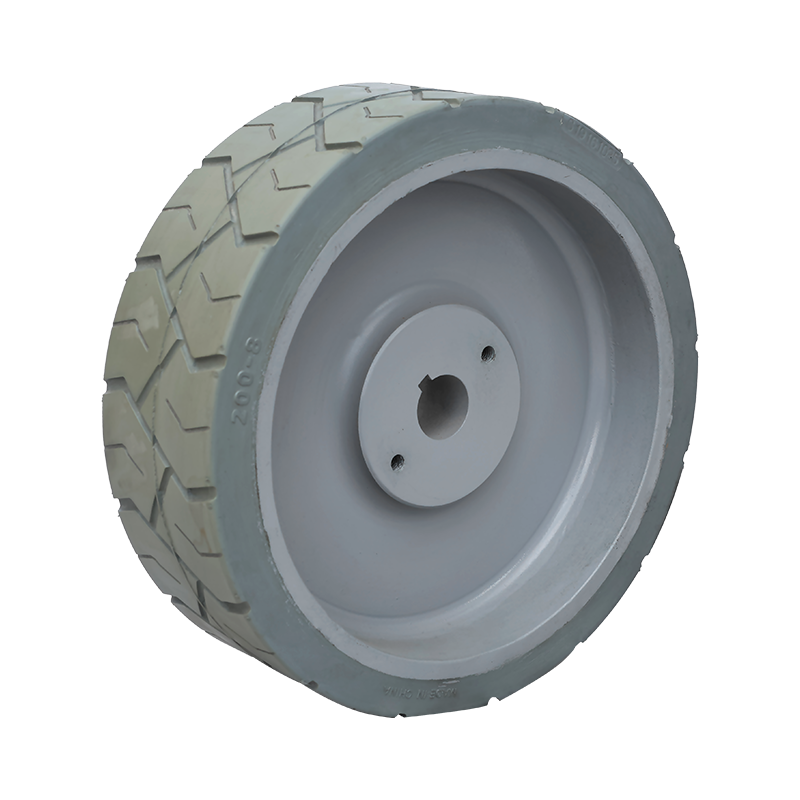
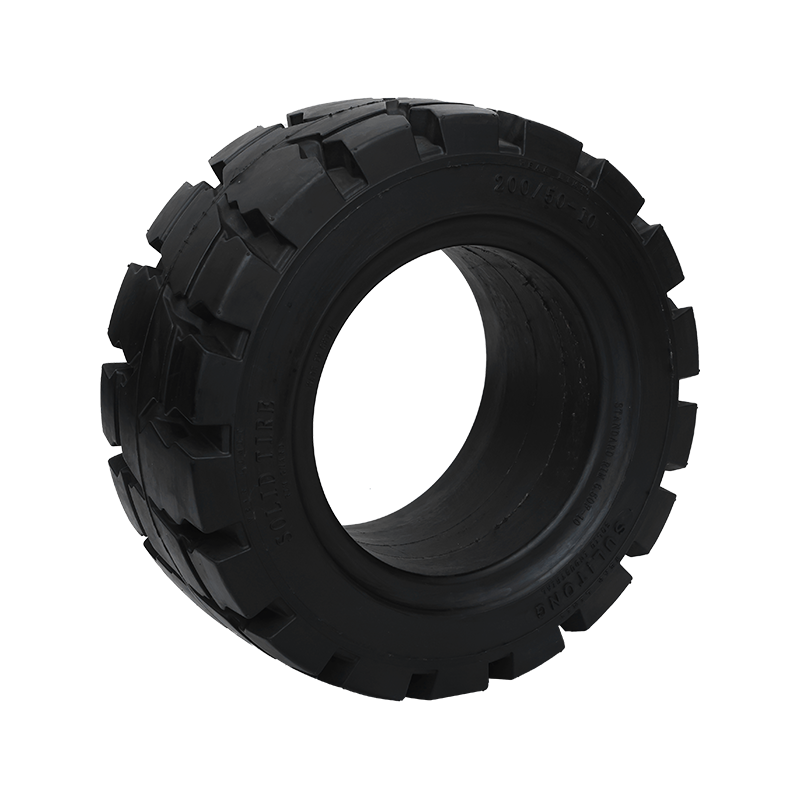
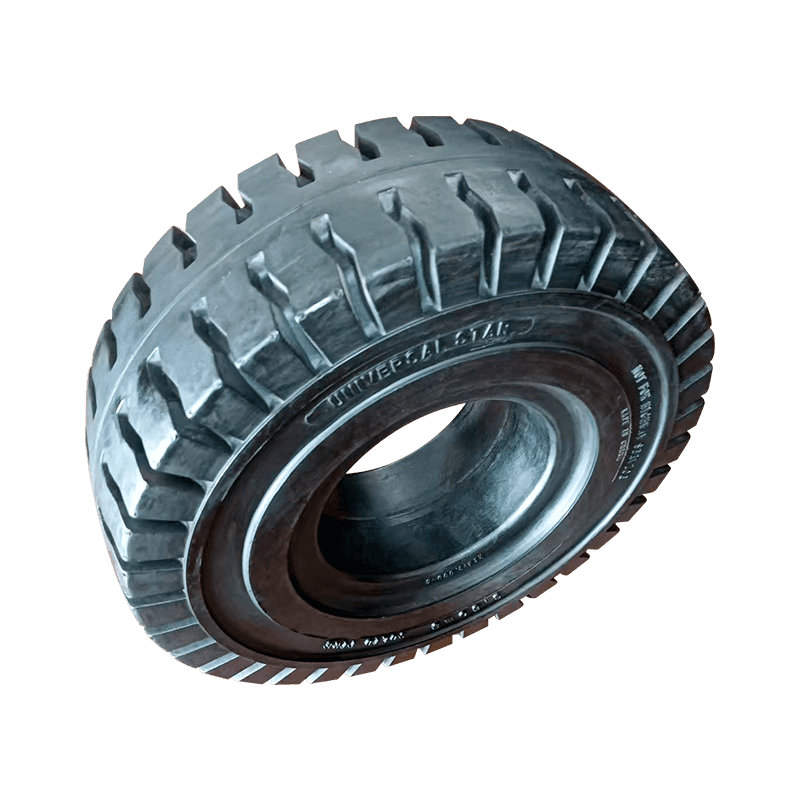
A press-on solid tire consists of a solid rubber molding shaped to match the retaining groove profile of the steel wheel rim it is designed for. The tire is installed by pressing it onto the rim using a hydraulic press that applies controlled force across the full circumference of the tire bead. The interference fit between the rubber and the rim groove — typically 1–3mm of radial interference depending on tire size — is what holds the tire in place during operation. No bolts, clamps, or adhesives are involved; the retention is entirely mechanical, relying on the elastic compression of the rubber against the rim steel.
The rubber compound used in a press-on solid scissor lift tire determines its hardness, wear resistance, non-marking performance, and low-temperature flexibility. Standard black compound tires use carbon black as the primary reinforcing filler, delivering excellent wear resistance and tensile strength at a competitive cost. Non-marking compound tires substitute silica or other light-colored fillers for the carbon black, producing a tire in white or grey that does not deposit black rubber marks on sensitive floor surfaces. The mechanical performance of high-quality non-marking compound tires is broadly comparable to standard black compound in indoor slab applications, though some non-marking formulations show slightly higher wear rates on abrasive surfaces and marginally reduced traction on contaminated floors.
How to Read Scissor Lift Tire Size Markings
Scissor lift tire sizes are expressed in a standardized three-number format that encodes the three critical dimensions needed to confirm rim compatibility and machine fitment. Ordering the wrong size is one of the most common and easily avoidable tire purchasing mistakes, and it happens most frequently when buyers rely on visual comparison or general descriptions rather than reading the size marking directly from the tire being replaced.
The size marking for a press-on solid scissor lift tire appears in one of two formats. The inch format — for example, 15×5-8 or 18×7-8 — expresses overall diameter × width × rim diameter, all in inches. The millimeter format — for example, 381×127-203 or 457×178-203 — expresses the same three dimensions in millimeters. Both formats are in common use; which one appears on a specific tire depends on the machine manufacturer's country of origin and the tire supplier's house format. Always verify all three numbers when ordering replacements — a tire that matches on two dimensions but differs on the third will not fit correctly and cannot be safely used.
The table below shows the most common scissor lift tire sizes and the machine platforms they are typically associated with, as a general reference guide. Always confirm the correct size against the specific machine's operator manual or the tire marking on the existing tire before ordering:
| Tire Size (Inch) | Tire Size (mm) | Typical Machine Category | Common Models |
| 12×4.5-8 | 305×114-203 | Compact electric slab | Skyjack SJ3215, Genie GS-1530 |
| 15×5-8 | 381×127-203 | Mid-size electric slab | JLG 2030ES, Skyjack SJ3220 |
| 18×7-8 | 457×178-203 | Larger electric slab | Genie GS-3232, JLG 3246ES |
| 22×9-10 | 559×229-254 | Heavy-duty electric / dual-purpose | Skyjack SJ6832, Haulotte H15SX |
| 25×8-12 | 635×203-305 | Rough-terrain scissor lift | JLG 3394RT, Genie GS-4390RT |
Choosing Between Standard Black and Non-Marking Scissor Lift Tires
The choice between standard black compound and non-marking compound scissor lift tires is one of the most frequent decisions facing fleet operators and rental companies, and it is sometimes made incorrectly — either by defaulting to non-marking tires everywhere out of excessive caution, or by using standard black tires in facilities where floor marking causes real operational or contractual problems. A clear understanding of what drives this decision helps make it correctly every time.
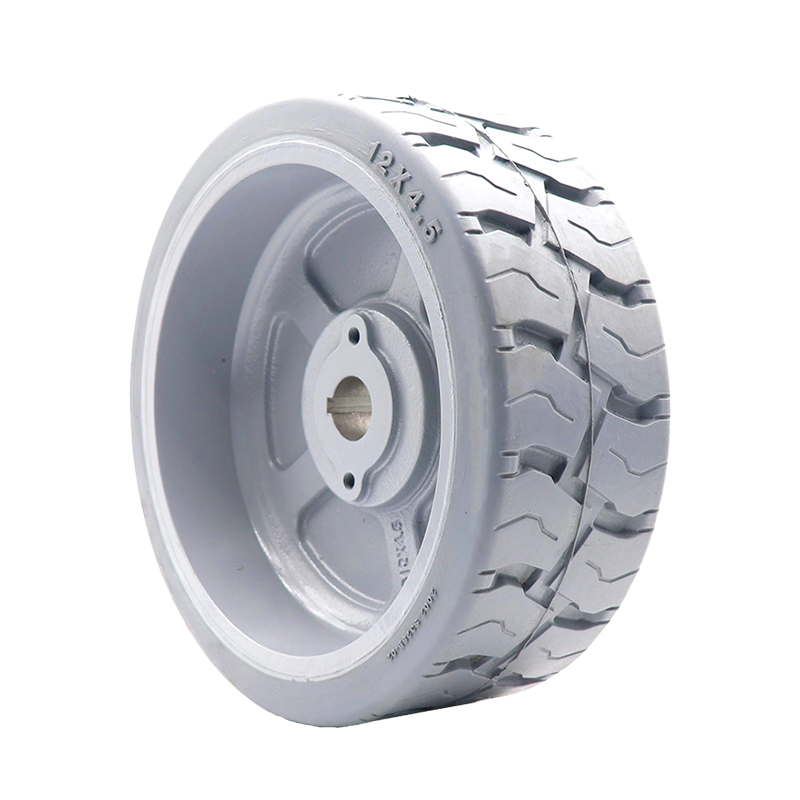
Standard black scissor lift tires leave black rubber deposits on floor surfaces when the machine turns, accelerates, or brakes. The marking is caused by carbon black particles abrading from the tire contact patch under the shear forces of lateral or longitudinal slip. On rough outdoor surfaces or plain concrete floors where appearance is irrelevant, this causes no problem. On polished concrete, epoxy-coated warehouse floors, ceramic or vinyl tile, food-grade sealed surfaces, or any other floor where cleanliness and appearance are operationally significant, black tire marks are a genuine issue — they are difficult to remove from sealed surfaces, they accumulate over time, and in some industries they constitute a contamination event that triggers cleaning protocols and potential customer complaints.
Non-marking scissor lift tires solve this problem by eliminating the carbon black filler that causes marking. They are the appropriate specification for any scissor lift operating in food production facilities, pharmaceutical plants, electronics manufacturing, retail distribution, healthcare facilities, and other environments where floor cleanliness standards are high. They are also worth specifying for rental fleet machines that move regularly between sites — it is simpler to run a non-marking tire on all indoor machines than to manage separate inventories and risk fitting the wrong tire to a machine destined for a sensitive facility.
The practical performance differences between quality non-marking and standard black scissor lift tires in genuine indoor slab applications are minor. Both deliver equivalent load capacity, similar wear life on smooth surfaces, and comparable rolling resistance. The price premium for non-marking tires — typically 10–25% over equivalent black compound — is modest in the context of the total cost of machine ownership and is almost always justified in the facilities where non-marking performance is actually required.
Rough-Terrain Scissor Lift Tire Options: Pneumatic vs. Foam-Filled
For rough-terrain scissor lifts operating outdoors on construction sites, agricultural land, or other unprepared surfaces, the tire selection question is not about marking compound — it is about whether to use standard pneumatic tires or foam-filled tires, and whether the tread pattern is appropriate for the specific ground conditions the machine will encounter.
Standard Pneumatic Tires on Rough-Terrain Scissor Lifts
Standard pneumatic tires offer the best ride quality on rough outdoor terrain and the greatest ground-conforming flexibility across varying surface conditions — from compacted gravel to soft mud to rough concrete. Their air-filled construction allows the tire to deform over obstacles and spread the contact patch across irregular surfaces, maintaining traction and reducing the shock loads transmitted to the machine structure. For rough-terrain scissor lifts operating on sites with reasonably clean ground conditions — where the risk of puncture from sharp steel debris, rebar ends, or broken masonry is relatively low — standard pneumatics are a cost-effective and high-performing choice.
The vulnerability of pneumatic tires to puncture is their fundamental limitation on active construction sites. A single puncture on an elevated rough-terrain scissor lift is a significant safety event — the machine must be lowered, the affected tire secured against further deflation, and the platform evacuated before any repair can begin. On busy sites where multiple punctures per week are a realistic occurrence, the cumulative cost of downtime, repair labor, and replacement tubes or tires can be substantial. It is this calculation that drives many rough-terrain scissor lift operators toward foam-filled tires despite their higher initial cost.
Foam-Filled Tires on Rough-Terrain Scissor Lifts
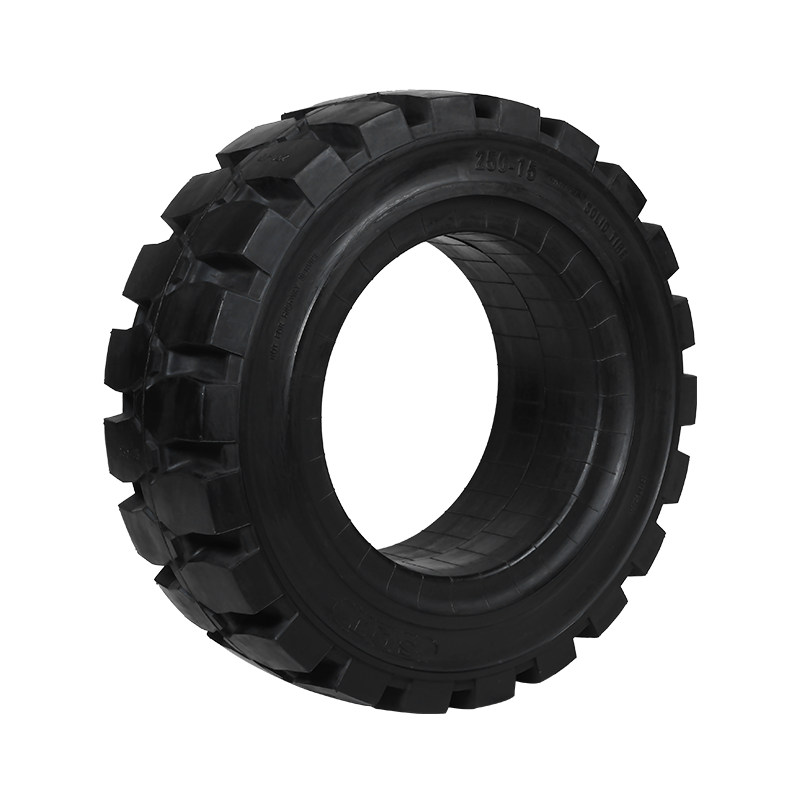
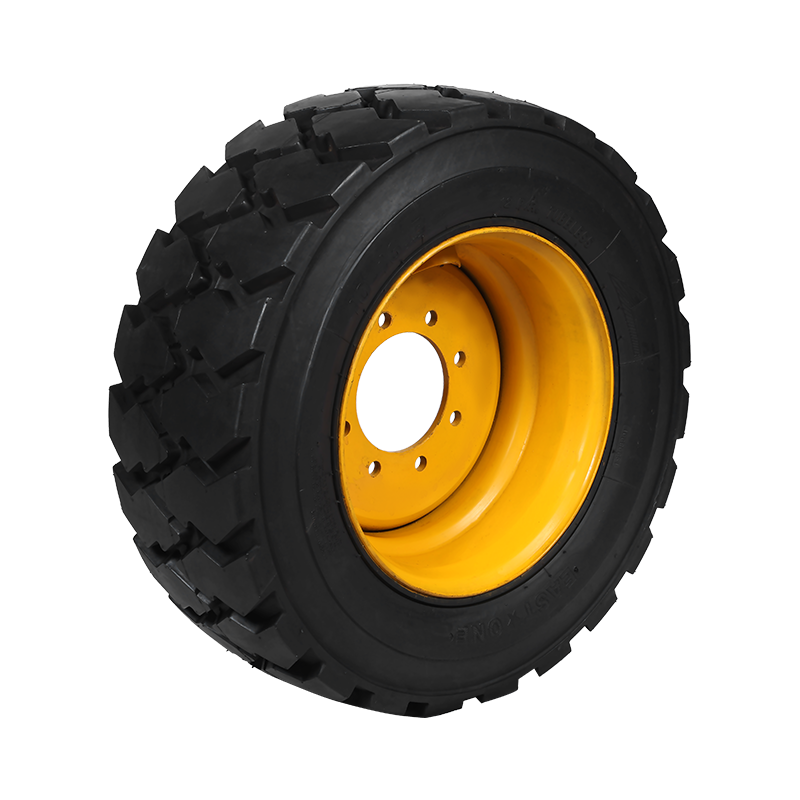
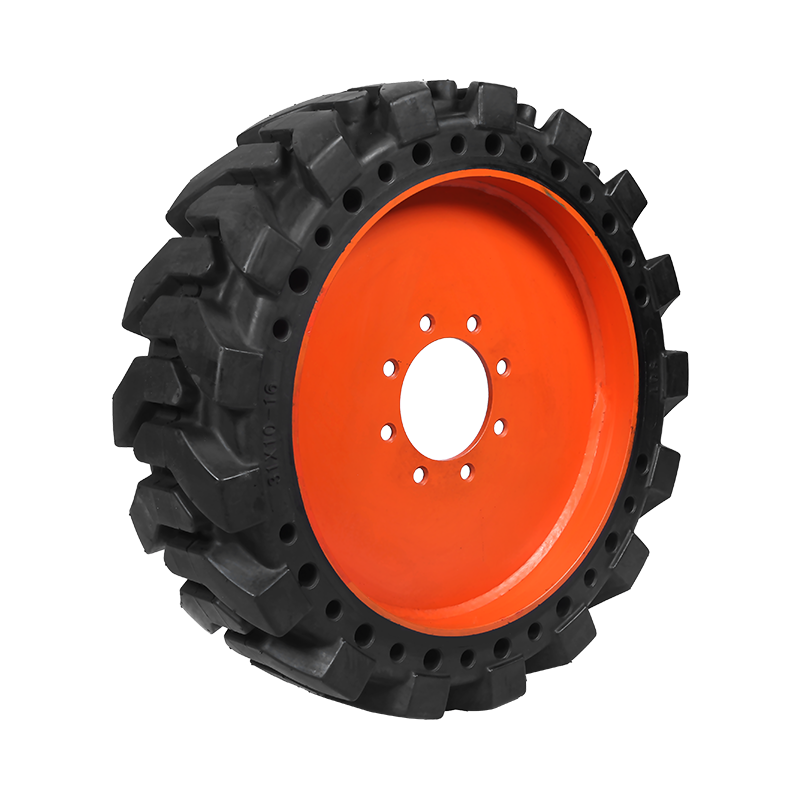
Foam-filled scissor lift tires start as standard pneumatic tires and are converted by injecting two-component polyurethane foam through the valve stem after removing the air charge. The foam cures inside the tire cavity and creates a solid fill that eliminates the air void — and with it, the puncture risk — while retaining the pneumatic tire's casing, sidewall flexibility, and tread pattern geometry. On rough-terrain scissor lifts, foam-filled tires are increasingly the default specification for fleet operators who prioritize machine uptime over the marginal ride quality advantage of standard pneumatics.
The ride quality difference between a correctly foam-filled tire and an equivalent standard pneumatic is noticeable but not dramatic on typical construction site surfaces — slightly firmer through surface irregularities, with somewhat higher vibration levels transmitted to the platform during travel. For most rough-terrain scissor lift applications where travel distances are short and speeds are low, this difference is operationally inconsequential. Where it matters more is on longer travel distances across very rough ground, where the accumulated vibration from foam-filled tires can contribute to operator fatigue over a full working shift.
Foam fill quality is critical and varies significantly between suppliers and installation operators. Properly mixed and filled tires at the correct density for the specific tire cavity volume deliver consistent performance and long service life. Under-filled tires develop voids that create uneven load distribution and premature casing wear. Over-filled tires generate internal pressure that stresses the casing and can cause bead separation. Fleet operators without in-house foam filling capability should use a specialist tire service provider with calibrated mixing equipment and documented fill procedures for each tire size in their fleet.
Scissor Lift Tire Wear: What to Inspect and When to Replace
Scissor lift tires wear gradually and predictably in normal operation, but the rate of wear varies considerably depending on the surface type, the frequency of sharp turns, the machine's load profile, and the ambient temperature. Establishing a consistent inspection and replacement protocol — rather than waiting for obvious failure — is the most cost-effective approach to tire management on any scissor lift fleet.
Most press-on solid scissor lift tires incorporate a wear indicator system, typically a differently colored rubber layer or a series of molded indicator holes in the tread face. When the outer tread compound wears down to expose the indicator color or reaches the indicator hole depth, the tire has consumed its designed service life and must be replaced. Continuing to operate beyond the wear indicator exposes the machine to the risk of the steel rim contacting the floor — creating a rigid, unstable contact point that significantly increases tip-over sensitivity and damages floor surfaces.
Beyond wear depth, the following conditions should trigger immediate tire replacement on any scissor lift regardless of remaining tread:
- Chunking or large-scale tread loss: Sections of tread rubber torn away from the tire body indicate compound degradation, chemical attack, or mechanical damage beyond serviceable limits. A chunked tire has an irregular contact patch and unpredictable load distribution that compromises machine stability.
- Deep sidewall cracking: Circumferential or radial cracks in the sidewall deeper than a few millimeters indicate ozone attack or age hardening. Cracked sidewalls have reduced structural integrity and are prone to sudden section separation under load cycling.
- Rim separation or delamination: Any visible gap between the tire body and the rim groove, or lateral movement of the tire relative to the rim when force is applied, indicates that the interference fit has been lost. A delaminated press-on tire can separate from the rim suddenly during operation.
- Flat spots from cold storage or extended stationary loading: Solid tires left under load in cold conditions can develop permanent flat spots that create rhythmic vibration and uneven floor loading during operation. Flat-spotted tires should be replaced, not returned to service in the hope that the flat spot will work out under use.
- Age beyond five to six years: Rubber hardens with age through oxidation regardless of usage levels. Tires more than five or six years old should be assessed for compound hardness against the original specification and replaced proactively if significantly hardened, as aged hard compound generates excessive floor contact stress and provides inadequate cushioning.
Mismatched Tires and Why They Create Safety Problems
Running mismatched tires on a scissor lift — different sizes, different compounds, or different wear states on the same axle — is a common problem on poorly managed fleets and a genuine safety concern that goes beyond cosmetic inconsistency. Scissor lift stability calculations are based on specific assumptions about tire diameter, width, and compliance that the machine manufacturer established during design verification. When tires deviate from those assumptions, the machine's actual stability envelope differs from the calculated one in ways that are not always visible to the operator.
The most common mismatch scenario occurs when one tire on an axle is replaced and the replacement tire has a slightly different overall diameter than the worn tire on the opposite side. Even a few millimeters of diameter difference creates a persistent lateral lean in the machine that the operator must continuously compensate for, increases the load on the lower side's tires and structure, and places the machine's center of gravity in a slightly different position relative to its stability envelope than the design intended. Over time, this asymmetric loading accelerates wear on the overloaded components and increases the risk of an overturn incident on the machine's downhill or overloaded side.
The correct approach to scissor lift tire replacement is straightforward: replace tires in axle pairs wherever possible, confirm that the replacement tires are the correct size and compound specification for the machine, and verify that front and rear axle tires are not mixed between machines of different models or sizes. For rental fleet operators managing large numbers of machines, a tire tracking system that records the installation date, size, and compound of every tire on every machine — and flags machines approaching replacement intervals — is worth the administrative overhead it requires, particularly as fleet size grows and the opportunity for mismatched fitment increases.
Getting the Most Life Out of Scissor Lift Tires
Scissor lift tires in normal indoor service life can last anywhere from one to four years depending on usage intensity, surface type, operating technique, and compound quality. The spread in that range is wide enough that operational and management decisions have a significant influence on when tires need replacing — and therefore on the total tire cost per hour of machine operation.
The single biggest driver of premature scissor lift tire wear in indoor applications is aggressive turning on abrasive surfaces. Tight-radius turns at speed generate high lateral shear forces in the tire contact patch, abrading rubber from the tread surface at a rate far higher than straight-line travel. Operators who habitually perform sharp pivot turns on rough concrete or aggregate-contaminated floors can wear a set of solid tires in a fraction of the time that a more measured operating technique would achieve. Training operators on smooth, wide-radius turns wherever the floor space permits — and on reducing speed before turning rather than turning at full travel speed — is one of the highest-return interventions available to a fleet manager trying to extend tire life.
Floor cleanliness also matters more than most operators realize. Abrasive grit, metal swarf, sand, and aggregate tracked onto otherwise smooth warehouse floors dramatically increase tire wear rates when the machine drives over contaminated areas. Regular sweeping of machine travel routes, particularly at building entry points where outdoor debris is brought in on wheels and foot traffic, measurably extends tire life on electric scissor lifts operating in otherwise clean facilities. The cost of more frequent floor sweeping is trivial compared to the cost of replacing a full set of scissor lift tires ahead of schedule.
CONTACT US
-

Email: SMT001@saimeite-tyre.com
-

Phone: +86-18451337018No. 1, Renmin South Road, Yandu District, Yancheng City, Jiangsu Province, China