
 English
 한국어
한국어 Français
 Español

The Essential Guide to Wheel Loader Tires: Construction, Ratings, and Application-Specific Treads
Wheel loaders are essential pieces of heavy equipment in construction, mining, and material handling operations. The performance, efficiency, and safety of these machines are critically dependent on their tires. Unlike passenger vehicles, wheel loader tires are complex, highly engineered components designed to withstand immense loads, operate on diverse and often abrasive terrains, and provide the necessary traction for digging and hauling heavy materials. Selecting the right tire type, size, and compound is a practical decision that directly impacts operational costs and machine uptime.
Content
Wheel Loader Tire Construction: Bias-Ply vs. Radial
The internal construction of a wheel loader tire is a primary factor determining its suitability for various applications. The two main types are bias-ply (or cross-ply) and radial.
Bias-Ply Tire Structure and Application
In a bias-ply tire, the casing plies are layered diagonally from one bead to the other, typically at an angle of about 30 to 40 degrees, with successive layers crisscrossing. This overlapping structure creates a robust sidewall and tread connection. Bias-ply tires are generally less expensive upfront and offer excellent stability and resistance to sidewall penetration, which makes them a preferred choice for short-haul, high-impact applications, such as logging or scrap yards, where sharp debris is common.
Radial Tire Structure and Application
Radial tires feature body plies that run perpendicular to the direction of travel (radially) from bead to bead, reinforced by steel belts running circumferentially beneath the tread. This separation of the sidewall and tread functions allows the sidewall to flex independently, providing a larger, more consistent footprint. Radial tires offer superior benefits for wheel loaders, including better traction, improved fuel efficiency, longer tread life, and a smoother ride. They are the standard for high-mileage, high-speed, or long-cycle applications, such as large mining sites or road construction.
Understanding Tire Size and Load/Speed Ratings
The tire size and the associated load/speed rating are mandatory specifications for safe and efficient wheel loader operation. Misinterpreting these markings can lead to catastrophic failure.
Decoding Tire Size Markings
Wheel loader tires typically use a two-part numbering system, for example, 26.5R25. The first number (26.5) is the width of the tire in inches. The letter 'R' indicates radial construction (a dash or a 'B' would indicate bias-ply). The second number (25) is the rim diameter in inches. For some sizes, a profile designator may be included.
Interpreting the Load/Speed Index
The load/speed rating, often a number followed by a letter, indicates the maximum load the tire can carry at a specified speed. For Off-The-Road (OTR) tires like those on a wheel loader, a specific set of service letters is used to denote the intended application and resulting speed capability. The key service letters are:
- L-2: Loader, Traction (Standard traction tread for soft surfaces)
- L-3: Loader, Rock (Aggressive tread for rock and hard surfaces)
- L-4: Loader, Rock Deep Tread (Extra-deep tread for severe rock and mining applications)
- L-5: Loader, Rock Extra Deep Tread (The deepest tread, offering maximum wear resistance)
- E-3: Earthmover, Traction (Often used on articulated dump trucks, but sometimes cross-referenced)
The higher the service letter (e.g., L-5), the deeper the tread, which translates to slower operating speeds to manage heat buildup. The load index number must be respected to prevent overloading, which is a common cause of premature tire failure.
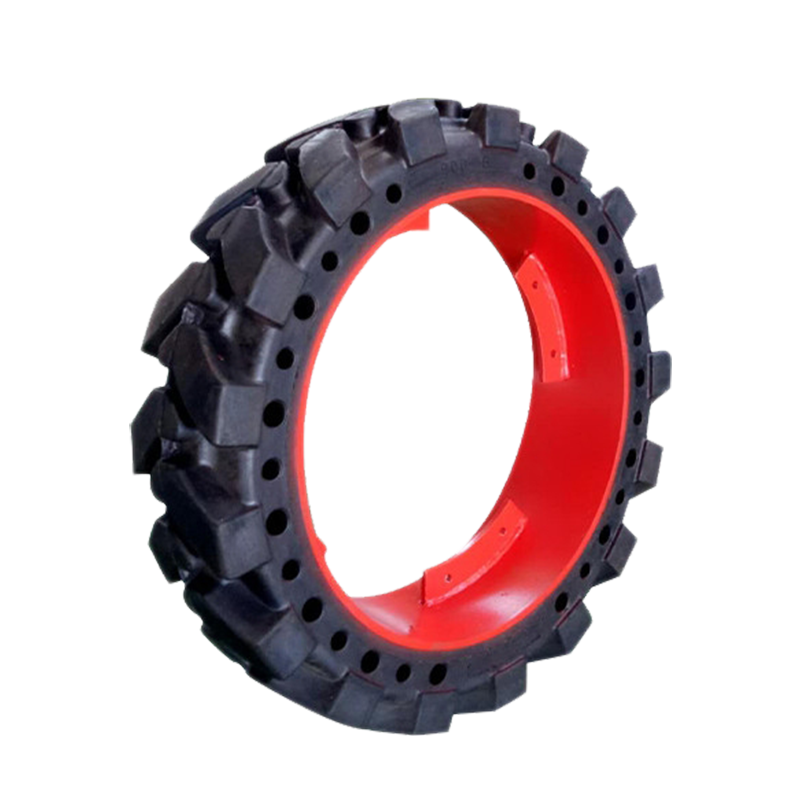
Tread Patterns and Compounds for Specific Applications
The tire's tread pattern and the rubber compound are customized to optimize performance for the unique challenges of the work environment.
Optimizing Tread Patterns
The primary function of the tread is to provide traction, but it also dictates wear rate and heat dissipation. Choosing the correct tread depth (TD) and pattern is vital:
- Block Tread (L-3/L-4/L-5): Characterized by large, non-directional blocks and high rubber-to-void ratio. Ideal for abrasive surfaces like rock quarries and mining, offering maximum cut and chip resistance and long wear life. The L-5 designation offers the deepest tread for the most severe environments.
- Rib Tread (L-2): Features a more defined directional pattern with smaller lugs, designed for softer, muddy, or loose surfaces where aggressive self-cleaning is needed. Provides good flotation and traction in soft soil.
- Flotation Tread: Designed to distribute the machine's weight over a wider area, minimizing ground pressure. Excellent for work in sand or soft topsoil to prevent rutting.
Rubber Compound Selection
Tire manufacturers formulate rubber compounds to balance wear life, cut resistance, and heat generation. Hard compounds resist cutting and abrasion but build up heat more quickly, while softer compounds dissipate heat better but wear faster. Specialized compounds are available:
| Compound Type | Key Property | Typical Application |
| Standard | General purpose balance | Construction, road work |
| Cut-Resistant | Maximum resistance to cuts and chips | Quarries, recycling, scrap yards |
| Heat-Resistant (Cool) | Low heat buildup for high-speed/long-haul | Mining, long-cycle operations |
Practical Tire Maintenance and Management
Proper tire maintenance is the single most important factor in maximizing tire life and minimizing operational expense.
The Critical Role of Inflation Pressure
Under-inflation is the leading cause of wheel loader tire failure. It increases heat buildup, accelerates shoulder wear, and increases fuel consumption. Over-inflation reduces the tire footprint, leading to poor traction, center-tread wear, and a higher risk of impact rupture. Operators must adhere strictly to the manufacturer's recommended cold inflation pressure, checked daily, ideally with a Tire Pressure Monitoring System (TPMS).
Tire Rotation and Matching
While wheel loaders are not typically rotated in the same manner as road vehicles, managing tire wear across the machine is important. It is vital to ensure that all tires on a single axle, and ideally all four tires, have a matched circumference. Mismatched tires can put stress on the driveline components. When replacing tires, the new tire's tread depth should be closely matched to the remaining tread depth of the other tire on the same axle.

CONTACT US
-

Email: SMT001@saimeite-tyre.com
-

Phone: +86-18451337018No. 1, Renmin South Road, Yandu District, Yancheng City, Jiangsu Province, China