
 English
 한국어
한국어 Français
 Español

The Invisible Science: How Skid Steer Tires Conquer the Toughest Terrains
Content
The Maneuverability Paradox of the Skid Steer Loader
The skid steer loader is a compact, four-wheeled marvel of construction and agriculture. Its defining feature is its incredible agility, achieved through a differential steering system: the wheels on one side of the machine are driven independently of the wheels on the other. To turn, the wheels on one side slow down or even stop, causing the machine to skid across the ground. This maneuverability, while highly efficient in tight spaces, places a tremendous, unique stress on the machine’s footwear: the Skid Steer Tires. They must constantly resist abrasion, tearing, and puncture from the side-to-side scrubbing motion, all while carrying heavy loads over uneven, often hostile, ground.
Engineered for Endurance: The Three Tire Types
The heavy-duty demands of a skid steer have led manufacturers to develop distinct tire technologies, each engineered to trade-off comfort, longevity, and cost to suit a specific job site environment.
1. The Standard Workhorse: Pneumatic Tires
Pneumatic (air-filled) tires remain the most common and cost-effective option. They function similarly to large truck tires, utilizing pressurized air for cushioning.
- Pros: They provide the smoothest ride, which is important for operator comfort during long shifts, and they offer the best shock absorption, protecting the machine’s drivetrain. They also have a lower initial purchase price.
- Cons: Their major weakness is vulnerability to punctures. A stray nail, sharp rock, or piece of scrap metal can lead to costly downtime. The robustness of a pneumatic tire is measured by its Ply Rating, indicating the strength of the internal construction—a higher rating means better durability.
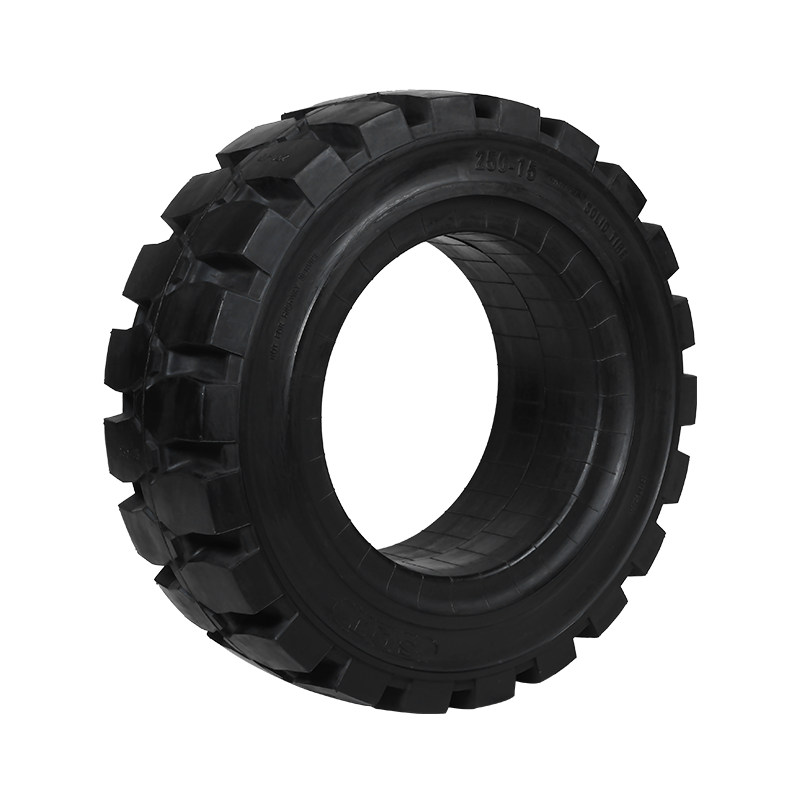
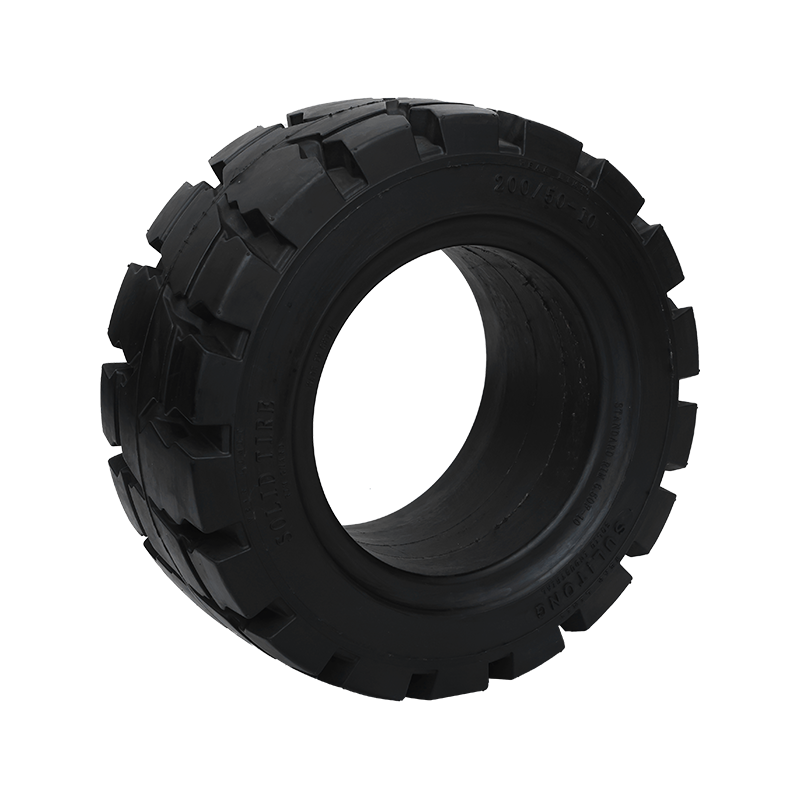
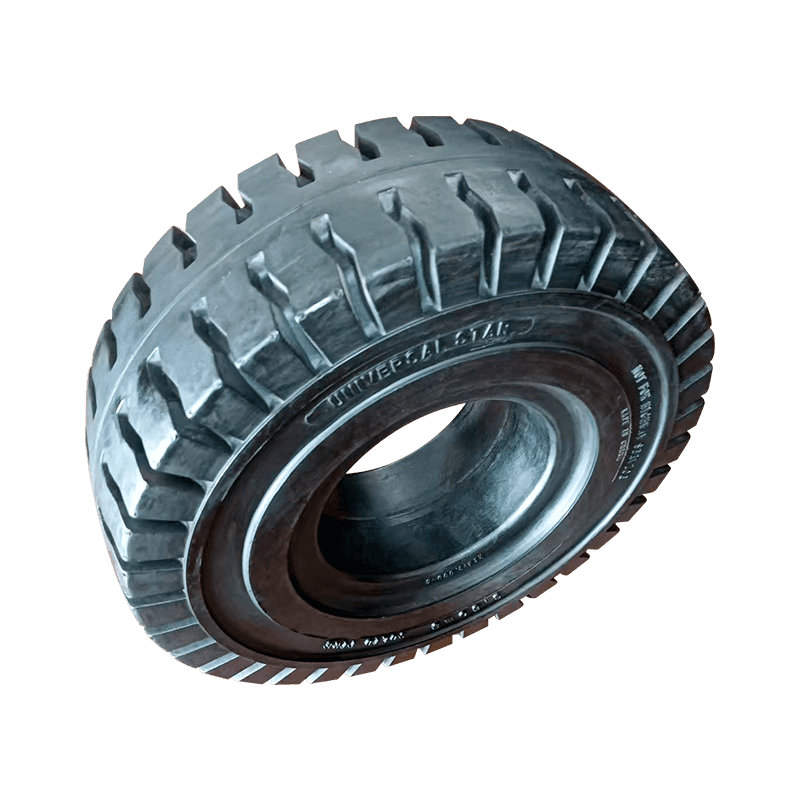
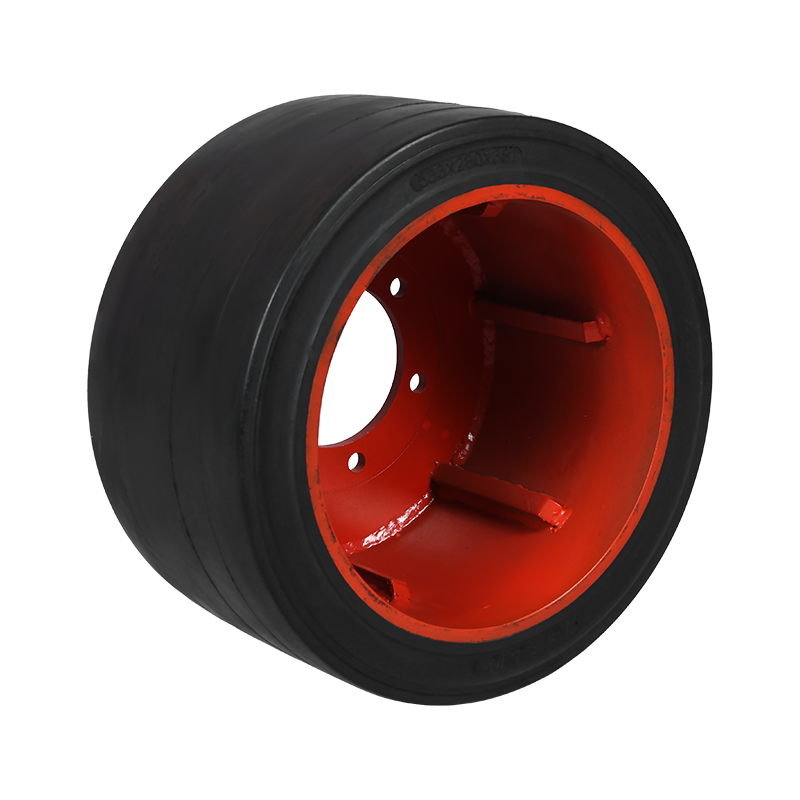
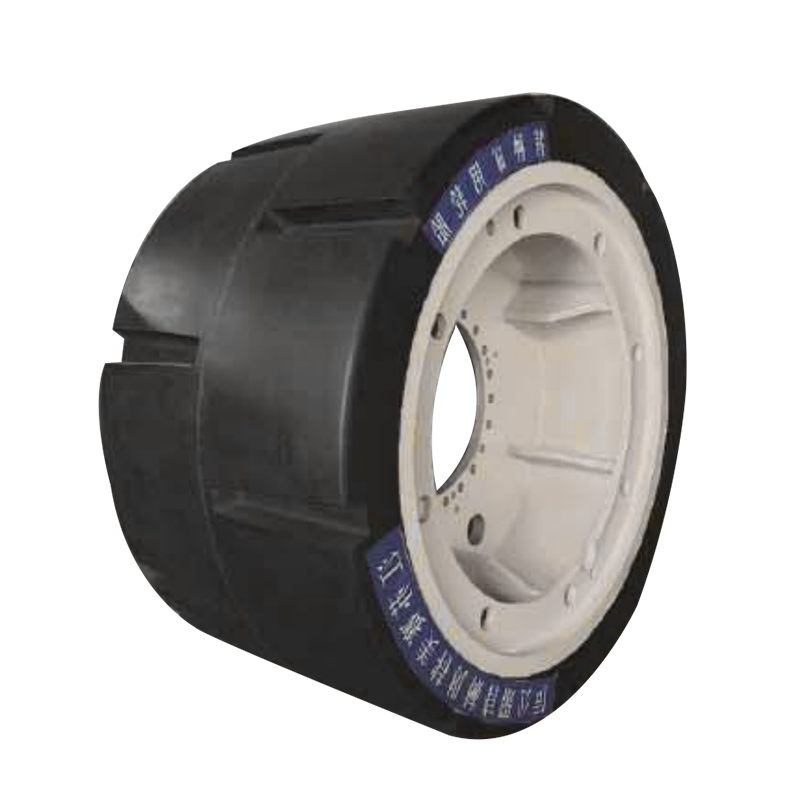
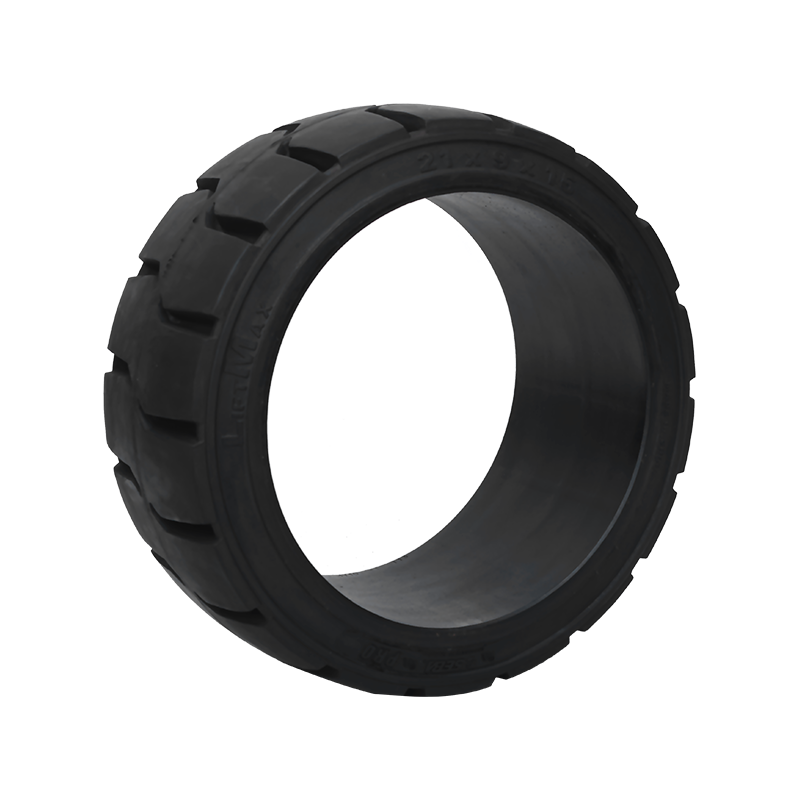
2. The Bulletproof Option: Solid Tires
Where punctures are a constant threat—such as in demolition, scrap yards, or recycling centers—solid rubber tires are the preferred solution.
- Pros: They are 100% flat-proof and puncture-resistant, guaranteeing minimal downtime. They also feature extremely deep, durable tread, leading to a much longer overall lifespan compared to pneumatics.
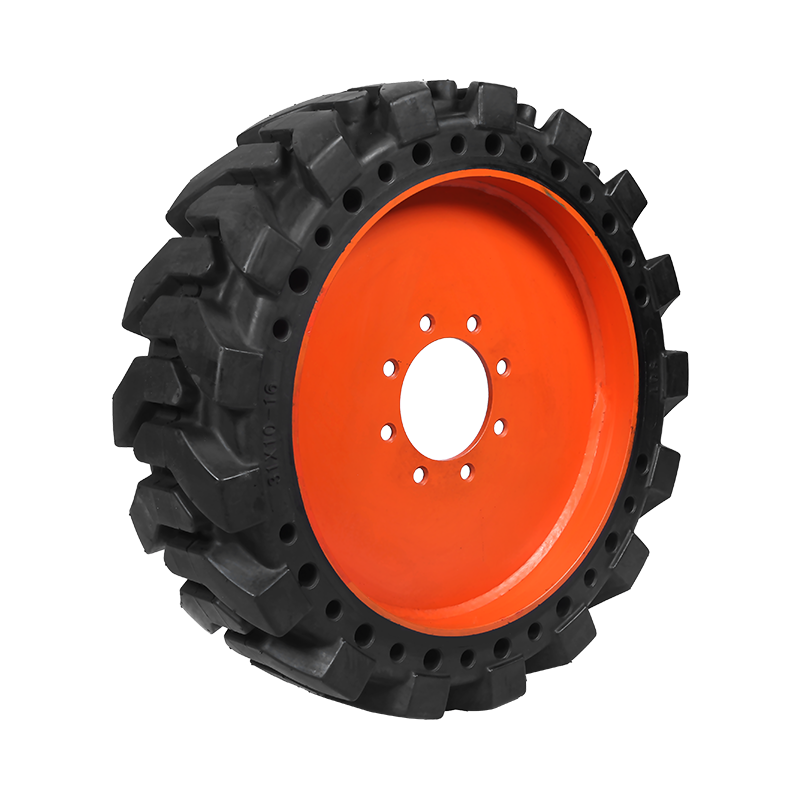
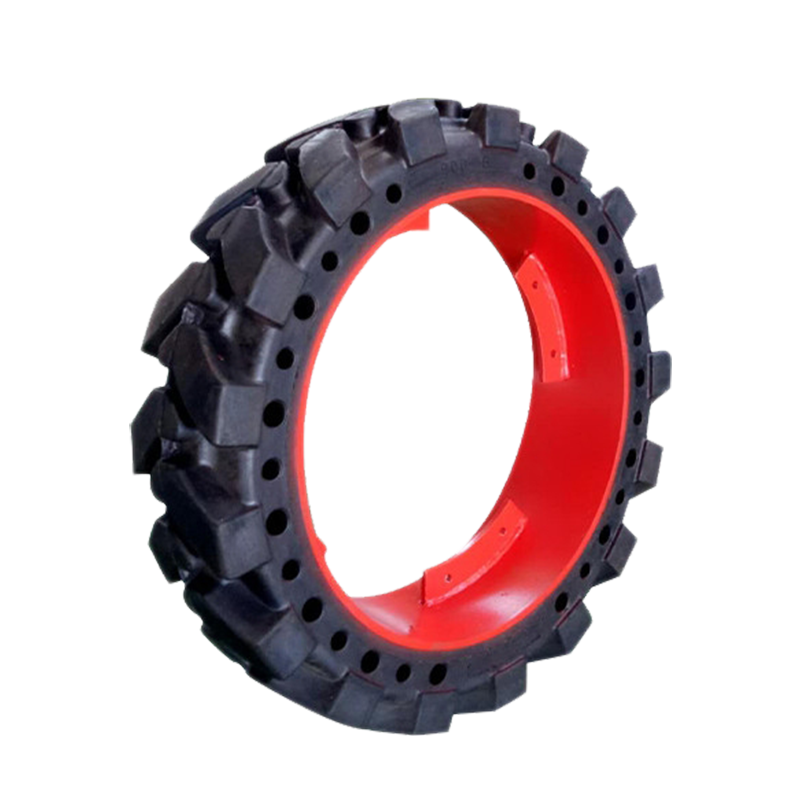
- Cons: Being pure rubber, they offer a significantly harsher, less cushioned ride for the operator. They also add considerable weight to the machine, which can affect fuel consumption and slightly increase stress on the drivetrain. Some advanced designs feature engineered apertures (holes) in the sidewall to mimic the shock absorption of an air-filled tire.
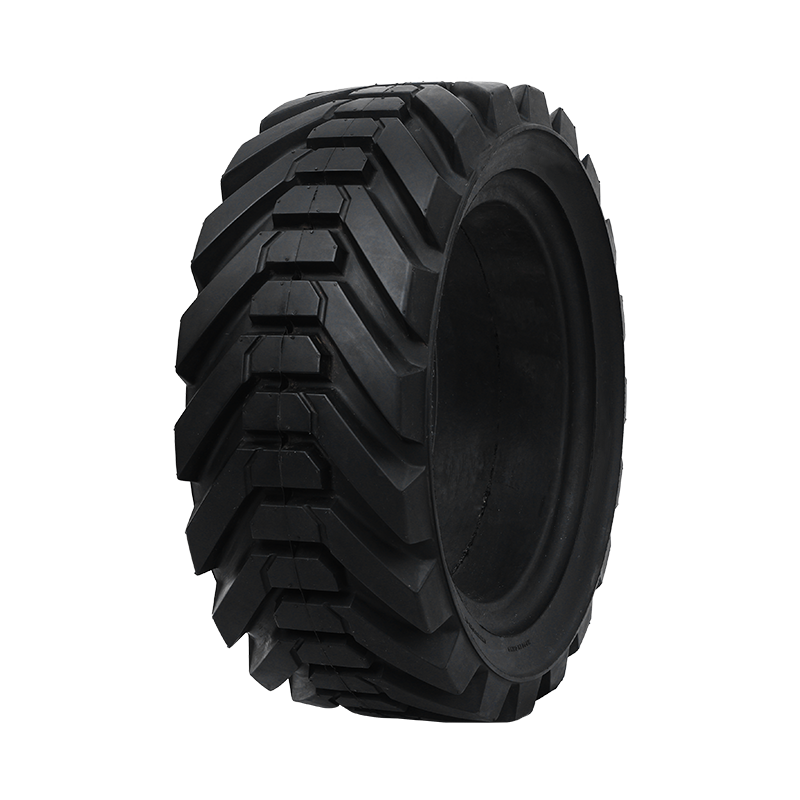
3. The Hybrid Compromise: Foam-Filled Tires
For operators who need flat-proofing but want to retain some of the pneumatic tire’s benefits, a foam-filled tire is an option. This involves injecting a liquid polyurethane compound into a standard pneumatic tire and allowing it to cure into a solid, resilient core.
- Pros: They are flat-proof and retain the original tread design of the pneumatic tire.
- Cons: The ride is stiffer and less forgiving than air-filled, and the foam adds a lot of weight, similar to a pure solid tire.
Traction and Terrain: The Science of the Tread
Beyond the internal construction, the external tread pattern is critical, as it is the point of contact that determines grip, stability, and wear life. Tire engineers design specific treads to optimize performance for different surfaces:
Aggressive Lug (R-4 and R-5 patterns)
These are characterized by deep, widely spaced blocks of rubber. This high “void ratio” allows the tire to dig into and self-clean, making them excellent for traction in soft or loose material like mud, gravel, and dirt. However, on hard surfaces like asphalt, these deep lugs wear down quickly.
Hard Surface / Industrial (Non-Directional)
These tires feature a more uniform, shallower tread with less spacing between the blocks (a low void ratio). This maximizes the rubber-to-ground contact area, distributing the load over a larger footprint. This design resists the severe abrasion and cutting common on concrete and asphalt, leading to an extended lifespan on hard, unforgiving surfaces.
Turf and Flotation
These are the least aggressive, with very shallow, rounded treads and a wide footprint. Their purpose is to minimize ground pressure and prevent damage, making them ideal for work on sensitive surfaces such as finished lawns, golf courses, or soft, wet soil where deep ruts must be avoided.
Selecting the right Skid Steer Tires is a crucial factor in operational efficiency. The constant skidding motion requires a tire that is not only strong enough to resist punctures but also chemically and structurally robust enough to withstand the relentless lateral grinding, ensuring the compact workhorse stays on the job and maximizes its legendary versatility.
CONTACT US
-

Email: SMT001@saimeite-tyre.com
-

Phone: +86-18451337018No. 1, Renmin South Road, Yandu District, Yancheng City, Jiangsu Province, China